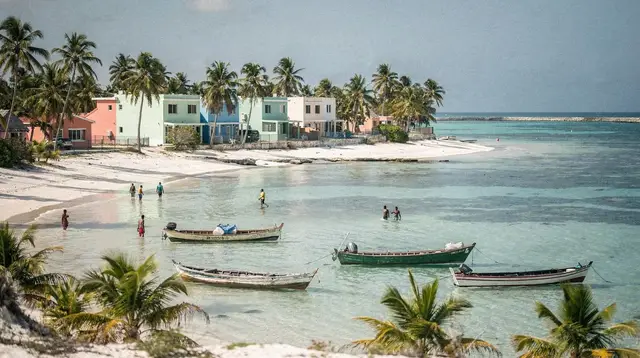
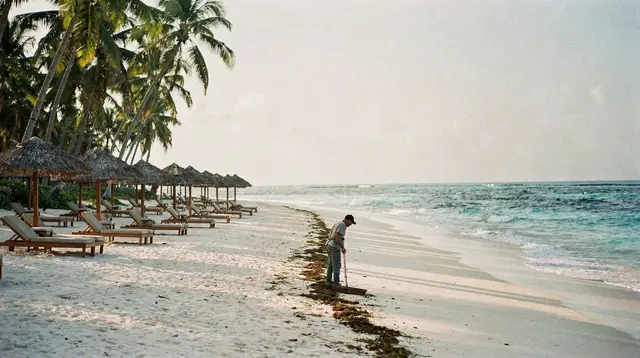
Las Terrenas sits on the north coast of the Samana peninsula, a beach town built around a strip of restaurants, small hotels and several kilometers of sand rather than a single resort compound. It is the liveliest base on the peninsula, but it should not be confused with Samana town itself, which faces Samana Bay and is where humpback whale watching departs from — an activity that belongs to the Samana, Miches and Los Haitises region page, not to this one.
A beach town, not an excursion hub
What sets Las Terrenas apart from the Punta Cana and Bavaro hotel zone is how little of it is organized around excursion desks. There is no dense cluster of resort tour counters pushing the same handful of trips; instead, the town runs on independent restaurants, a market, small guesthouses and a scattering of tour operators who arrange buggy routes, boat trips and transfers on request. For a visitor used to the packaged feel of a Punta Cana resort, that can read as either refreshingly loose or mildly disorganized, depending on temperament. Either way, it is worth knowing before arrival: a spontaneous “what’s there to do today” walk into town works better here than it does in a resort lobby, but it also means fewer guarantees on schedules, pricing and English-language service than a resort-affiliated tour desk provides.
Getting there from Punta Cana
There is no direct highway corridor and no train connecting the Bavaro-Cap Cana hotel zone to the Samana peninsula, so reaching Las Terrenas from a Punta Cana hotel is a genuinely long transfer, not a short excursion. The road crosses the interior of the country before reaching the peninsula, and travel time depends heavily on traffic, the route taken and whether the vehicle stops en route — this page does not give a fixed number of hours because the specific Punta Cana-to-Las-Terrenas link isn’t a route this site tracks with a confirmed figure.
In practice, most visitors handle it one of three ways: a private transfer or rental car for those staying overnight, a bundled all-day tour that treats the drive as part of the itinerary, or skipping it entirely in favor of activities closer to the hotel zone. Whichever option is chosen, always check the exact pickup time, return time and total duration on the GetYourGuide or Viator listing itself before booking, since operators vary and this page cannot promise a same-day round trip is comfortable for every traveler.
For visitors approaching from elsewhere, Santo Domingo and its Las Americas airport (SDQ) sit closer to the peninsula than Punta Cana International Airport (PUJ) does, which is one reason some itineraries route through the capital rather than back through the hotel zone. See Punta Cana to Santo Domingo: how to get there for that connection, and getting around Punta Cana: taxis, Uber, guaguas for how local transport options compare across the country.
The beaches
Las Terrenas is really three beaches strung along the coast rather than one:
| Beach | Character |
|---|---|
| Playa Bonita | Quieter, wide sand, fewer restaurants directly on the beach |
| Playa Coson | Long and less developed, often cited as the most scenic stretch |
| Playa Las Ballenas | Closer to town, more beach bars and restaurants nearby |
None of these beaches are where whale watching happens, despite the “Ballenas” name (Spanish for whales) — that activity is specific to Samana Bay and its January-to-March season, covered on the Samana, Miches and Los Haitises region page and in the Samana whale watching tours guide. Sargassum, the brown seaweed that periodically affects the country’s Atlantic-facing east coast, is a separate and less predictable issue on this side of the island; conditions vary by year and by beach, so check recent reports before assuming any beach will be clear.
The town itself
The center of Las Terrenas is walkable, with a concentration of restaurants ranging from simple Dominican comedores to French- and Italian-influenced kitchens left over from the town’s mixed expatriate history. Seafood is a reasonable default given the coastal setting, and prices generally sit below what a similar meal costs inside a Punta Cana resort, though a restaurant bill still normally carries the standard 18 percent ITBIS tax plus a 10 percent service charge — worth budgeting for rather than being surprised by at the end of a meal. A small market operates in town for produce and basics, and several shops sell the same larimar stone and amber jewelry found elsewhere in the country; see larimar and amber: what to buy for what to look for and what to avoid.
Compared with the hotel zone, Las Terrenas has noticeably less English signage and fewer staff geared toward package tourists, which is part of its appeal for travelers who want a more local feel, and part of the friction for those who prefer everything pre-arranged. Tap water is not safe to drink here any more than it is in Punta Cana — stick to bottled or purified water throughout the country.
Organized activities based in and around Las Terrenas
While the town itself isn’t built around excursion counters, a handful of activities are commonly booked from Las Terrenas as a starting point, mostly aimed at the countryside and coastline rather than the beach strip itself. A buggy route through the inland coffee and cocoa-growing areas is one of the more popular options and gives a look at rural life away from the coast:
a dune buggy route through coffee and cocoa farms with a stop at El Limon waterfallFor travelers who want a longer off-road day, a four-wheel adventure route covers similar countryside terrain by a different vehicle type:
a four-wheel off-road adventure route through the Samana countrysideSome visitors instead use Las Terrenas as a base for a day trip toward the capital, which gives a sense of scale for how far the peninsula sits from the rest of the country:
a full-day tour to Santo Domingo with hotel pickup from the Las Terrenas areaEl Limon waterfall, reached by a short hike or horseback ride from a village outside town, is one of the most frequently combined stops with a Las Terrenas stay:
a guided hike or ride to El Limon waterfallNone of these activities are whale watching, mangrove tours or the Los Haitises caves — those belong to the Samana whale watching tours, Los Haitises boat tours and things to do in Los Haitises guides, and to the Los Haitises destination page and Miches destination page for the mountain viewpoints and coastal stretch further east. This page stays with the beach town itself; see things to do in Las Terrenas for a fuller activity list and samana beaches and Cayo Levantado for how Las Terrenas compares with the beaches on the bay side of the peninsula.
What Las Terrenas is not
It’s worth being direct about a few common mix-ups. Las Terrenas is not the departure point for whale watching — that’s Samana town, on the bay side of the peninsula, and only from roughly mid-January to late March. It is not a mangrove or cave destination — that’s Los Haitises National Park, reached by boat from Samana or from Sabana de la Mar, well outside this town. And it is not a short excursion from a Punta Cana hotel; anyone weighing a single day trip should compare it honestly against options closer to the hotel zone, such as the Higuey day trip from Punta Cana or the Bayahibe day trip from Punta Cana, both of which involve considerably less road time.
Money and practical notes
Dominican pesos (DOP, RD$) are the official currency, though US dollars are widely accepted in restaurants and for tours in Las Terrenas as elsewhere in the country; change is typically given back in pesos. See pesos or dollars in Punta Cana for how that plays out in practice, and money, tipping and taxes in Punta Cana for the ITBIS and service-charge breakdown that applies nationwide, Las Terrenas included.
Anyone flying in or out of the country still needs the free online e-Ticket form, mandatory for both arrival and departure, and the USD 10 tourist card, which is normally already bundled into the airfare rather than paid separately at the airport — see Dominican Republic e-Ticket and entry rules for the current requirements. Tap water throughout the country, including in Las Terrenas, is not safe to drink; see can you drink the water in Punta Cana for the general rule, which applies here too.
Best time to visit
The drier, less humid season from December to April is generally the more comfortable stretch for a beach-focused stay, and it also avoids the peak of the hurricane season that runs June through November, with the highest risk in August, September and October. Outside those months, expect more rain and humidity, though the beach town itself stays open and functional year-round. None of this overlaps with the whale watching window in Samana Bay, which is a separate, narrower calendar entirely tied to the bay side of the peninsula rather than to Las Terrenas. For a wider view of seasonal trade-offs across the region, see best time to visit Punta Cana and, for those weighing a longer loop through the north coast, the wild north coast: Uvero Alto and Miches itinerary, which sits east of Las Terrenas along the same general stretch of less-developed coastline.
Las Terrenas: frequently asked questions
Is Las Terrenas worth visiting from Punta Cana?
Yes, but treat it as its own trip rather than an add-on. It is a genuine beach town with restaurants, a market and a walkable center, which makes it a different experience from a Bavaro or Cap Cana resort. Because of the distance, most visitors either stay overnight or combine it with a wider Samana itinerary rather than a single-day round trip.
Can I see whales in Las Terrenas?
No. Humpback whale watching happens in Samana Bay, roughly mid-January to late March, and boats for that activity leave from Samana town, not Las Terrenas. If whale watching is the goal, look at the Samana region page rather than this one.
How do I get from Punta Cana to Las Terrenas?
There is no direct highway link and no train; travelers use a private transfer, a rental car, or an organized tour that bundles the road time into the day. The route crosses the interior of the country, so it is a long transfer rather than a short one, and exact timing depends on traffic and the operator. Check the pickup and return times on the GetYourGuide or Viator listing for the exact schedule.
Is Las Terrenas better than Bavaro or Punta Cana beaches?
They are different experiences rather than one being objectively better. Las Terrenas has a village atmosphere, independent restaurants and less resort infrastructure, while Bavaro and Cap Cana have wider all-inclusive beaches and a denser hotel base. Travelers who prefer organized excursions and short transfers usually stay closer to Punta Cana; those who want a change of pace add Las Terrenas as a separate stop.
What is there to do in Las Terrenas besides the beach?
The town has a walkable center with restaurants, small shops and a market, and it works as a base for organized activities such as buggy routes through the coffee and cocoa countryside. Waterfalls, mangroves and the Los Haitises caves are nearby but are treated as separate excursions rather than part of the town itself.
Do I need a car in Las Terrenas?
A car or a private driver makes the town far easier to enjoy, since the beaches (Playa Bonita, Playa Coson, Playa Las Ballenas) stretch along several kilometers of coast and public transport is limited. Many visitors instead book a private transfer or an organized tour that includes transport for the day.
Is Las Terrenas expensive?
Prices sit in a similar range to other Dominican beach towns: a modest lunch and a day at the beach can run roughly USD 15-30 per person, more at beach clubs or seafood restaurants. As with the rest of the country, restaurant bills normally add an 18 percent ITBIS tax plus a 10 percent service charge, so a menu price is not the final total.
What’s the difference between Las Terrenas and Samana town?
Las Terrenas is a beach town on the northern side of the peninsula, known for its beaches and restaurants. Samana town, on the southern side, faces Samana Bay and is the departure point for whale watching tours and boats toward Los Haitises. They are roughly an hour apart by road and serve different purposes for a visit.