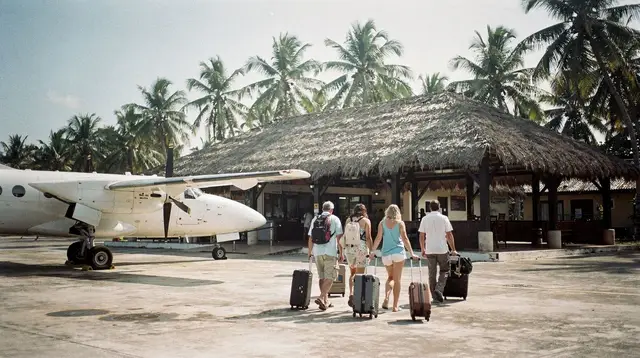
Driving in the Dominican Republic: honest advice
I get asked some version of this question by nearly every reader planning more than a beach week: should I just rent a car and drive myself around, instead of relying on taxis and transfers the whole trip? I want to give you the honest version of the answer, not the version that sounds adventurous in a blog post.
What driving here actually involves
You drive on the right, which is one less thing to adjust to if you are coming from the US, Canada or most of continental Europe. There is no train network anywhere in the Dominican Republic, so a car genuinely does open up routes that public transport handles slowly or not at all — smaller towns around Higuey, the back roads near Miches, the stretch between La Romana and Bayahibe.
That said, the documented local norm here is not individual car rental. It is guaguas (local buses) for budget travel between towns, fixed-rate taxis for point-to-point trips, and private transfers for airport runs and day trips. That is what most residents use, and it is what most visitors end up using too, even ones who considered renting. That is worth sitting with before you commit to a rental: if the people who live here and know the roads best still default to guaguas and taxis over their own cars for a lot of trips, that tells you something about the driving conditions and the value of local knowledge on the road.
Where I would think twice
I will not pretend I know the state of every road segment or how often police checkpoints appear, because nobody honestly can give you a precise figure for either — it varies by route, by season and by the day. What I can tell you from a planning perspective: main highways connecting the tourist zone to Higuey, La Romana and Santo Domingo tend to be in reasonable shape, while smaller roads into towns and rural stretches are more of a mixed bag, with the occasional unmarked speed bump or pothole that catches you off guard, especially after dark. Night driving on unfamiliar rural roads is where I would personally be most cautious, not because it is uniquely dangerous, but because visibility and signage are inconsistent.
Checkpoints are a normal part of driving here, not a sign you have done something wrong. Keep your passport or a copy, your rental agreement and your licence within reach, and treat any stop as routine.
Where a rental genuinely makes sense
If you are staying more than a week and want to explore beyond the hotel zone at your own pace — say, chasing quieter beaches around Uvero Alto and Miches, or stringing together a loop that a private transfer would charge for as separate one-way legs each time — a rental starts to look more reasonable. I am not going to quote you a daily rate, since it depends heavily on the company, the season and the vehicle class, and any number I gave you here would be a guess dressed up as a fact. Compare a few local operators once you land rather than trusting a single figure from a blog.
Where I would skip it
For a single day trip, I generally would not bother. If you are heading to the colonial zone in Santo Domingo, that is two and a half to three hours of driving each way on a route you have never seen, ending in a dense old city with its own parking and traffic quirks — a private transfer or a multi-day Dominican Republic tour that includes Santo Domingo removes that whole layer of stress and lets you actually look at the city instead of the road.
Same logic applies to excursions built around specific activities rather than open exploring. If the point of the day is snorkeling off Catalina Island, a Catalina Island snorkeling trip already includes the boat transfer, so there is no driving decision to make at all. If you want the cenotes and zip lines at Scape Park in Cap Cana, an entry package to Scape Park’s cenotes and zip lines gets you there without you needing to find parking or navigate unfamiliar side roads. And if what you actually want is the feeling of covering rough terrain yourself, a half-day 4x4 or ATV tour through caves and the Dominican countryside gives you that experience with someone else responsible for the vehicle and the route.
My honest bottom line
I would not tell anyone renting is a mistake — some readers have specific plans that genuinely benefit from it, and plenty do it without any trouble. But if you are on the fence, the documented default here favours guaguas, fixed-rate taxis and private transfers over solo rentals, and that default exists for practical reasons: unfamiliar roads, variable conditions, and a driving culture that takes a bit of adjustment. Weigh that against how much of your trip actually depends on going somewhere a transfer or a tour cannot already take you.
If you are still deciding between renting and using local transport for your day-to-day moves rather than one-off excursions, read through the guided alternative options above alongside our separate guide on off-road day trips, then compare that against what a multi-day rental would actually cost you once insurance and fuel are added in.
Getting around without a car
For day-to-day moves rather than one-off excursions, see getting around Punta Cana by taxi, Uber and guagua and whether Uber actually works here. If you land at PUJ airport and are still deciding, our airport transfer guide covers the fixed-price option most visitors use on day one.
If you do decide to rent, our dedicated car rental guide for the Dominican Republic goes deeper on paperwork and insurance than this piece does. For the specific question of reaching the capital, see getting from Punta Cana to Santo Domingo, and for a Santo Domingo day out on foot once you arrive, the self-guided colonial zone walk is a good companion piece.
Renters planning a longer loop might also look at our one week without a car itinerary for a sense of how far transfers and tours alone can take you, and our common travel mistakes page, which covers a few transport-related ones. For money matters on the road, including whether to carry pesos or dollars, see pesos or dollars in Punta Cana. And if your itinerary includes the islands, our Saona Island excursions guide explains why that trip starts in Bayahibe, not from a Punta Cana marina, regardless of how you get yourself there.
Private options for other excursions are covered in our private tours guide if a rental starts to feel like more hassle than it’s worth. For a wider view of the two hotel corridors this decision most often comes up in, see Punta Cana, Bavaro, Cap Cana and Uvero Alto compared, and our Uvero Alto and Higuey region overview for the longer transfer that region already involves without a car.
Driving in the Dominican Republic: your questions answered
Is it legal for tourists to drive in the Dominican Republic?
Yes. A valid driver’s licence from your home country is generally accepted for a rental, and you drive on the right, same as in most of continental Europe and North America.
Do I need an international driving permit?
Rental counters vary in what they ask for. Some accept a home licence alone, others want an international permit alongside it. Check with the specific rental company before you fly rather than assuming either way.
Is driving here more dangerous than at home?
I would not call it dangerous, but the driving culture is looser than what visitors from the US, Canada or northern Europe are used to: lane markings get treated as suggestions, motorbikes weave, and rural roads are not always lit at night. Slower, more cautious driving closes most of that gap.
Are the roads in bad condition?
It is a mix, and I am not going to invent a percentage. Main highways connecting Punta Cana to Higuey, La Romana or Santo Domingo are generally paved and maintained. Side roads into smaller towns can be rougher, with potholes and unmarked speed bumps. Assume variability rather than a uniform standard.
Will I get stopped at police checkpoints?
Checkpoints exist on the main routes, and it is normal to be waved through or asked a quick question. I cannot give you a frequency, since it varies by route and day. Carry your passport or a copy, your rental papers and your driver’s licence, and treat any stop calmly.
Is a rental car worth it just for one day trip?
For a single trip to somewhere like the colonial zone in Santo Domingo or the Bayahibe boat docks, a private transfer or a booked tour usually removes more hassle than a one-day rental does, especially since you would be navigating unfamiliar roads on your only day there.
What is the alternative if I do not want to drive?
Guaguas for budget point-to-point travel, fixed-rate taxis arranged through your hotel, or private transfers booked in advance. For excursions into Scape Park, Catalina Island or multi-day loops toward Santo Domingo, a guided tour also removes the driving question entirely.
Getting around Punta Cana on GetYourGuide
Verified deep-linked GetYourGuide tours. Book through these links and we earn a small commission at no cost to you.
GetYourGuide does not provide a product photo for this activity — the image shows the meeting point, photographed by us.