Punta Cana in winter: what December to April actually looks like
Is winter a good time to visit Punta Cana?
Winter (roughly December to April) is the driest, least humid stretch of the year in Punta Cana, with sea and beach conditions at their best and no sargassum buildup. It is also the busiest and most expensive season, so book flights, hotels and excursions well in advance.
What “winter” means on a tropical coast
Punta Cana does not have a winter in the sense that a lot of visitors are used to. Air temperatures hold steady in the 26-31°C range all year, the sun rises and sets at roughly the same times, and there is no cold snap to plan around. What travel guides call “winter” here is really the dry season: a stretch running from around December to April when rainfall and humidity both drop compared with the rest of the year. It happens to line up with winter back home for most of the visitors who fly in, which is why the label sticks, but it is a seasonal label for weather and crowd patterns, not temperature.
This page is about that specific window and what it actually changes on the ground: how full the beaches and resorts get, what happens to prices, why the sea looks better than it does in summer, and a couple of things it does not mean, no matter how often they get assumed. If you want the risk side of the calendar instead, the dedicated pages on hurricane season and sargassum season cover that in detail; this page focuses on the upside and the trade-offs of visiting during the dry months.
Weather: drier and less humid, not cooler
The headline change from December to April is humidity, not heat. The wetter months, roughly May to November, bring heavier and more frequent rain showers along with the kind of sticky humidity that makes the same 28°C feel hotter. In the dry season, rain is less frequent and often shorter when it does show up, and the air feels noticeably lighter. Mornings can be cooler and breezier, especially in January and February, though “cooler” here still means light layers in the evening rather than anything close to cold.
| Factor | Dry season (Dec-Apr) | Wet season (May-Nov) |
|---|---|---|
| Typical temperature | 26-31°C | 26-31°C |
| Humidity | Lower | Higher |
| Rainfall | Less frequent, often brief | More frequent, can be heavier |
| Hurricane risk | None (season is June-Nov) | Present, peaks Aug-Oct |
| Sargassum on east coast beaches | Generally lower | Generally higher, peaks Apr-Oct |
| Crowds and prices | Higher | Lower |
None of this is a promise. Weather in the Caribbean varies year to year, and a dry-season trip can still catch a rainy afternoon or two. The pattern above is a tendency, not a guarantee, and it is worth checking the best time to visit Punta Cana guide for a fuller month-by-month breakdown if you are choosing exact dates.
Sea and beach conditions: the real reason people book this window
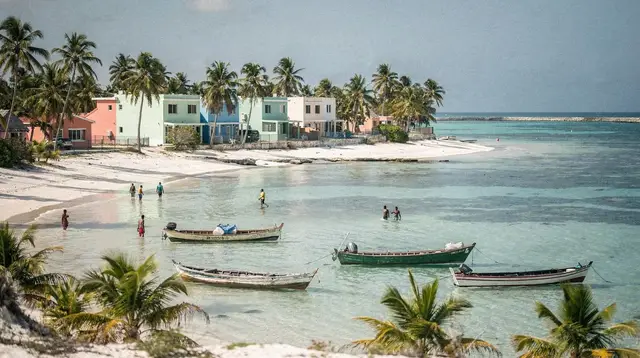
The dry season’s biggest practical payoff is at the waterline rather than in the air. Sargassum, the brown seaweed that periodically piles up on the east coast’s beaches, is mostly an April-to-October issue, and the amount varies a lot from year to year. Visiting from December through March meaningfully improves your odds of finding clear sand and clear, calm water in Bavaro and Cap Cana, without the guesswork of chasing a good week during the wetter months.
Calmer seas in this window also make water-based excursions more consistent. Boat trips to Saona Island, catamaran outings and snorkeling or diving day trips tend to run more predictably, since choppier conditions and storm activity are much more of a wet-season and hurricane-season concern. If you are weighing a boat day against a land-based excursion, the calmer winter sea is a real argument in favor of the water option, and a light adventure like Punta Cana: Buggy El Patron pairs well with a beach day either side of it, since the roads and trails run dry rather than muddy in this stretch.
Crowds and prices: the trade-off nobody skips
The dry season is Punta Cana’s high season for a straightforward reason: it is the best window weather-wise for visitors flying in from colder climates, and everyone books around the same logic. That means fuller resorts, fuller beaches, fuller excursion boats, and airfares and hotel rates that generally sit higher than during the quieter months. Christmas week, New Year and, for many nationalities, February school holidays are the priciest pockets inside an already pricier season; late January and early April tend to be a little calmer and a little cheaper within the same broad window.
The knock-on effect worth planning for is availability. Hotel tour desks in high season often have thinner leftover inventory for popular excursions, since blocks get reserved by tour operators ahead of time. Booking online through GetYourGuide or Viator a few days ahead, rather than walking up to the desk once you have landed, tends to leave more choice of time slot and operator; the trade-offs between the two approaches are laid out on hotel tour desk or book online. If your travel dates are flexible, shifting even a week outside the Christmas-New Year peak or February half-term can noticeably ease both cost and crowding without giving up much of the dry-season weather advantage. For a broader look at how far a budget stretches in either season, see Punta Cana on a budget.
The whale-watching mix-up
Because this is Punta Cana’s best-known season, it is a common assumption that it is also whale season. It is not, at least not in Punta Cana itself. Humpback whales are visible only in Samana bay, on the northeast peninsula, roughly two to three hours from the Punta Cana hotel zone, and only within a narrow window from around mid-January to late March. Outside those months, or outside that bay, there are no whales to see, regardless of how good conditions are elsewhere on the island.
The overlap is useful, though: if your trip falls between mid-January and late March, the dry season’s better roads, calmer seas and generally more reliable weather make a Samana day trip or overnight a realistic add-on rather than a gamble. The logistics of the Punta Cana: Dolphin Experience is a Punta Cana-based marine activity and a different animal and location entirely from Samana whale watching; do not treat one as a substitute for the other. For the whale trip specifically, Samana whale watching tours and whale watching from Punta Cana: day trip or overnight lay out how the trip works, how long it actually takes, and what to expect once you are on the water.
What stays the same regardless of season
A handful of practicalities do not shift with the calendar and are easy to overlook when the focus is on weather. The e-Ticket, a free online entry and exit form, is mandatory year-round for every traveler, dry season or not; details are on Dominican Republic e-Ticket and entry rules. Restaurant bills carry an 18% ITBIS tax plus a 10% service charge (“ley”) in every season, something worth budgeting for on top of any menu price; see money, tipping and taxes in Punta Cana for how that plays out in practice. Tap water is not drinkable at any time of year. And the peso (DOP) remains the official currency throughout, even though US dollars are widely accepted at resorts and on excursions booked online, with change typically handed back in pesos.
None of these are winter-specific rules, but a trip planned around “the good season” can end up assuming everything else relaxes too. It does not: the entry paperwork, the taxes and the currency situation are constants that a dry-season booking does not change.
Building a winter itinerary around the strengths
Given calmer seas and clearer beaches, a dry-season trip is a reasonable time to prioritize activities where sea state actually matters: boat trips to Saona or Catalina, snorkeling, diving, or a parasailing outing over the bay. A short, high-energy morning like
Punta Cana: Parasailing Tour
benefits directly from steadier winter conditions compared with a squally wet-season afternoon. Land-based half-days, such as a countryside and rum-tasting outing, work well as a break from busier beaches; the Cultural Safari from Punta Cana gets you off the resort strip without depending on sea conditions at all, which is a useful option on a day when beaches are at their most crowded.
For a family trip, a fast, land-based activity like Go Karts Punta Cana is a straightforward way to fill an afternoon that does not compete for beach space or boat slots. If Christmas or New Year week specifically is on the table, Christmas and New Year in Punta Cana covers what changes around resort schedules and pricing during that particular fortnight, which behaves a little differently even within the wider dry season. And if you are still deciding how many days to build the trip around, how many days in Punta Cana and the five-day Punta Cana itinerary both work as a starting frame, with excursion timing adjusted for the fuller winter calendar.
Winter versus the rest of the year, in short
Set side by side, the trade-off is fairly clean: winter buys better sea and beach conditions and a lower chance of sargassum, at the cost of higher prices and thicker crowds, with zero hurricane risk since that season closes at the end of November. The wetter months flip that: cheaper and quieter, but with a higher chance of both rain and sargassum, and hurricane season running through part of the window. Neither season is objectively “the” time to visit; it depends on whether calm water and predictable outdoor plans matter more to you than budget and elbow room. For a full comparison against the other end of the calendar, see Punta Cana in summer, and to avoid the more common planning slip-ups regardless of which season you land in, Punta Cana travel mistakes to avoid is worth a read before you book.
If your dates are flexible, the sweet spot inside the dry season itself is often mid-January through March, minus the February holiday weeks: past the Christmas-New Year price spike, still ahead of the sargassum window ramping up, and, if the timing lines up, within reach of a Samana whale-watching add-on. Outside that stretch, December and April remain solidly dry-season options, just with either the holiday surcharge or the front edge of the wetter months creeping in at the margins. Whichever week you pick, checking the current listing on GetYourGuide or Viator before you travel is the only reliable way to confirm actual prices and availability for the dates you have chosen, since both shift with demand inside the season described here.
Frequently asked questions about visiting Punta Cana in winter
What months count as winter in Punta Cana?
There is no cold season here. “Winter” refers to the drier, less humid stretch that runs roughly from December to April, which is also the North Atlantic winter for most visitors flying in. Temperatures stay in the same 26-31°C range as the rest of the year; what changes is rainfall, humidity and how busy the resorts are.
Can you see whales in Punta Cana during winter?
No. Humpback whales are only visible in Samana bay, on the northeast peninsula, and only from around mid-January to late March. Punta Cana’s own beaches never have whale sightings, in any season. A whale-watching trip means a day trip or overnight to Samana, not a boat leaving from a Punta Cana hotel.
Is Punta Cana more expensive in winter?
Yes, noticeably. December through April is high season, and hotel rates, flight prices and even excursion prices from GetYourGuide or Viator tend to sit higher than in the quieter months. Christmas, New Year and February half-term weeks are the most expensive pockets within that window.
Does Punta Cana have sargassum in winter?
Sargassum buildup is mostly an April-to-October problem on the east coast beaches, so winter (December to March) is generally the calmest stretch for clear sand and clear water. It is not a guarantee for every beach every year, but the odds are clearly better than in summer.
Is there a hurricane risk in Punta Cana in winter?
No. The hurricane season runs June to November, with the highest risk in August to October. By December the season is over, which is one of the practical reasons winter is considered the safer and more reliable window for outdoor plans.
Do I need to book excursions further ahead in winter?
Yes. Popular trips such as Saona Island boat tours or buggy excursions fill up faster in high season, and hotel tour desks often only have leftover slots. Booking online a few days ahead through GetYourGuide or Viator generally secures more choice of time and operator.
What should I pack differently for a winter trip?
Not much changes weather-wise, since temperatures barely move year-round. The practical differences are logistical: pack for busier beaches and pools, expect resort restaurants and excursions to be fuller, and bring a light layer for occasional breezier, less humid evenings compared with summer.
Seasonal tours and activities on GetYourGuide
Verified deep-linked GetYourGuide tours. Book through these links and we earn a small commission at no cost to you.
GetYourGuide does not provide a product photo for this activity — the image shows the meeting point, photographed by us.