Punta Cana in summer: what the hot, wet season is really like
Is summer a bad time to visit Punta Cana?
It is not a bad time, but it is a different one. Expect more frequent afternoon showers, tropical humidity, and hurricane season from June to November with the highest risk in August to October. Sargassum can also reach east coast beaches, especially from April to October, in amounts that vary year to year. In exchange, resorts and excursions are generally less crowded and often cheaper.
Punta Cana runs on a tropical calendar with two real seasons, and summer here does not mean what it means at home. From May through November, the island trades the drier, more crowded months of December to April for heat, humidity, a real chance of a passing storm, and beaches that can look completely different from one week to the next depending on what has washed ashore. None of that makes summer a season to avoid outright, but it is one worth planning for honestly rather than being sold on.
This guide covers what actually happens on the ground during these months: the weather pattern, the hurricane season timeline, the sargassum situation on the east coast, and how each of those affects the excursions you might book. If you are deciding between December and August, best time to visit Punta Cana compares both seasons side by side; if your trip lands specifically over Christmas or New Year, that period has its own dynamics covered in Christmas and New Year in Punta Cana rather than here.
What the weather actually does from May to November
Punta Cana is tropical year-round, with daytime temperatures typically sitting between 26 and 31 degrees Celsius whether you visit in January or August. The difference in summer is humidity and rainfall pattern, not raw heat. The wetter season runs roughly May through November, in contrast to the drier stretch from December to April.
In practice, this rarely means all-day rain. The typical pattern is a clear or partly cloudy morning followed by a build-up of clouds through the afternoon and a heavy but short downpour, sometimes accompanied by thunder, that can pass within thirty to sixty minutes. Some days skip the rain entirely; others bring two or three separate showers. The humidity that sits over the region between showers is often what visitors notice more than the rain itself — it is a heavier, stickier heat than a dry-season day at the same temperature.
Bring a light rain jacket or poncho rather than relying on umbrellas, which are awkward on a beach or a buggy tour, and keep a dry bag on any excursion that goes out on the water.
Hurricane season: June to November, higher risk August to October
The Dominican Republic’s hurricane season runs from June through November, in line with the wider Atlantic season, and the period of highest risk for the east coast falls between August and October. This is not a guarantee that a storm will hit during any given stay — most weeks in most summers pass without any direct impact on Punta Cana — but it is a real possibility that a guide with any honesty needs to state plainly rather than gloss over.
Tropical systems are tracked well in advance, generally with several days of warning before landfall becomes likely. Resorts have established storm protocols, and airlines and tour operators typically adjust schedules, offer rebooking, or close specific outdoor activities as a storm approaches. Boat-based excursions such as catamaran trips or Los Haitises boat tours are the first to be postponed when seas turn rough, since safety margins on the water are much smaller than on land.
If you are booking a trip inside this window, two practical steps are worth taking: buy travel insurance that explicitly covers weather-related trip interruption, and check the forecast again in the week before departure rather than only at the time of booking. For a closer look at what actually happens if a storm approaches mid-trip, see what happens if a hurricane hits during your stay.
Sargassum: possible, variable, never guaranteed away
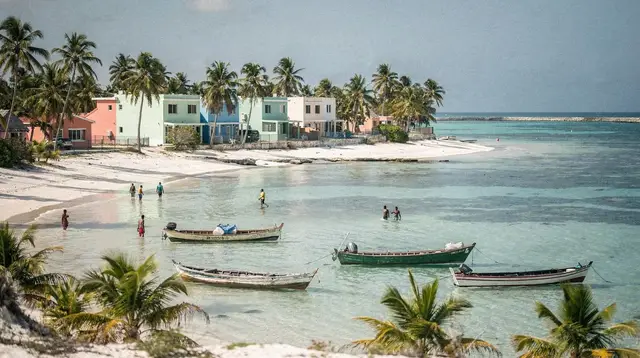
Sargassum is a brown seaweed that can wash up in large mats on Punta Cana’s east-facing beaches, and it is one of the least predictable parts of a summer visit. Arrivals are heaviest, on average, from April through October, but the amount varies enormously from one year to the next and even from one week to the next within the same season. Some summers bring long stretches of clear sand; others bring beaches that need daily raking by resort staff to stay usable.
No operator, hotel or guide can promise a sargassum-free beach during this window, and any page that does is not being straight with you. What resorts in Bavaro and Punta Cana proper generally do is clear their own stretch of sand each morning, which keeps the immediate swim area usable even in a heavier year, though the effect is more visible cosmetically along the shoreline further from the cleared zone. If beach time is the main point of your trip and sargassum is a dealbreaker for you personally, it is worth reading is sargassum a dealbreaker before you book, and comparing the situation against best beaches in Punta Cana for which stretches tend to fare better.
What still works well in summer
Plenty of the region’s excursions are largely unaffected by the wet-season pattern, especially anything land-based that can work around a short afternoon shower rather than depend on calm seas.
Buggy and ATV tours through the countryside run on schedule through most of the season, since a short downpour is, if anything, part of the experience rather than a reason to cancel — see a countryside buggy tour with river and cave stops for one of the more popular versions. Cultural and countryside excursions that visit local farms, villages and cacao or coffee stops also continue largely as normal; a guided countryside safari into rural communities is a good example of an activity that does not depend on flat, sunny seas.
Water-based activities close to shore, including a dolphin encounter at a marine park, generally continue unless there is an active storm nearby, since these operate in protected, controlled pools rather than open water. Parasailing is more weather-sensitive, since it depends on wind and sea conditions on the day; a parasailing session over Bavaro’s coastline is worth booking with an operator that clearly states its weather-cancellation and rebooking policy.
Boat trips to Isla Saona and Isla Catalina run through summer as well, but they are the category most likely to be adjusted or postponed on a day with rough seas or an approaching system, more so than any land-based tour.
| Activity type | Summer reliability | Notes |
|---|---|---|
| Buggy and ATV tours | High | Short showers are part of the route, rarely cancel a full tour |
| Cultural and countryside tours | High | Indoor and covered stops reduce weather exposure |
| Marine park / dolphin activities | High | Controlled pools, less exposed to open-sea conditions |
| Parasailing | Moderate | Depends on daily wind and sea state |
| Catamaran and island boat trips | Moderate to lower on storm days | First category postponed when seas are rough |
| Diving and snorkeling | Moderate | Visibility and safety depend on conditions that day |
Prices and exact schedules for any of these shift by date and operator, so treat the ranges here as a starting point and check the current listing on GetYourGuide or Viator for the day you have in mind rather than a fixed number.
The honest trade-off
Summer’s real upside is not marketing spin: fewer crowds at popular sites, generally easier availability, and often lower prices on both accommodation and some excursions compared with the December-to-April peak. If your priority is avoiding lines at attractions and paying less for a similar itinerary, this season delivers that.
What it asks in return is flexibility. Build a day or two of slack into any multi-day plan rather than scheduling boat trips back to back, since a rescheduled excursion needs somewhere to land. Keep an eye on the forecast in the days before any water-based activity. And go in accepting that the beach photo you see online from a dry-season trip may not match what is on the sand the week you arrive — some weeks it will, some weeks it will not, and nobody can tell you which in advance. If a beach-focused holiday with more certainty matters more to you than saving on price, the December-to-April window described in Punta Cana in winter removes most of this uncertainty, at the cost of more people and higher rates.
For travelers planning a longer stay across this period, rainy season five days lays out an itinerary built specifically around the pattern of short afternoon showers, and rainy day Punta Cana covers what to do on the days a downpour runs longer than usual. For getting between hotel areas and excursion pickup points regardless of the weather, see getting around Punta Cana: taxis, Uber and guaguas.
How summer looks different across the region
Punta Cana is often used as shorthand for the whole east-coast tourist zone, but the five areas that make up this guide do not experience summer identically, and it is worth knowing which one your hotel sits in before you plan around the weather.
Bavaro, Punta Cana proper and Cap Cana form the main hotel belt and sit closest to Punta Cana International Airport, generally 15 to 40 minutes away depending on the resort. Their east-facing beaches are also the stretch most exposed to sargassum arrivals between April and October, so this is the zone where the seaweed question comes up most. Further north, Macao, Uvero Alto and the inland town of Higuey run 40 to 60 minutes from the airport; the coastline here is more open and less built up, and Higuey itself, being inland, is unaffected by sargassum even in a heavy year, which makes a cultural or countryside day trip a reasonable fallback when the coast is having a bad beach week.
South of the hotel zone, La Romana and Bayahibe are the gateway to Isla Saona and Isla Catalina, and this is the region where the moderate-to-lower summer reliability of boat excursions matters most directly — see Bayahibe day trip from Punta Cana and Saona vs Catalina: which island for how the two islands compare when seas are less predictable.
To the northwest, Samana and Miches see the same wet-season rainfall pattern as the rest of the coast, but summer is the off-season for the region’s best-known draw: humpback whales pass through the Bay of Samana only from roughly mid-January to the end of March, so a summer trip north should be planned around Los Haitises boat tours and Las Terrenas buggy and ATV tours rather than whale watching. Finally, Santo Domingo and Boca Chica to the west sit outside the main hurricane-exposed hotel corridor and have no beach-facing sargassum concern in the same way, which is one reason a Santo Domingo day trip from Punta Cana is often suggested as a rainy-week alternative that does not depend on calm seas or a clear beach.
Practical details that matter more in summer
A few logistics apply year-round but are worth restating for a summer trip specifically, since heat, humidity and the odd downpour change how much they matter day to day. The free online e-Ticket form is mandatory for every visitor on both arrival and departure regardless of season, and it is worth filling out on a hotel Wi-Fi connection rather than trying to complete it on a phone at the airport during a shower. Keep a dry bag or waterproof pouch for your passport and any printed confirmations on days you have a boat excursion booked, since summer’s short, heavy showers are exactly the kind of weather that catches paper documents unprepared.
On money, the local currency is the Dominican peso (DOP, RD$), not the euro, though US dollars are widely accepted at hotels, tour desks and excursion counters; change is typically given back in pesos. Restaurant bills normally already include an 18% ITBIS tax plus a 10% service charge, sometimes labeled “ley,” so factor that into a summer trip’s budget the same way you would in high season — the lower prices that make summer appealing apply to room rates and some tour costs, not to how local tax and service charges are calculated.
Tap water is not safe to drink at any time of year, and staying hydrated matters more in the summer humidity, so stick to bottled or filtered water even at the hotel. The region runs on Atlantic Standard Time (UTC-4) year-round with no clock changes, and power outlets are the standard 110-120V American type A/B, so no adapter is needed for US or Canadian plugs. If anything goes wrong, the emergency number nationwide is 911.
Punta Cana in summer: frequently asked questions
Does it rain every day in Punta Cana in summer?
No. Rain is usually a short, heavy shower in the afternoon or evening rather than an all-day event, and mornings are frequently clear. Some days stay dry, others bring more than one burst of rain, and it varies week to week.
How dangerous is hurricane season in Punta Cana?
Punta Cana is not hit by a hurricane every year, but the risk is real from June to November and highest from August to October. Storms are tracked days in advance, and resorts and tour operators follow standard evacuation and closure procedures when one approaches.
Will the beach have sargassum when I visit?
It might, and there is no way to guarantee it will not. Sargassum arrival on Punta Cana’s east coast beaches is variable and hard to predict more than a few days ahead, though it tends to be more common from April to October than in winter.
Is it cheaper to visit Punta Cana in summer?
Generally yes. Summer falls outside the December-to-April high season, so hotel rates and some excursion prices are often lower and availability is easier, though exact pricing depends on the operator and the specific dates.
Are excursions cancelled because of rain or storms in summer?
Boat trips, catamaran tours and water sports can be postponed or cancelled if a tropical system or rough seas make it unsafe, and operators typically rebook or refund in that case. Land-based tours like buggy rides or cultural visits are less often affected by ordinary afternoon rain.
What should I pack for Punta Cana in summer?
A light rain jacket or poncho, quick-dry clothing, reef-safe sunscreen, and a dry bag for phones and documents on boat excursions are all worth the extra space in your suitcase.
Is it still warm enough to swim and snorkel in summer?
Yes. Water and air temperatures stay in the tropical range year-round, so swimming, snorkeling and most water activities run as normal outside of active storm days.
Seasonal tours and activities on GetYourGuide
Verified deep-linked GetYourGuide tours. Book through these links and we earn a small commission at no cost to you.
GetYourGuide does not provide a product photo for this activity — the image shows the meeting point, photographed by us.