Buggy vs ATV vs Polaris: which to book
What is the difference between a buggy, an ATV and a Polaris in Punta Cana?
A buggy is a two-seat off-road vehicle you drive yourself, with a passenger beside you. An ATV (quad) is a single-rider machine, more agile but less comfortable over distance. A Polaris is a wider side-by-side that seats several people together, built for stability rather than solo handling. All three run short off-road routes around Macao Beach and Bavaro, not boat trips.
Three vehicles, one stretch of dirt road
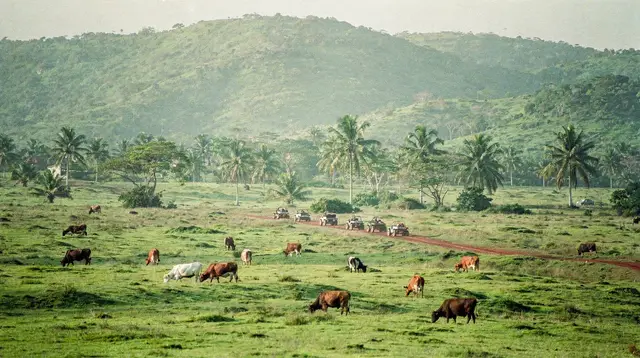
Around Macao Beach and the countryside behind Bavaro, three off-road formats get sold under overlapping names: the buggy, the ATV (also called a quad), and the Polaris (a side-by-side, sometimes badged RZR or UTV). They cover the same rough terrain, the same red-dirt trails, and often the same half-day window, but the vehicle changes who is comfortable, who is driving, and how many people ride together. If you are choosing between listings on GetYourGuide or Viator and the photos all look similar, the vehicle is the detail that actually separates them.
This page stays on land. It does not cover the boat trips to Isla Saona or Isla Catalina, which are a different kind of day out departing from Bayahibe, not from the Punta Cana hotel zone. If you are trying to decide between a beach day on the water and a dirt-trail morning, read that comparison separately; this one is about buggy vs ATV vs Polaris only.
The buggy: drive it yourself, bring a passenger
A buggy in this context is a small, open, two-seat off-road vehicle: pedals, a steering wheel, a seatbelt for driver and passenger, and a roll bar overhead. One adult drives, one rides beside them. It handles closer to a compact car than to a motorbike, which is why operators often present it as the easiest option for someone who has never driven off-road before.
What a buggy is good at:
- Manoeuvrability. Buggies are narrow enough to take tighter trail sections and sharp turns without much drama, and the seated, car-like position makes cornering feel intuitive.
- A shared experience for two. Couples or a parent-and-teen pairing get to do the trail together in one vehicle, rather than side by side on separate machines.
- A gentler learning curve. Pedals and a wheel are familiar; balance is not part of the equation the way it is on an ATV.
What it is not: spacious. A buggy carries two, not three or four, and legroom and storage are limited. If your group has more than two people who want off-road time, you are either renting two buggies or looking at a Polaris instead.
The ATV: a solo quad, more agile, less comfort
An ATV, or quad, is a single-rider machine with handlebars instead of a wheel, an engine between the rider’s knees, and no seatbelt or roll cage. It is the format most associated with the classic “quad biking” image, and it rewards active, hands-on riding more than any of the other two options.
Where an ATV pulls ahead:
- Agility. A quad is light and narrow, which makes it quick to turn and easy to place precisely on a trail, mud puddle or incline.
- A more physical, solo feel. Riders control balance and throttle themselves, closer to riding a dirt bike than driving a car, which some travellers specifically want.
Where it falls short for some travellers:
- Comfort over distance. No seatbelt, no roof, and a standing or crouched riding position over rough ground tires out a rider faster than sitting in a buggy or Polaris.
- One rider per machine. Most operators around Bavaro and Macao rent ATVs as single-seat vehicles; a couple wanting to ride together needs two ATVs, not one shared quad.
- A steeper first attempt. Balance and throttle control sit entirely with the rider, so a first-timer feels the learning curve more than they would in a buggy or Polaris.
An ATV suits a traveller after a more physical, hands-on ride and who is comfortable riding solo, more than it suits a group trying to stay together in one vehicle.
The Polaris: a side-by-side built for groups and stability
The Polaris (or generic “side-by-side,” sometimes marketed as a UTV or RZR) looks like a scaled-up buggy: wider frame, several seats in a row or two rows, full seatbelts, a roll cage, and one driver at the wheel. It trades some of the buggy’s nimbleness for stability and capacity.
Strengths of the Polaris format:
- Capacity. Several people, often three to four, ride together in one vehicle, which suits families or small groups who would rather not split across multiple machines.
- Stability over rough ground. The wider stance and full cage make it feel steadier on uneven trail sections than a buggy or ATV, which matters for nervous first-timers or older travellers.
- One driver, several passengers. Only one person needs to be comfortable behind the wheel; everyone else just rides.
Trade-off: a Polaris is less nimble than a buggy or an ATV on tight trail sections, and the ride tends to feel calmer rather than sporty. If the appeal of an off-road excursion is the thrill of driving yourself through tight turns, a Polaris is the least exciting of the three. If the goal is bringing a family or a small group along without splitting into separate vehicles, it is usually the practical choice.
Side-by-side comparison
| Buggy | ATV (quad) | Polaris (side-by-side) | |
|---|---|---|---|
| Riders per vehicle | 2 (driver + passenger) | 1 | Typically 3-4 |
| Who drives | One adult, seated, wheel and pedals | The rider, handlebars, standing/crouched | One adult, seated, wheel and pedals |
| Comfort | Seatbelt, roof bar, moderate comfort | No seatbelt, most physical, tires faster | Seatbelt, roll cage, most comfortable |
| Manoeuvrability | High | Highest | Lower, wider turning |
| Best suited to | Couples, first-timers driving together | Solo riders wanting a hands-on, physical ride | Families, small groups, less confident riders |
| Typical setting | Trails near Macao Beach and Bavaro countryside | Trails near Macao Beach and Bavaro countryside | Trails near Macao Beach and Bavaro countryside |
Prices, exact routes and included stops (a cenote, a beach break, a cacao farm) vary by operator and by season, so treat this table as a way to narrow the format, not as the final word on cost. Check the current listing on GetYourGuide or Viator for the details of a specific date.
What all three have in common
However you choose, keep these points in mind for any of the three:
- These are land excursions, not boat trips. They run on dirt trails around Macao Beach and the countryside behind Bavaro, typically a few hours long. They are unrelated to the Saona or Catalina island excursions, which depart from Bayahibe by boat.
- A driving licence is usually required for whoever drives. Passengers on a buggy or Polaris do not need one; the rider of an ATV does, since there is no separate passenger seat.
- Mud and dust are part of the experience. Wear clothes and shoes you do not mind getting dirty, and expect operators to offer bandanas or goggles.
- Group size shapes the right pick more than thrill-seeking does. A couple leans toward a buggy, a solo traveller after a physical ride leans toward an ATV, and a family or small group leans toward a Polaris.
- Combined routes exist. Some tours pair the buggy or ATV leg with a stop at a cenote, Macao Beach, or a countryside farm; read what is included rather than assuming.
Booking by vehicle type
a self-driven buggy route through the countryside near Punta Cana is a straightforward way to try the two-seat format without a long transfer. For a route built around a Macao Beach and cenote stop combined with the buggy ride, that pairing covers both the trail and a swim in one outing. Groups wanting a longer or more intense trail day can look at a longer, more demanding buggy circuit departing from Punta Cana, while travellers who want the buggy format combined with a jungle setting and a stop at an animal sanctuary might prefer a guided jungle buggy ride that includes a stop at Monkeyland. None of these listings lock in an exact price or duration on this page; the current figures sit on the operator’s own tour page.
Where this fits in a Punta Cana trip
A buggy, ATV or Polaris morning is one of the easier half-day excursions to slot into a longer stay, since it does not require the long transfer that a day trip to Bayahibe or Santo Domingo does. It pairs naturally with other short land excursions such as ziplines or horseback riding on a different day, and works well as an activity for families travelling with kids when the Polaris option is chosen over the ATV.
If you are travelling as a couple or solo and want to compare booking through a hotel tour desk against booking the same excursion online in advance, that trade-off is covered on its own page rather than repeated here. The same goes for weighing a private tour against a group departure: worth reading before you commit to a specific time slot, since private tours and group excursions differ in more than price. For a wider list of common first-trip missteps around excursions in general, see Punta Cana travel mistakes to avoid.
Base decisions on where you are staying, too: an excursion departing from Bavaro or Cap Cana usually means a shorter transfer than one booked from further-flung Uvero Alto, since Macao Beach and the countryside trailheads sit closer to the main hotel zone. Check the pickup details on the listing rather than assuming a fixed transfer time.
Buggy, ATV or Polaris: which to book
Is a buggy or an ATV harder to drive?
An ATV asks more of the rider physically, since balance and throttle control sit on one person with no seatbelt or roll cage. A buggy is closer to driving a small car: pedals, a seatbelt, a roof bar, and a passenger seat, which makes it more forgiving for a first-timer.
Can two people ride one ATV?
Most operators around Punta Cana rent ATVs as single-rider machines and require a second ATV for a second adult, rather than a passenger seat. A buggy or a Polaris is the option built to carry a passenger from the start.
Is a Polaris better for families with children?
A Polaris side-by-side generally suits families and mixed-age groups better than a solo ATV, since it seats several passengers with seatbelts and a roll cage. Minimum age and height rules still apply and vary by operator, so check the listing before booking.
Do I need a driving licence to drive a buggy or ATV in Punta Cana?
Operators commonly ask for a valid driving licence for whoever takes the wheel of a buggy, ATV or Polaris. Passengers do not need one. Confirm the exact requirement on the tour listing, since policies differ between operators.
Which is faster or more of a thrill: buggy, ATV or Polaris?
An ATV tends to feel the most exposed and nimble on tight trail sections, a buggy sits in between with more protection and similar handling, and a Polaris trades top-end thrill for a smoother, more stable ride across rougher ground. None of the three is a high-speed activity; routes are paced for mixed-ability groups.
Do these tours include Macao Beach or a stop for a swim?
Many buggy, ATV and Polaris routes near Bavaro and Punta Cana pass Macao Beach or a similar stop, sometimes paired with a cenote or a cacao farm. What is included changes by operator and season, so read the listing rather than assuming a beach stop is guaranteed.
Are buggy, ATV and Polaris tours the same as a boat trip to Saona or Catalina?
No. Buggy, ATV and Polaris excursions are land-based, off-road outings around Macao Beach and the countryside near Bavaro, lasting a few hours. Saona and Catalina are boat excursions departing from Bayahibe, a separate day out on the water, not on dirt trails.
How much do buggy, ATV or Polaris tours cost in Punta Cana?
Prices vary by vehicle type, group size, route length and season, and are typically listed in USD by the operator. Check the GetYourGuide or Viator listing for the current price and what is included before booking.
Punta Cana tours worth comparing on GetYourGuide
Verified deep-linked GetYourGuide tours. Book through these links and we earn a small commission at no cost to you.
GetYourGuide does not provide a product photo for this activity — the image shows the meeting point, photographed by us.