Macao Beach is public, and that changes what you should expect
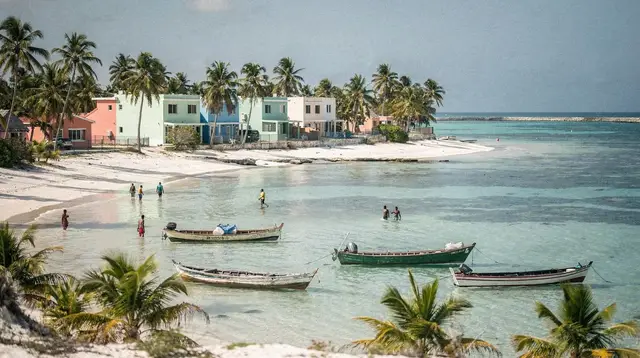
The first thing to sort out about Macao is what it isn’t. It isn’t a resort beach, it isn’t reserved for guests of any hotel, and it isn’t a stretch of sand with sunbeds, towel service and a swim-up bar within reach. Macao Beach is a public beach on the Atlantic-facing coast north of the main Bavaro and Cap Cana hotel strip, and it functions more like a working surf beach than a curated resort amenity. Vendors set up along the access road, surf schools operate out of simple shacks, and buggy and ATV convoys use the beach as a stop rather than a destination in itself.
That distinction matters because a lot of travelers hear “beach near Punta Cana” and picture the calm, reef-protected water in front of their hotel. Macao is a different kind of place. The surf here is real, sometimes rough, and the appeal is physical: riding a buggy or ATV along the coastal trails, taking a surf lesson, or stopping for a swim as part of a longer excursion rather than spending a full day parked under a palapa.
Where Macao sits, and how it relates to Uvero Alto and Higuey
Macao Beach belongs to the broader Uvero Alto and Higuey area, north of the dense hotel zone around Bavaro and Cap Cana. It isn’t a hotel sector itself; the all-inclusive properties in this part of the coast are concentrated a bit further along in Uvero Alto, and if you’re comparing where to stay, that’s the page with the hotel detail. Macao is the coastline and the activity hub, not a lodging area.
Inland from the beach, the town of Higuey is a different kind of place again: a working Dominican city built around the Basilica of Our Lady of Altagracia, cattle country and small farms, not a beach town at all. Some buggy and safari routes that stop at Macao Beach also swing through countryside near Higuey, which is why the two names often show up on the same tour itinerary even though they cover very different terrain. For the basilica, the market and the cultural side of that town, the Higuey destination page is the one to read.
How far is it from a Bavaro or Cap Cana hotel
There’s no single fixed number here, because it depends on which hotel you’re starting from and the road conditions on the day. As a rough guide, treat the drive from most Bavaro or Cap Cana properties to Macao Beach as a genuine excursion, generally somewhere in the 30 to 60 minute range by road, not a quick hop down the coast. If your hotel sits toward the northern edge of Bavaro, closer to Uvero Alto already, the trip will be shorter; if you’re deep in Cap Cana to the south, expect the longer end of that range. Traffic on the main coastal road and the condition of unpaved sections near the beach itself both add variability, so treat any tour operator’s stated transfer time as an estimate rather than a guarantee.
For airport-side context, Punta Cana International Airport sits well south of Macao, and getting around the wider zone generally means taxis, private transfers or organized tours rather than public transit, since there’s no train network in this part of the Dominican Republic.
What people actually come to Macao Beach to do
Surfing
Macao has some of the more consistent surf on this stretch of coast, which is why it has its own small cluster of surf schools and board rental stands rather than the flat, sheltered water typical of the main resort beaches. If riding a wave is part of your trip, this is a more realistic place to look than the beach in front of your hotel.
Buggy and ATV tours
This is the activity Macao is best known for. Tour operators run buggy and ATV convoys out along dirt roads, past small farms and through patches of countryside, usually finishing with a stop at the beach itself for a swim or a drink. It’s a dusty, physical, genuinely outdoor way to spend a few hours, closer to an adventure park than a beach day.
Horseback riding and countryside stops
Some operators pair a Macao Beach stop with horseback riding sessions along the coast or through nearby farmland, which suits travelers who want a slower, more scenic version of the same “leave the resort” idea.
Water sports beyond surfing
Beyond surf lessons, a handful of water sports operators work this stretch of coast, though the offering here is smaller and more surf-oriented than the calmer, organized water sports setups you’ll find on the beaches directly in front of Bavaro resorts.
What Macao Beach is not good for
It’s worth being direct about the trade-offs. Macao isn’t the place for a quiet, shaded, swim-and-read kind of beach day; that experience is better found on the calmer beaches inside the main resort strip. There’s no dense line of beach clubs or loungers here, and the surf conditions that make it interesting for board sports also make it less relaxing for small children or anyone who wants flat, still water. If your priority is a classic postcard swim beach, this isn’t the stop, and it’s worth reading about the best beaches in Punta Cana more broadly before building a day around Macao specifically.
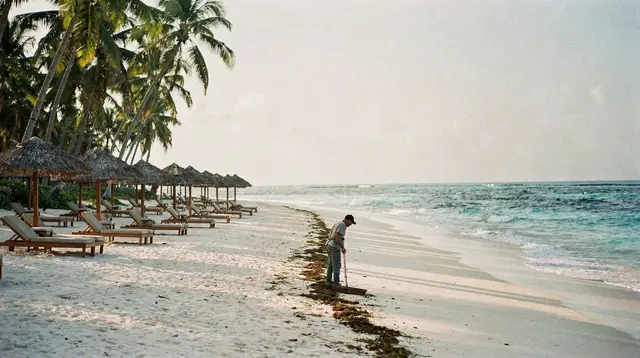
Seasonal seaweed is also a factor to weigh honestly. Like other beaches on this east-facing coast, Macao can see sargassum wash ashore, mainly between April and October and unevenly from year to year; see the sargassum season guide if you’re planning a visit in that window and want to know what to expect before you book.
When to visit Macao Beach
Timing shapes a Macao trip more than it does a resort beach day, mostly because the appeal here is outdoor and weather-dependent rather than a lounge chair under a palapa. The Dominican Republic runs a tropical climate year-round, generally 26-31°C, but the two halves of the year feel different on the ground. December through April is the drier, less humid stretch, and it also tends to mean firmer dirt roads for buggy and ATV routes, which matters on a trip built around driving through countryside to reach the coast.
May through November is wetter, and hurricane season runs June through November, with the highest risk concentrated in August, September and October; see the hurricane season guide if you’re booking an outdoor excursion during that window, since heavy rain can affect both the roads inland and conditions at the beach itself. For a broader look at how the seasons compare across the whole region, the best time to visit Punta Cana guide covers the trade-offs beyond just Macao.
Sargassum, covered above, adds another seasonal wrinkle specific to this coast, mainly April through October. None of this rules Macao out at any particular time of year, since most visits are built around a tour rather than hours spent lying on the sand, but it’s worth checking recent conditions before locking in a beach-heavy itinerary.
Practical details before you go
A few practical points are easy to overlook when a Macao excursion gets folded into a resort stay. The currency is the Dominican peso (DOP, often written RD$), not the euro; US dollars are widely accepted at tour operators and beachside vendors, but change is typically handed back in pesos, so it helps to carry a mix of small bills. Restaurant bills, where they apply on a longer safari-style day that includes a meal, normally carry an 18% ITBIS tax plus a 10% service charge already built in, so a quoted menu price usually isn’t the final number. The money, tipping and taxes guide and the piece on pesos or dollars go through this in more detail.
Tap water isn’t safe to drink anywhere in this part of the Dominican Republic, Macao included, so stick to bottled or purified water on excursion days; the drinking water guide covers what that means in practice for meals and ice. Driving is on the right, there’s no passenger rail network connecting Macao to the hotel zone, and getting there independently means a taxi, a private transfer or a booked tour rather than a fixed-schedule bus. Electrical outlets follow the US standard, 110-120V with type A/B plugs, which rarely matters for a day trip but is worth knowing if a tour asks you to charge a GoPro or phone in a shared vehicle beforehand.
On safety and entry basics: most visitors from the EU, UK, US, Canada and much of South America don’t need a visa for a standard tourist stay, and the mandatory e-Ticket form has to be completed online before arrival and departure regardless of where in the country you’re headed. None of that is specific to Macao, but it’s part of the same trip, and the safety overview and entry rules guide are worth reading once rather than per-destination.
Pairing Macao with the rest of a trip
Macao rarely works as a stand-alone day out from a hotel that’s also trying to fit in a catamaran trip, a Saona Island excursion and time at the resort pool. It’s worth thinking about where it sits in a broader itinerary rather than booking it in isolation. Travelers building a longer, activity-heavy stay sometimes group it with other adventure days; the adventure week itinerary built around buggies, ziplines and caves is one way to see how a Macao-style excursion fits alongside other outdoor days without overloading a single stay. For a first visit trying to fit everything in without a rental car, the one week without a car itinerary also shows where a tour like this typically lands in a week that leans on organized transport rather than independent driving.
If the countryside and buggy side of Macao appeals more than the beach itself, it’s also worth comparing notes with similar routes elsewhere on this coast; Miches buggy and ATV tours and Samana buggy and ATV tours cover comparable terrain further north, for travelers weighing which region’s version of the excursion to book, or splitting a longer stay between the hotel zone and the north coast.
Booking a Macao Beach excursion
Because most of what happens at Macao is organized through tour operators rather than walk-up access, booking ahead through GetYourGuide or Viator is the normal way to visit, and it’s also how you get a transfer included from your hotel. Prices vary by group size, whether the vehicle is shared or private, and what’s bundled in (lunch, drinks, a cave stop, a river cruise), so treat any number below as a starting range rather than a fixed rate, and check the listing for the day’s actual price.
a self-drive ATV route that finishes with time at Macao Beach is the most straightforward version of the classic excursion, and a good baseline for comparing prices. For a private group, a private ATV adventure with your own vehicles and guide trades a higher price for more flexibility and less waiting around at stops.
If you’d rather ride in a shared buggy convoy instead of driving an ATV yourself, a buggy tour that runs along the coast to Macao Beach covers similar ground with a different vehicle and is often priced closer to entry level. For something that pairs the beach with a swim stop in a cave and a taste of local food, the Mundo Taino tour combining a blue cave swim with Macao Beach is a longer, more varied day than a straight buggy or ATV loop.
Full-day safari-style tours are another common way to see Macao without organizing it yourself; they typically combine a countryside route, a stop near Higuey, and time on the beach, with lunch included. Whichever option you book, confirm the pickup zone against your hotel’s location in Bavaro, Cap Cana or Uvero Alto before booking, since transfer times vary as described above.
Quick comparison: ways to experience Macao Beach
| Activity | Typical format | Roughly best for |
|---|---|---|
| Surfing / surf lessons | Independent or with a local school on-site | Surfers and beginners wanting real waves |
| Buggy tour | Shared convoy, guided route with a beach stop | Groups wanting an active half-day |
| ATV tour (self-drive) | Shared or private, drive your own quad | Travelers who want more control over pace |
| Countryside/safari combo | Full-day, includes Macao plus inland stops | Travelers who also want a taste of rural life near Higuey |
| Cave and beach combo | Half-day, swim stop plus Macao Beach | Travelers who want variety beyond just the beach |
Macao Beach: frequently asked questions
Is Macao Beach the same as the beaches at my Bavaro hotel?
No. Macao Beach is a public beach, open to anyone, while the beach in front of a Bavaro or Punta Cana resort is generally reserved for guests. Macao has open surf, a public access road and vendors, not sunbeds and beach service.
Can I swim calmly at Macao Beach?
You can swim, but the surf is often rougher here than on the calmer, reef-protected stretches in front of the Bavaro hotels. Macao is better understood as a surf and activity beach than a lounge-and-swim beach.
How do I get to Macao Beach from my hotel?
Most visitors reach Macao as part of a booked buggy, ATV or safari tour that includes transport from Bavaro or Cap Cana hotels. Independent taxi or transfer is possible but not something to plan around a fixed price without checking first.
How far is Macao Beach from Bavaro or Cap Cana?
It’s a real drive, not a stroll down the coast; allow at least 30 to 60 minutes by road from most Bavaro or Cap Cana hotels, more with traffic. It sits north of the main hotel strip, closer to the Uvero Alto sector.
Do I need to book a tour to visit Macao Beach?
You don’t strictly need one, but most of what makes Macao worth the trip, buggy routes, ATV trails and organized beach stops, is delivered through a booked excursion. Check GetYourGuide or Viator for current departure points and prices rather than expecting a fixed walk-up rate.
Is Macao Beach good for beginner surfers?
It’s a working surf beach with real waves and local surf schools rather than a flat, sheltered bay. Beginners can take lessons here, but it isn’t a calm, wade-in swimming spot.
What should I bring to Macao Beach?
Cash in pesos or dollars for vendors, sun protection, and closed shoes if you’re arriving by buggy or ATV since the approach roads can be dusty or muddy. Water shoes help with the rockier patches of shoreline.
Is Macao Beach affected by sargassum?
Like other stretches of the east coast, Macao can see sargassum seaweed wash up, mainly from April to October, in amounts that vary year to year. It’s worth checking recent reports before planning a beach-focused visit in that window.