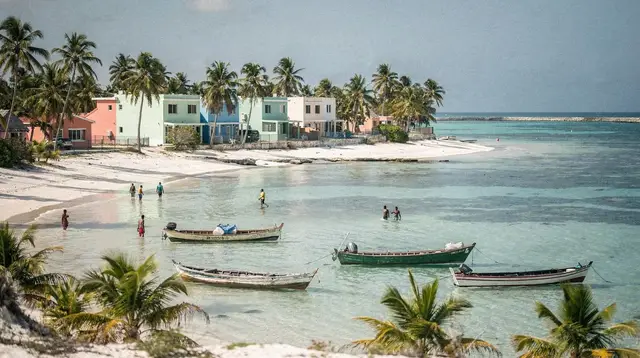
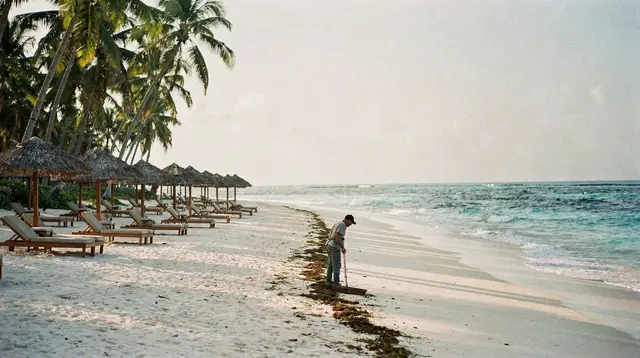
A different sector from Bavaro, not an extension of it
Punta Cana works as an umbrella name for the whole tourist coastline, but the sectors inside it are not interchangeable. Bavaro is the dense hotel strip most first-time visitors picture: long beaches, back-to-back resorts, cocktail-bar density. Cap Cana sits further south, past the airport, and is built around a different set of things entirely: a marina lined with restaurants and yachts, several golf courses, gated residential resorts, and a nature park carved into the limestone that most visitors come specifically to see. If you booked a hotel in Bavaro expecting Cap Cana’s quiet, or the other way around, you booked the wrong sector — see Punta Cana vs Bavaro vs Cap Cana vs Uvero Alto before you commit to either.
That distinction matters for a second, more specific reason: Cap Cana is where Hoyo Azul is, and Hoyo Azul is regularly mixed up with a Mexican cenote. It isn’t one. The confusion is understandable — a deep, round, turquoise sinkhole surrounded by jungle looks a lot like the cenotes of the Yucatan Peninsula — but this one is on the eastern tip of the Dominican Republic, inside Scape Park, in Cap Cana. Nothing about it is Mexican, and no Yucatan tour company or itinerary applies here. If a page, ad or friend’s photo mentions cenotes and Punta Cana in the same sentence, it means this cenote.
Scape Park and Hoyo Azul, the main reason people come here
Scape Park is a private nature park built around a network of caves and one large, striking cenote. Hoyo Azul is a deep, spring-fed sinkhole with vivid blue-green water, reached by a short walk or a buggy ride from the park’s zip-line and cave circuit. Most visitors combine the cenote with at least one other section of the park — zip lines strung across the forest canopy, a cave walk, sometimes a mud-bath area — rather than treating Hoyo Azul as a stand-alone stop.
Plan on roughly half a day for a Scape Park visit that includes the cenote plus one or two other activities. That’s a working estimate, not a schedule: exact opening times, how long each zip-line or cave section takes, and how crowded the cenote platform gets on a given morning all vary, so check the current hours and included activities on your booking page rather than planning around a fixed itinerary. The same applies to price — Scape Park entry and combined tours are sold at different tiers depending on what’s included, and the number that matters is whatever shows on the day you book, not a figure fixed months in advance.
a Scape Park pass covering the Hoyo Azul cenote, zip lines and cave sections is the most direct way to see the park’s main draws in one visit. For a version that pairs the cenote with time on the water, a combined catamaran, snorkeling and Hoyo Azul day saves you organizing two separate outings, though it also means a longer day with less flexibility at each stop. If your group wants a livelier, adults-focused version of the park’s caves, a cave party tour with a mud bath and cocktails uses the same cave network for a different kind of afternoon — read what’s actually included before booking it as a swap for the standard cenote visit, since it isn’t one.
For a full walkthrough of the park’s layout, what each activity involves and what past visitors have flagged as worth skipping, see Hoyo Azul and Scape Park guide. If cenotes and swimming spots more broadly interest you, Punta Cana cenotes, caves and waterfalls rounds up the other options across the region, most of which are considerably further away than Cap Cana’s.
Marina, restaurants and golf: what the sector is actually built around
Outside Scape Park, Cap Cana’s identity is set by its marina. Puntacana’s original beach-resort model is about the beach itself; Cap Cana’s is about the water in a different sense — sport-fishing boats, private yachts and the restaurants lining the marina walkway. It’s a pleasant place for a dinner or a drink even without a boat, and it functions as the departure point for some snorkeling and catamaran trips rather than every hotel needing its own pier.
Golf is the other pillar. Cap Cana is home to several courses, including ones associated with the Punta Espada name, set along dramatic coastal cliffs rather than flat resort grounds. If golf is a real part of your trip planning rather than an afterthought, golf in Punta Cana and Casa de Campo compares Cap Cana’s courses with the well-known Casa de Campo courses further west near La Romana.
None of this means Cap Cana lacks beach access — its resorts have their own stretches of sand — but the sector wasn’t built around a long public beach promenade the way Bavaro was. If beach time, beach bars and walkable beachfront density are what you’re optimizing for, Bavaro remains the better match; things to do in Bavaro covers that side of the coin. Cap Cana is the better match if a marina dinner, a golf round, or a nature excursion with a fixed destination matters more to you than beach density.
Who Cap Cana actually suits
Cap Cana isn’t a worse or better version of Bavaro — it’s built for a different kind of day. It suits:
- Couples wanting a quieter, higher-end base without Bavaro’s density of hotels and beach vendors
- Golfers treating a round as a core part of the trip, not a side activity
- Boat travelers using the marina as a departure point for snorkeling or fishing
- Anyone whose main reason for coming to this side of the island is Hoyo Azul and Scape Park
It suits these groups less well:
- Families wanting a long, walkable public beach with plenty of beachfront restaurants — Bavaro fits that brief better
- Budget travelers, since Cap Cana’s resorts and dining sit at the pricier end of the region
- Anyone expecting Mexican-style cenote hopping — this is one cenote inside one park, not a network of sites to string together in a day
For a broader look at how Cap Cana compares with the other sectors that make up the Punta Cana and Bavaro area, things to do in Cap Cana lists activities specific to this sector, and is Punta Cana safe for tourists covers general safety questions that apply across the whole tourist zone, Cap Cana included.
Getting to Cap Cana and around it
Cap Cana sits close to Punta Cana International Airport (PUJ), typically a 15 to 30 minute drive depending on which part of the sector you’re headed to — comparable to, or slightly shorter than, the drive to most Bavaro hotels, and considerably shorter than the 40 to 60 minutes it takes to reach Uvero Alto further north. For the general rundown on transfers, taxis and what to expect landing at PUJ, see from PUJ airport to your hotel.
Within Cap Cana and between it and neighboring sectors, private transfers and fixed-rate taxis are the norm; there’s no train network anywhere in the region. If you’re staying in Bavaro or Punta Cana proper and booking a day trip out to Cap Cana, most tour operators include round-trip hotel transfers as part of the excursion — confirm this on your specific booking rather than assuming it.
Day-tripping further afield from a Cap Cana base works the same way it does from anywhere else on this coast: Bayahibe day trip from Punta Cana covers the route south to Isla Saona’s departure port, and Santo Domingo day trip from Punta Cana covers the considerably longer 2.5 to 3 hour drive west to the capital’s colonial zone — not a trip to squeeze into half a day from this side of the island.
Money, tipping and the practical basics
Cap Cana runs on the same currency and rules as the rest of the Dominican Republic, but it’s worth knowing before you’re standing at a marina restaurant or a golf clubhouse bar. The official currency is the Dominican peso (DOP, written RD$) — not the euro — though US dollars are widely accepted at hotels, excursion counters and most restaurants in this sector; change is typically handed back in pesos, so carrying a mix of both avoids awkward math at checkout. Restaurant bills, including the marina’s higher-end spots, normally already carry an 18% ITBIS tax plus a 10% service charge (locally called the “ley”) built into the total — check the bill before adding a second tip on top of a charge that’s already there.
A few other basics apply here as everywhere in the country: tap water isn’t safe to drink, so stick to bottled or filtered water even at resort-adjacent restaurants; outlets run on 110-120V with US-style type A/B plugs, which matters if you’re bringing European electronics for a golf-trip laptop or camera gear; and the emergency number nationwide is 911. If you’re flying in through Punta Cana International Airport, the free e-Ticket form is mandatory for both arrival and departure and needs filling out online before you travel — see Dominican Republic e-Ticket and entry rules for the details. For a fuller rundown of pricing norms, tipping expectations and where the taxes show up, money, tipping and taxes in Punta Cana and pesos or dollars in Punta Cana cover the wider picture beyond Cap Cana’s marina and golf courses.
Weather, hurricane season and timing a Cap Cana day
Cap Cana sits in the same tropical climate band as the rest of the coast, with temperatures running roughly 26-31°C year-round, so heat isn’t the deciding factor in when to come — rainfall and storm risk are. The drier stretch from December through April is the more reliable window for a full day combining Scape Park, the marina and a golf round without weather cutting the plan short; May through November is wetter, and June through November is hurricane season, with the highest risk concentrated in August, September and October. None of that rules out a visit in those months, but it’s worth building flexibility into the day rather than locking in a golf tee time or a catamaran departure months ahead. Hurricane season in Punta Cana covers what that risk actually looks like in practice.
Sargassum seaweed is the other seasonal variable, though it affects Cap Cana’s beach coastline more than its marina or Scape Park’s inland cenote — the algae can wash up on stretches of the east coast mainly between April and October, in amounts that vary year to year and aren’t predictable months in advance. Sargassum season in Punta Cana explains where and when it tends to show up. One thing Cap Cana won’t offer regardless of season: whale watching. The humpback whales that pass through the Dominican Republic gather in the Bay of Samana roughly from mid-January to late March, on the opposite side of the country — Samana whale watching tours covers that trip separately, since no boat leaving Cap Cana’s marina reaches the whales.
Where Cap Cana fits in your itinerary
Most visitors don’t base an entire trip around Cap Cana; they stay in Bavaro, Punta Cana proper or Uvero Alto and treat Cap Cana as a half-day or full-day excursion built around Scape Park, plus maybe a marina dinner or a round of golf. That’s a reasonable way to plan it, and it’s reflected in the itineraries that include a Cap Cana stop as one day among several — see five days in Punta Cana or couples and honeymoon seven days for examples of how it’s typically slotted in.
If your priority is a snorkeling day rather than the cenote, a full-day snorkeling trip to Catalina Island departs from the La Romana area rather than Cap Cana’s marina — worth knowing before you assume every boat trip on this coast leaves from the same pier.
Cap Cana at a glance
| Cap Cana | Bavaro | |
|---|---|---|
| Character | Marina, golf, gated resorts | Dense hotel strip, long beaches |
| Main draw | Hoyo Azul and Scape Park | Beach, resort density |
| Distance from PUJ | 15-30 minutes | 15-40 minutes |
| Best suited to | Couples, golfers, boat trips | Families, classic beach resort stays |
| Typical visit length | Half a day to a full day as an excursion | Multi-night resort stay |
Prices, opening hours and exactly what’s included in a given Scape Park ticket change often enough that no fixed number belongs in a guide like this one — check the current terms on your GetYourGuide or Viator listing before you book, and confirm the day’s schedule with your hotel tour desk or tour operator once you’re on the ground.