Things to do in Bavaro
What can you actually do from a Bavaro hotel without a long transfer?
Bavaro's own beach, water sports, buggy and cave tours, golf, parasailing and Indigenous Eyes at the nearby Puntacana Resort are all reachable in well under an hour. Saona, Bayahibe and Samana are region trips, not Bavaro activities, and each needs a much longer transfer first.
Where Bavaro sits inside the Punta Cana zone
Bavaro is the busiest hotel sector on the east coast of the Dominican Republic, a long run of resorts behind wide, cocotier-lined beaches. It’s the part most people picture when they say “Punta Cana,” but it’s worth separating the two: Punta Cana is both the cape at the island’s eastern tip and, loosely, the whole tourist zone that stretches from here up to Uvero Alto. Bavaro is one sector inside that zone, not a synonym for it. For a sweep of everything across the wider area, the things to do in Punta Cana guide covers more ground; this page stays specifically on what’s reachable from a Bavaro hotel without eating half a day in transfers.
Two neighbors get confused with Bavaro constantly, and it’s worth being precise about each. Cap Cana sits south of Bavaro and is a different tier of development: a private marina, several golf courses, and the Scape Park area with the Hoyo Azul cenote. It has its own things to do in Cap Cana page, and if a hotel tour desk is quoting a Cap Cana excursion, expect it to feel and cost differently than anything based in Bavaro itself. Macao is different again — Macao Beach is a public beach known for surf and buggy meet-up points, not a hotel strip, and it has its own things to do in Macao guide. None of these three are interchangeable, and a tour described as leaving from one doesn’t necessarily start close to the others.
Getting to and from Bavaro
Punta Cana International Airport (PUJ) is the airport serving Bavaro, and most hotels here are a 15 to 40 minute drive away, depending on exactly which stretch of the strip the property sits on and how traffic is running. That’s noticeably shorter than the 40 to 60 minutes quoted for hotels further north in Uvero Alto, and it’s one practical reason Bavaro tends to book up first. The airport transfers guide has the detail on fixed-rate taxis and private transfers if you’re arranging your own pickup rather than taking a resort shuttle. On the ground, there’s no train network here — getting around in this part of the country means taxis, private transfers, or the local guaguas for longer, cheaper runs, and cars drive on the right.
Beach time and the resort strip
The main draw of staying in Bavaro is the beach itself: wide sand, calm water inside the reef line, and a long enough strip that even a busy season doesn’t feel packed everywhere at once. Most hotels here control their own stretch of beach, which is different from the fully public setup at Macao Beach further north — expect loungers and beach service rather than the surf-and-vendor atmosphere over there. The best beaches in Punta Cana guide compares Bavaro’s beach against the other sectors if you’re weighing hotel locations before booking rather than after arriving. One honest note: sargassum, the brown seaweed that periodically washes up on this coast, mostly April to October, does reach Bavaro’s beaches in some years and not in others — no operator can promise a clear beach on a given week that far in advance.
Indigenous Eyes and the Puntacana Resort side
One activity that’s easy to miss because it isn’t technically inside Bavaro is the Indigenous Eyes ecological reserve, a network of freshwater lagoons and forest trails inside the Puntacana Resort, immediately adjacent to Bavaro. It’s a low-key half-day out — walking trails, swimmable cenote-like pools, no crowds by comparison to the beach — and close enough from most Bavaro hotels that it doesn’t require the kind of longer transfer a region day trip does. The full Indigenous Eyes guide has trail and swimming detail if you want to plan the visit rather than just add it to a list.
Buggy, cave and adventure park excursions
Buggy tours are one of the most heavily booked activity types out of Bavaro hotels, usually built around a caves-and-mud-track format rather than any single site. A typical Bavaro-based buggy day mixes off-road tracks, a stop at a natural cave or cenote, and often a countryside stop for a fruit or rum tasting.
a private buggy run to nearby caves that skips the group convoy is worth the extra cost if a shared, dusty line of buggies isn’t your idea of a good afternoon. For something closer to a single fixed-site day rather than a driving tour, a full-access pass to an adventure park near Bavaro bundles ziplines, cenote swimming and a few adrenaline extras into one ticket, which tends to work out cheaper than booking each piece separately. The broader buggy and ATV tours guide covers how these compare across operators and what a realistic mud-and-dust expectation looks like — book with old clothes and a waterproof phone case, not white resort wear.
Golf near Bavaro
Golf isn’t something Bavaro itself is known for the way Cap Cana or La Romana’s Casa de Campo are, but several championship courses sit within a manageable drive, and plenty of Bavaro hotels arrange tee times as a half-day excursion rather than a full trip. If golf is a priority for the stay, the golf near Punta Cana and Casa de Campo guide breaks down which courses are realistically close to Bavaro versus which involve the longer drive south toward Cap Cana or La Romana — worth checking before assuming “nearby” means a 15-minute ride.
Water sports, snorkeling and boat trips
The calm, reef-protected water off Bavaro suits a fairly wide range of on-water activities without needing to leave the sector. Jet skis, banana boats and stand-up paddleboarding are sold on the beach itself at most resorts, and the water sports guide has a rundown of what’s typically available and roughly what it costs.
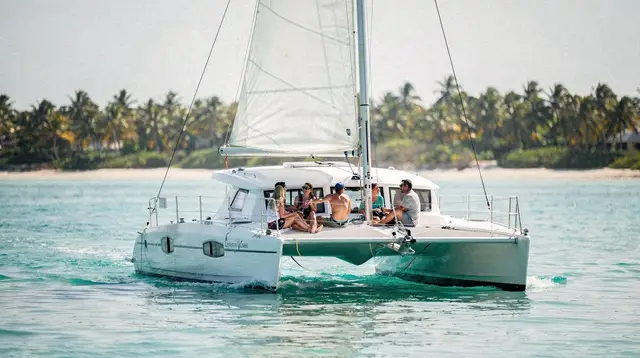
For something with a bit more height, a parasailing flight straight off Bavaro beach is one of the shortest, most straightforward add-ons here — no transfer beyond walking to the beach operator’s stand, and it runs in well under two hours including waiting time. If you’d rather see the coastline from a boat than above it, catamaran outings along this stretch of coast are covered in the catamaran and boat trips guide; note that these Bavaro-area catamaran runs are shorter, closer-to-shore trips and not the same product as the Saona Island boat crossing, which departs from Bayahibe after a much longer drive.
For beginners curious about diving without committing to a certification course, an introductory scuba dive off Bavaro is a manageable half-day option with an instructor handling the gear and briefing — a gentler entry point than the multi-day courses covered in the region’s dedicated diving guide.
Cultural and local experiences
Not every Bavaro activity is beach or adrenaline-based. A number of half-day tours package a look at Dominican daily life, food and craft close to the hotel strip rather than out in the countryside proper — a cultural half-day covering local food, rum and everyday Dominican life near Bavaro is a reasonable way to get outside the resort without a long transfer, and it pairs naturally with the food and rum content in the wider food, rum and cigars guide.
What Bavaro is not the base for
It’s worth being direct about this because tour desks aren’t always: Saona Island, Bayahibe and the Cotubanama national park are covered by their own region guides, and getting there from a Bavaro hotel means 1h15 to 1h45 on the road before the boat leaves — not a Bavaro activity, a full day trip. The Saona Island excursions and Bayahibe day trip guides lay out that transfer honestly. Whale watching only happens in Samana Bay, roughly mid-January through late March, and it isn’t visible anywhere near Bavaro at any time of year. Hoyo Azul and the Scape Park cenote are in Cap Cana, a separate sector to the south — reachable, but again not something you’re doing on a two-hour window between breakfast and the pool.
Comparing Bavaro to its neighbors at a glance
| Sector | What it is | Typical draw | Distance feel from Bavaro |
|---|---|---|---|
| Bavaro | Main hotel strip | Wide beach, buggy tours, water sports | Home base |
| Cap Cana | Higher-end sector, marina, golf | Golf, Scape Park, Hoyo Azul cenote | Short drive south |
| Macao | Public beach sector | Surf, buggy meet-up point | Short drive north |
| Bayahibe | Fishing-village-turned-port | Saona and Catalina boat departures | 1h15-1h45 drive |
| Samana | Peninsula further northwest | Whale watching (mid-Jan to late Mar only) | Multi-hour trip, usually overnight or long day |
Booking sense: prices, timing, honesty
Excursion prices around Bavaro vary by season, group size and whether a tour is private or shared, so treat any figure here as a range rather than a fixed rate — check the operator’s own listing for the day’s price rather than a number quoted secondhand. Restaurant bills, including any meal built into a tour package, typically carry an 18% ITBIS tax plus a 10% service charge on top of the menu price, which catches first-time visitors off guard if a quoted price didn’t already flag it. Payment is in Dominican pesos (DOP), though US dollars are widely accepted for excursions and tourist-facing purchases; change usually comes back in pesos.
Morning departures tend to have cooler temperatures and smaller crowds for buggy and boat activities, while afternoon slots suit beach-based add-ons like parasailing or water sports once the day has warmed up. Booking a day or two ahead through a hotel tour desk or online is generally enough for Bavaro-based activities — the longer lead times matter more for popovers into Bayahibe or Samana, where boat capacity and weather can affect availability further out.
Weather, seasons and when to go
Bavaro sits in a tropical climate that stays warm year-round, typically 26-31°C whatever month you land. December through April is the drier, less humid stretch and doubles as the region’s high season, while May through November runs wetter, with the Atlantic hurricane season spanning June to November and the highest risk window sitting between August and October — worth checking a storm outlook if the stay falls in that window. The best time to visit guide breaks down the trade-offs season by season, and the hurricane season guide covers what an active storm actually means for a Bavaro trip. Sargassum, mentioned above, tends to cluster April to October but varies year to year — the sargassum season guide has more on which weeks tend to be worse.
Money, entry rules and practical basics
Everyday spending in Bavaro runs in Dominican pesos (DOP), though US dollars are accepted almost everywhere tourists shop or book excursions; change comes back in pesos, so it’s worth keeping small bills of both currencies handy. The money, tipping and taxes guide has more detail on what to expect on a bill beyond the 18% ITBIS and 10% service charge already mentioned above.
Entry is visa-free for a 30-day tourist stay for EU, UK, US, Canadian and most South American passport holders, extendable for a fee on departure if needed. The 10 USD tourist card cost is bundled into most flights already, but the free online e-Ticket form is mandatory on both arrival and departure and isn’t automatic — the e-Ticket and entry rules guide walks through filling it out before flying. A passport valid through the full length of the stay is required, same as most destinations.
A few basics worth knowing before leaving the resort: tap water isn’t safe to drink, so bottled or filtered water is the norm even for brushing teeth at some properties — see can you drink the water for the full picture. Outlets are the US-style 110-120V type A/B, so European visitors need an adapter, not a converter. The country runs on Atlantic time (UTC-4) without seasonal clock changes, which matters for coordinating tour pickup times against a home time zone. The general emergency number is 911, same as in the US and Canada. For a broader read on day-to-day safety around Bavaro and the wider zone, the is Punta Cana safe guide covers what actually needs caution versus what doesn’t, and what to pack has a practical list for the climate described above.
Frequently asked questions about things to do in Bavaro
Is Bavaro the same place as Punta Cana?
No. Punta Cana is both the cape at the eastern tip of the island and, loosely, the whole tourist zone. Bavaro is one specific sector within that zone, the densest strip of hotels, with Cap Cana and Macao as separate neighboring sectors.
How far is Bavaro from Punta Cana International Airport?
Most Bavaro hotels are 15 to 40 minutes from PUJ by road, depending on exactly where the property sits and traffic on the day.
Can you see Saona Island or go whale watching directly from Bavaro?
No. Saona departs from Bayahibe, itself a 1h15-1h45 drive from Bavaro before the boat even leaves, and whale watching only happens in Samana Bay roughly mid-January to late March. Both are day trips, not Bavaro activities.
Is Indigenous Eyes ecological park in Bavaro?
It’s in the Puntacana Resort, adjacent to Bavaro rather than inside it, and easy to combine with a Bavaro stay without a long transfer.
What’s the difference between Bavaro and Cap Cana?
Bavaro is the main hotel strip with wide, cocotier-lined beaches. Cap Cana is a separate, higher-end sector to the south with its own marina and golf courses, including the Scape Park area with Hoyo Azul.
Is Macao Beach part of Bavaro?
No, Macao Beach is a public beach in its own sector, known for surf and buggy excursions, distinct from the private hotel beaches that line Bavaro.
What’s worth booking from a Bavaro hotel without leaving the area for hours?
Buggy and cave tours, parasailing, a golf round, snorkeling or diving trips, and local cultural experiences all run close to Bavaro and fit into half a day.
Tours for your first trip to Punta Cana on GetYourGuide
Verified deep-linked GetYourGuide tours. Book through these links and we earn a small commission at no cost to you.
GetYourGuide does not provide a product photo for this activity — the image shows the meeting point, photographed by us.