Bávaro is not Punta Cana, even though most people call it that
If a hotel confirmation email says “Bávaro” and a flight search says “Punta Cana,” you have not booked two different trips. Punta Cana is, strictly, the cape at the eastern tip of the Dominican Republic, and the name has stretched to cover the entire tourist zone that runs along that coast. Bávaro is the specific sector inside that zone: the dense strip of resorts sitting just north of the cape itself, distinct from Cap Cana to the south and Uvero Alto further up the coast. None of these are synonyms, and mixing them up matters for practical things — which beach you’ll actually be on, how far your hotel is from the airport, and what kind of excursion makes sense as a day trip versus a slog.
This page covers Bávaro on its own terms: what’s genuinely there, what belongs to its neighbors instead, and how to plan around it without inflating what it offers. For the broader naming confusion across the whole zone, see the Punta Cana destination page; for a side-by-side of all four sectors, see Punta Cana vs Bávaro vs Cap Cana vs Uvero Alto.
What Bávaro actually is
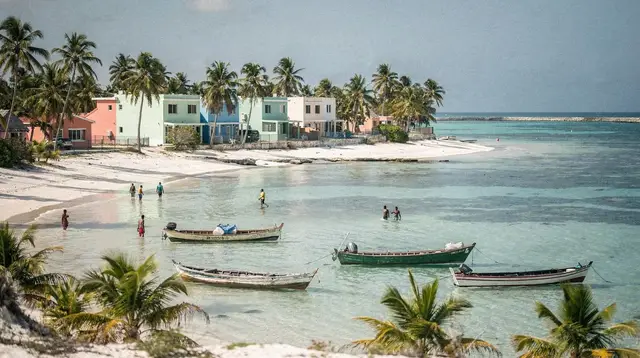
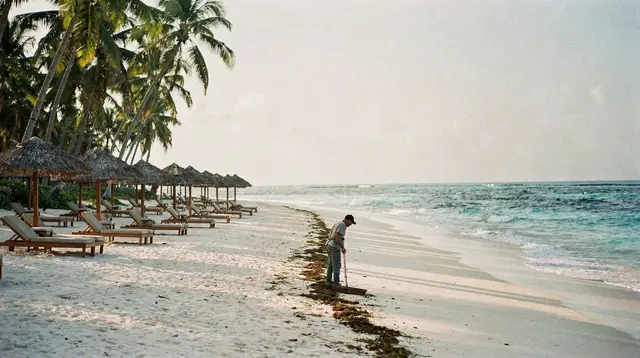
Bávaro is the single largest concentration of hotels in the Dominican Republic’s east coast tourist zone. It’s where the bulk of the big all-inclusive brands sit, one after another, along a genuinely wide beach backed by coconut palms. If you picture the postcard image of Punta Cana — turquoise water, a long pale sand beach, a wall of resort towers — that image is Bávaro more often than it’s the cape itself or Cap Cana.
The beach here, sometimes marketed under names like Bávaro Beach or Playa Bávaro, is public by Dominican law even where hotels have staked out loungers in front of their own property. It’s wide enough that walking between resorts along the sand is normal and easy, which is part of why the area works so well for travelers who want to compare pool decks, buffets, and beach clubs without leaving on foot.
What Bávaro does not have is a marina, a golf-course-and-villa development, or a headline attraction like Hoyo Azul — those belong to Cap Cana. It also isn’t a colonial town, a national park, or a whale-watching bay. Bávaro’s role in a Dominican Republic trip is almost entirely as a base: a place to sleep, eat, and swim, from which you book excursions elsewhere.
Getting there from PUJ
Bávaro is served by Punta Cana International Airport (PUJ), and for most Bávaro hotels the drive runs 15 to 40 minutes depending on exactly where the resort sits and how the airport traffic is running that day. That’s noticeably shorter than the trip to Uvero Alto, which typically takes 40 to 60 minutes because it sits further north along the coast. If a booking site or a friend quotes you a flat “20 minutes to Punta Cana,” ask which sector — the range exists for a reason, and a resort at the far northern edge of Bávaro will feel closer to Uvero Alto’s transfer time than to one near the cape.
Airport transfers are handled by fixed-rate taxis or pre-booked private transfers; there’s no rail option and car rental is the exception rather than the rule for a resort-based stay. See getting around Punta Cana for how locals and visitors actually move between sectors.
| From PUJ to | Typical drive time |
|---|---|
| Bávaro (most hotels) | 15-40 minutes |
| Cap Cana | 15-30 minutes |
| Uvero Alto | 40-60 minutes |
| Bayahibe (for Saona) | 1h15-1h45 |
| Santo Domingo colonial zone | 2h30-3h |
What’s actually within reach
Bávaro’s convenience is that a lot of the zone’s most-booked activities sit within a short ride, even though they aren’t technically “in” Bávaro itself.
The Indigenous Eyes Ecological Reserve sits inside the Puntacana Resort, a short drive north, and is one of the few things in the area that isn’t a beach, a pool, or a tour boat — a set of freshwater lagoons and forest trails you can walk through in an hour or two. It’s a reasonable break from resort life without committing a full day.
Buggy and ATV tours through the countryside and limestone caves are the area’s other signature activity, and several depart from ranches close to Bávaro itself rather than requiring a long transfer. A typical outing combines a cave stop, a swim, and a mud-and-dust ride through farmland — worth booking through a fixed operator rather than a hotel-desk upsell, since prices for the same route can vary. If that appeals, a private buggy tour through the caves near Bávaro runs as a small-group or private option rather than a mass convoy.
Catamaran trips along the coast are the other Bávaro staple, usually combining a short sail with snorkeling and a stop at a sandbar. Some pair the boat with a zipline and quad-bike segment on land, which is worth checking before you book if you specifically want water time rather than a land-and-water combo — a catamaran, zipline, and quad-bike day out of Bávaro covers both in one ticket, lunch included.
None of this is on Bávaro’s own doorstep in the way a beach chair is — they’re short drives, not walks — but they’re closer than almost anything else on this list of guides: buggy and ATV tours, things to do in Bávaro, and the general best beaches in Punta Cana roundup all cover pieces of this in more depth.
What Bávaro doesn’t have
Being honest about the gaps saves a wasted afternoon. Bávaro has no colonial architecture, no historic site, and no single “must-do” landmark inside the sector itself — that’s not a knock, it’s just not what the area was built for. If you want the marina-and-golf version of the coast, that’s Cap Cana. If you want whales, that’s Samaná, and only from mid-January to late March. If you want the colonial zone’s UNESCO-listed old town, that’s Santo Domingo, and it’s a genuine half-day-plus commitment at 2h30 to 3h each way, not a quick add-on.
Bávaro also isn’t the place to expect a quiet, undeveloped stretch of coast — that’s closer to what you’d find heading toward Miches or Uvero Alto. Bávaro’s beach is busy, its hotel density is high, and its identity is built around convenience and volume rather than seclusion.
Adventure parks and land-based activities
For travelers who want a full day of activity without booking a boat, a handful of adventure parks cluster in and around Bávaro, combining ziplines, buggies, horseback riding, and pools in a single admission. A full-access pass to the Bávaro adventure park is a straightforward way to cover several activities in one visit rather than booking each separately, and it works well as a rain-contingency plan if a beach day gets rained out during the wetter months.
Shopping: larimar and amber, with a caveat
Larimar (a pale blue stone found only in the Dominican Republic) and amber are the two souvenirs worth taking seriously here, and Bávaro has plenty of shops selling both — along with a fair amount of dyed glass and fake amber sold as the real thing. A guided visit to a workshop or a jewelry-focused excursion is a reasonable way to see genuine pieces before buying, rather than relying on a beach vendor’s word.
Sample day plans
A slower day: breakfast at the hotel, a morning at Indigenous Eyes, back for lunch and pool time, an evening walk along the beach between resorts.
A more active day: an early buggy-and-cave tour, a late lunch back at the hotel, then an afternoon at an adventure park if there’s energy left, or simply the beach.
A water-focused day: a half-day catamaran and snorkel trip, which usually returns by mid-afternoon, leaving the evening free.
None of these require leaving before dawn or getting back after dark, which is part of Bávaro’s appeal as a base — most of what’s bookable from here runs as a half-day or full-day trip, not an overnight commitment.
Money and practical notes
Prices around Bávaro run in both US dollars and Dominican pesos (DOP, RD$); the peso is the official currency, and USD is widely accepted in hotels and on excursions, but change usually comes back in pesos. Restaurant bills typically add an 18% ITBIS tax plus a 10% service charge, on top of the menu price — factor that in when budgeting a meal outside the resort. For excursion prices, treat any number here as a range: check the current listing on GetYourGuide or Viator for the day’s actual rate rather than planning around a fixed figure. More detail on this in money, tipping, and taxes.
Before travel, remember the online e-Ticket form is mandatory for entry and exit, and the $10 USD tourist card is usually already bundled into the airfare rather than paid separately on arrival.
When to visit
December through April is the drier, less humid stretch and the area’s high season — expect fuller hotels and firmer prices. May through November is more humid, and June through November is hurricane season, with the highest risk from August to October. Sargassum seaweed can also reach this stretch of coast, most commonly between April and October, though how much shows up varies year to year and isn’t something a hotel can guarantee against. See best time to visit Punta Cana for the full seasonal breakdown.
Where to stay
Bávaro’s hotel density means “where to stay” is really a question of which stretch of beach and which price tier, more than which town — there’s no separate town center to weigh against it. For a comparison of options across the whole zone, see where to stay in Punta Cana.
Frequently asked questions about visiting Bávaro
Is Bávaro the same place as Punta Cana?
Not exactly. Punta Cana is the cape at the island’s eastern tip and, loosely, the name for the whole tourist zone. Bávaro is the specific hotel-dense sector within that zone, separate from Cap Cana and Uvero Alto.
How far is Bávaro from Punta Cana International Airport?
Usually 15 to 40 minutes by road, depending on which hotel you’re heading to and traffic conditions. Hotels further north within Bávaro can run closer to the longer end of that range.
Is there anything historic to see in Bávaro itself?
No. Bávaro is a resort and beach area without a historic site of its own. The nearest historic destination is Santo Domingo’s colonial zone, which is a 2h30 to 3h drive, not a quick trip.
Can I see whales from Bávaro?
No. Humpback whales are only visible in Samaná Bay, roughly from mid-January to late March. They are not seen along the Bávaro coast at any time of year.
Is Bávaro beach public or private?
Dominican beaches are public by law, including the stretch fronting Bávaro’s hotels. In practice, loungers and beach clubs closest to a resort tend to be reserved for guests, but walking the sand between properties is normal and free.
What’s the best day trip to book from a Bávaro hotel?
That depends on what you want: a catamaran and snorkel trip stays close and returns the same afternoon, while Isla Saona requires a 1h15 to 1h45 drive to Bayahibe before you even board a boat. Plan Saona as a full-day commitment, not a quick add-on.
Does Bávaro have adventure parks or is it only beaches?
Both. Several adventure parks combining ziplines, buggies, and pools sit in or near Bávaro, useful for a full day of activity or as a backup plan on a rainy day.
Is the tap water safe to drink in Bávaro hotels?
No. Tap water isn’t considered potable anywhere in the Dominican Republic, including Bávaro; stick to bottled or filtered water, which most hotels provide.