Is Punta Cana too touristy?
I get asked some version of this question a lot: is Punta Cana just a wall of resorts, or is there something real underneath the marketing photos? After spending enough time moving between sectors here, I think the honest answer is neither yes nor no. It depends entirely on where you point your finger on the map.
What “Punta Cana” actually means when people call it touristy
Here’s the confusion at the root of the question. Punta Cana is technically a cape at the eastern tip of the country, but almost everyone uses the name loosely to mean the whole tourist zone stretching from Bavaro up to Uvero Alto. That zone is not one thing. Bavaro, Cap Cana, Uvero Alto and Macao are separate sectors with different densities, different infrastructure and, frankly, different feelings on the ground. Lumping them together is how the “too touristy” verdict gets handed down without anyone checking which sector they’re actually judging. If you want the sector-by-sector breakdown, I cover that in detail on Punta Cana vs Bavaro vs Cap Cana vs Uvero Alto.
Bavaro is the part that earns the reputation
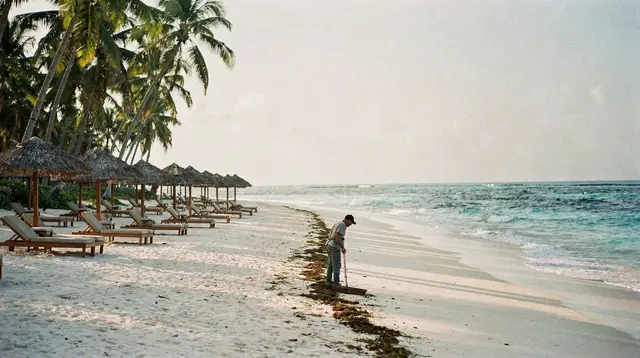
If your only exposure to Punta Cana is Bavaro, I understand the skepticism. This is the main hotel strip, the highest concentration of all-inclusive properties in the whole region, and the stretch of coastline most photographed for brochures. Beach vendors, tour touts near the sand, a steady flow of buggies and catamarans launching from the same stretch of beach on any given morning. It’s not a manufactured image; it’s genuinely the busiest sector of Punta Cana-Bavaro. If wall-to-wall resorts is what you’re picturing when you ask if this place is too touristy, Bavaro is the sector doing that to your imagination, and I won’t pretend otherwise.
Cap Cana changes the rhythm without leaving
What surprised me the first time I spent a few days in Cap Cana is how different the pace feels only a short drive south of Bavaro. This is a higher-end sector built around a marina and golf courses, with lower density and a slower rhythm, even though it’s still very much a tourist area. It’s not untouched, and it’s not cheap, but it doesn’t carry the same crowded-beach feeling. It’s also home to Scape Park, where a limestone cenote called Hoyo Azul sits inland from the coast — worth knowing it’s here in the Dominican Republic, not Mexico, since I still see that mix-up online. A morning at Scape Park, riding one of the buggy or ATV routes through the park’s trails, feels closer to nature time than resort time. I’ve booked the buggy adventure tour through this area and it barely resembles a Bavaro beach afternoon.
Uvero Alto: the sector that answers the question most directly
If Bavaro is the case for “too touristy,” Uvero Alto is the strongest case against it. It sits further north, 40 to 60 minutes from Punta Cana International Airport compared with 15 to 40 minutes for most Bavaro and Cap Cana hotels, and that extra distance has kept it noticeably more isolated. Fewer hotels, a longer stretch of open beach, and none of the density that defines the southern strip. It’s still a resort sector, don’t mistake this for an undiscovered fishing village, but the difference in crowd level is real and immediate once you’re on the ground. I wrote more on this specific sector in the quiet side of Punta Cana: Uvero Alto if that’s the angle you’re chasing.
Macao Beach: public, and it shows
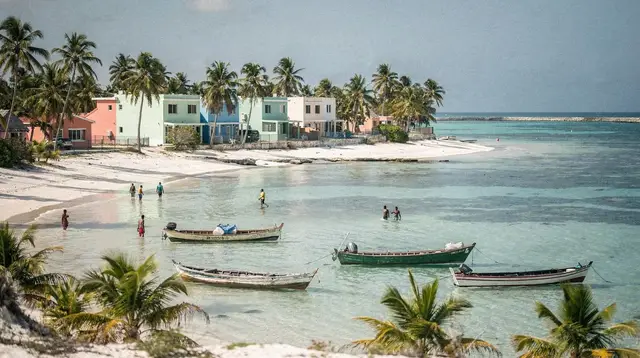
Macao deserves its own mention because it’s not a hotel beach at all — it’s a public beach, known for surf and for being the departure point for a lot of buggy and ATV excursions rather than for resort loungers. The crowd here is a mix of day-trippers, surfers and tour groups rather than a captive hotel population, which gives it a different texture than Bavaro’s private sand. It’s touristy in its own way, plenty of tour vans park here on a busy morning, but it’s a different kind of touristy: transient rather than saturated.
An ATV or quad run out of Macao, like the quad tour through the area, spends more time inland and away from the beach crowd than you’d expect. Worth knowing too: sargassum can reach this stretch of east coast beach, mostly from April to October, and it affects the “how crowded does this look” question as much as hotel density does — I go into it more in sargassum season in Punta Cana.
Where it gets genuinely quiet: Higuey and the north
Zoom out further and the picture shifts again. Higuey, inland from the coast, is a real Dominican town built around the Basilica of Our Lady of Altagracia, a national pilgrimage site rather than a beach resort. It has almost no beach tourism infrastructure at all. Further northwest, the Samana-Miches region — Samana, Las Terrenas, Los Haitises and Miches — is considerably less developed than the Bavaro-Cap Cana strip, with fewer hotels, more fishing villages, and a landscape of mangroves and karst hills rather than resort towers.
I’m not going to claim these areas are free of tourism; they aren’t, and whale-watching season in Samana (roughly mid-January through late March) brings its own crowds by boat — it’s also one of the better arguments for visiting outside the December-to-April high season, which I cover in best time to visit Punta Cana. But the density and infrastructure are a different order of magnitude from Bavaro.
South and west: Bayahibe, Saona and Santo Domingo
The sectors above cover the coastline people usually mean when they say “Punta Cana,” but the region most travelers book excursions into stretches further than that. South of Bavaro, the La Romana-Bayahibe area is built around day trips rather than a hotel strip of its own: Bayahibe town, the Cotubanama national park, and the boat crossings out to Isla Saona and Isla Catalina. Saona in particular can feel crowded at its main sandbar stop when several boats arrive together, which is worth knowing before you book — the crowd there comes in waves tied to boat schedules, not from hotel density.
On a good day, though, it’s still one of the better arguments for leaving the resort, and something like the Saona Crusoe VIP excursion spends more time on the water and less time queuing than the standard version. Further west, Santo Domingo and Boca Chica are a different trip entirely: a real capital city with a colonial zone, not a beach resort at all, and the crowd profile there is closer to any other Latin American historic center than to Bavaro’s beachfront. If you’re weighing a day out there, I’ve written about the colonial zone tours from Santo Domingo separately.
My honest verdict
So is Punta Cana too touristy? If you stay entirely inside a Bavaro resort compound and never leave the beach in front of it, you’ll find exactly the crowded, packaged experience the skeptics describe. But that’s a choice, not a geographic inevitability. Move ten to forty minutes in either direction — south to Cap Cana’s calmer marina district, north to Uvero Alto’s longer isolated beachfront, or inland to Higuey and the rural sectors — and the tourist density drops noticeably while still being a real, bookable trip.
Go further south to Bayahibe and Saona, or west to Santo Domingo, and you’re not really answering the “too touristy” question about Punta Cana anymore; you’re on a different kind of trip. For more on whether that trip is worth the effort, see leaving the resort: is it worth it and is Punta Cana safe for tourists, since safety concerns are the other thing that quietly shapes how far people are willing to venture. I’d rather answer honestly than sell you a fantasy: this is a tourism-driven region, full stop, and no sector here is a hidden untouched paradise. But “touristy” isn’t evenly distributed across it, and picking your sector deliberately changes the trip more than picking your hotel brand does.
Frequently asked questions about crowds and tourism in Punta Cana
Is Bavaro more crowded than the rest of Punta Cana?
Yes. Bavaro has the highest concentration of hotels and beachfront tourism infrastructure in the region, and it shows in beach density and the volume of tour operators working that stretch of coast.
Is Cap Cana quieter than Bavaro?
Generally yes. Cap Cana is a higher-end sector built around a marina and golf courses with lower hotel density, though it’s still an active tourist area, not an undeveloped one.
Why is Uvero Alto less crowded?
Distance is the main reason. Uvero Alto sits 40 to 60 minutes from Punta Cana International Airport, compared with 15 to 40 minutes for most Bavaro and Cap Cana hotels, and that extra travel time has limited its hotel growth relative to the southern strip.
Is Macao Beach part of a hotel resort?
No. Macao is a public beach, not attached to a private hotel property, and it’s better known for surf and buggy or ATV excursion departures than for resort loungers.
Are there parts of the region with almost no tourism?
Higuey, inland from the coast, functions mainly as a religious pilgrimage town with little beach tourism infrastructure. The Samana-Miches region is considerably less developed than Bavaro-Cap Cana, though it still sees tourism, especially during whale-watching season from mid-January to late March.
Does leaving the resort area actually feel different?
Yes, noticeably. Moving from Bavaro to Cap Cana, Uvero Alto, or inland toward Higuey changes the density and pace within a 20 to 60 minute drive, even though none of these areas are free of tourism entirely.
Is Punta Cana worth visiting if I don’t like crowded beaches?
It can be, if you choose your sector deliberately. Booking a hotel in Uvero Alto or Cap Cana rather than central Bavaro, and planning excursions that head inland or north, meaningfully changes how crowded your trip feels.
tours.Inspiration
Verified deep-linked GetYourGuide tours. Book through these links and we earn a small commission at no cost to you.
GetYourGuide does not provide a product photo for this activity — the image shows the meeting point, photographed by us.