Best beaches in Punta Cana: Bavaro, Cap Cana and Macao compared
Which beach is best in Punta Cana: Bavaro, Cap Cana or Macao?
Bavaro has the widest run of hotel beach in the zone and is the easiest choice for a first stay. Cap Cana is quieter and more upscale but has less continuous public sand. Macao is a public surf beach good for a change of scenery, not for lounging near a resort.
Bavaro, Cap Cana and Macao are not the same beach
“Punta Cana beach” is a phrase that gets used loosely, and it causes real confusion when you’re booking a hotel. The cape itself, Punta Cana, sits at the far eastern tip of the island. The name has stretched to cover the entire tourist zone that runs from Bavaro through Cap Cana up to Uvero Alto, but those are separate sectors with different beaches, different crowds and, some years, different sargassum levels on the same day. This guide sticks to the beaches you can reach without booking an excursion: Bavaro’s resort strip, public Macao Beach, and the Cap Cana coastline. Saona Island, Catalina Island and anything else that requires a boat transfer are covered in their own guides, not here.
Bavaro: the main hotel beach
Bavaro is the densest hotel corridor in the zone and the beach most people mean when they say “Punta Cana beach.” It’s a long, wide run of pale sand backed by coconut palms, protected for much of its length by an offshore reef that keeps the water calm and shallow close to shore. That calm water is one reason Bavaro suits families and first-time visitors better than Macao.
Technically the sand is public land, as all Dominican beaches are, but the practical experience in front of a hotel is private: loungers, umbrellas, beach staff and, at some resorts, a rope or flag system marking the property’s stretch. Walking along the water’s edge between hotels is normal and generally unbothered. Vendors selling jewelry, hair braiding or boat trips work the public access points more than the fenced resort sections.
Because Bavaro is one continuous strip, the actual experience varies a lot by property. A hotel near the northern end can feel noticeably different from one 3-4 km south, in terms of sand width, seaweed accumulation on a given week and how commercial the immediate stretch feels. If you want specifics on which activities cluster where, things to do in Bavaro breaks the sector down further.
Cap Cana: quieter, more upscale, less continuous sand
South of Bavaro, Cap Cana is a different kind of place entirely: a master-planned area built around a marina, golf courses and higher-end residences and resorts, rather than a wall-to-wall hotel beach. The shoreline here is less continuous and more broken up by private developments, so there isn’t a single long public beach in the way Bavaro has one. Juanillo Beach is the best-known accessible stretch, calmer and less crowded than Bavaro but with fewer walk-up vendors and services.
Cap Cana is also home to Scape Park and its Hoyo Azul cenote, a freshwater sinkhole inland from the coast rather than an ocean beach — worth knowing so you don’t confuse it with a swimming beach when planning a day. Details on visiting it are in the Hoyo Azul and Scape Park guide. For a fuller rundown of what else fills a day in this sector, see things to do in Cap Cana.
If your priority is quiet and upscale over convenience and long open sand, Cap Cana is the better fit. If you want to walk out of your hotel straight onto a long beach with easy access to other resorts’ bars and restaurants on foot, Bavaro still wins.
Macao Beach: the public surf beach, not a lounging beach
Macao Beach is a genuinely different animal from the resort strips. It’s a public beach outside the hotel zone, known for stronger surf, a rougher shoreline and a livelier, more local scene of surf schools, buggy tour stops and beachside shack restaurants. There are no resort loungers built into the sand here — you rent a chair from a local operator or bring your own setup.
Macao works well as a half-day trip for surf lessons, a buggy or ATV excursion stop (it’s a regular waypoint on tours like Punta Cana buggy and ATV tours), or simply a change of scenery from a week of resort beach. It does not work as a swap for your hotel’s calm swimming water: the current and shore break are stronger, and it’s a less relaxed environment for small children. Most Bavaro hotels are roughly 20-30 minutes away by road; from Uvero Alto it can run closer to 45 minutes. For the fuller activity list here, see things to do in Macao.
Uvero Alto: the fourth option further north
Uvero Alto sits north of Macao and is treated as its own hotel sector rather than an extension of Bavaro. It’s roughly 40-60 minutes from Punta Cana International Airport by road, noticeably longer than the 15-40 minutes most Bavaro and Cap Cana hotels see, so that transfer time is worth weighing before booking here for a short stay. In exchange, the beach itself tends to feel wider and less built-up than Bavaro’s busiest stretches, with fewer walk-up vendors and a more open, uncrowded feel. It shares the same general coastline and reef system as Bavaro, so water conditions run broadly similar, but hotel density is lower and a day trip into Bavaro or Macao for a change of scenery takes longer than it would from a central Bavaro base. For a closer look at what fills a day out here, see things to do in Uvero Alto and Uvero Alto beach and island trips.
Side-by-side comparison
| Bavaro | Cap Cana | Macao | |
|---|---|---|---|
| Type | Resort-lined public beach | Mixed private/public coastline | Public surf beach |
| Water | Calm, reef-protected | Calm to moderate | Rougher surf, stronger current |
| Crowd | Dense, resort guests + vendors | Quieter, upscale | Local, surfers, day-trippers |
| Best for | First stays, families | Quiet time, golf/marina days | Surf lessons, buggy stops |
| Access from most hotels | On-site or short walk | 15-30 min by road | 20-45 min by road |
| Continuous sand | Long, connected strip | Broken up by developments | One open stretch |
Prices for lessons, chair rentals or excursions along any of these beaches shift by season and operator, so treat any figure you see elsewhere as a rough guide rather than a fixed rate, and check the current price on the booking page before you commit.
Sargassum: the honest picture
Any beach on this east-facing coast can see sargassum, the brown seaweed that drifts in from the Atlantic and Caribbean and piles up on the shore. It’s most likely from April to October, but the amount varies a lot from year to year, from week to week, and sometimes from one hotel’s stretch to the next hotel’s stretch on the same morning. No hotel, tour operator or article can honestly promise a sargassum-free beach during that window, and you should be skeptical of anyone who does.
Hotels with beach-cleaning crews generally rake and clear their frontage daily during heavy weeks, which helps but doesn’t eliminate the smell or the buildup entirely on the worst days. If you’re traveling specifically to avoid it, the lower-risk months are roughly November through March, which also happens to overlap with the drier, less humid high season. For the full seasonal breakdown, see sargassum season in Punta Cana and, for planning around it more broadly, best time to visit Punta Cana.
If the beach disappoints: Indigenous Eyes as a backup
On a bad sargassum day, or if you just want a different kind of scenery for an afternoon, Indigenous Eyes ecological reserve inside Puntacana Resort is a practical alternative. It’s a set of freshwater lagoons and forest trails, not a beach, so it sidesteps seaweed entirely while still giving you swimming and a walk through greenery. It’s a reasonable half-day plan B rather than a replacement for beach time. More detail is in the Indigenous Eyes park guide.
Getting on and around the water
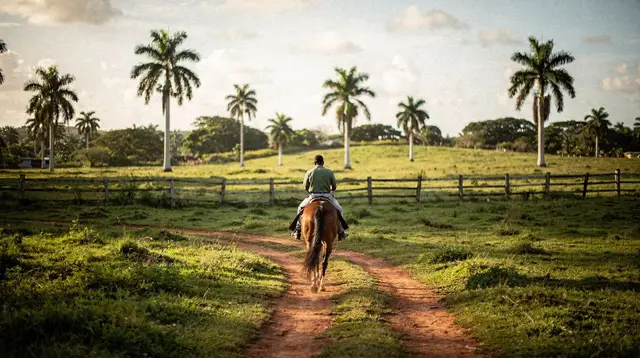
Most beach-based activities here are booked as add-ons rather than beach entry fees, since the sand itself is free to walk. A buggy tour is one of the more popular ways to see several beach sectors in one outing, cutting inland between fields and coastline: a buggy tour through fields and beaches around Punta Cana covers ground that a single hotel stay never would. If horses are more your pace, a horseback ride along the coastline is a slower, quieter way to see the shore, usually timed for morning or late afternoon light.
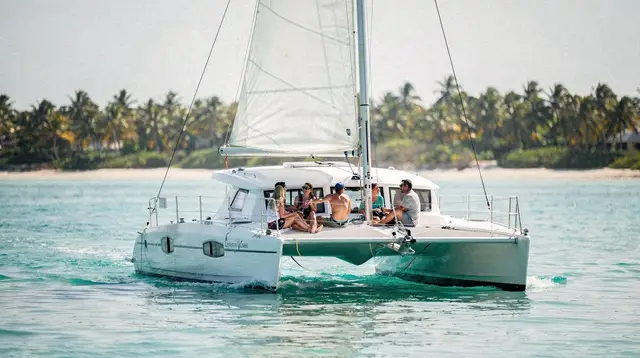
For a view of the coast from above rather than along it, a parasailing flight over the beaches gives a straight look at how the reef line and sandbars break up the water color, which is also a decent way to spot from the air which stretch looks clearest that day. And if you want a record of the trip without setting up your own equipment, a beach photo session with transport included is a low-effort way to get usable photos without asking a stranger to hold your phone.
Water sports gear — kayaks, paddleboards, snorkel sets — is generally rented beachside by the hour rather than booked in advance; see Punta Cana water sports for what’s typically on offer along Bavaro and Macao specifically.
Choosing between sectors before you book
If you haven’t picked a hotel yet, the beach question is really a sector question. Bavaro suits anyone who wants the widest choice of resorts and restaurants within walking distance and doesn’t mind a busier beach. Cap Cana suits travelers prioritizing quiet, golf or the marina scene over long beach walks. Uvero Alto, further north, trades a longer airport transfer for a less developed, quieter beach, covered separately in its own destination guide. For a direct comparison across all four sectors including transfer times and price tier, see Punta Cana vs Bavaro vs Cap Cana vs Uvero Alto. And if you’re weighing a wider set of first-trip questions beyond the beach itself, things to do in Punta Cana is the broader starting point.
Practical basics for a beach day
A few practical points apply across all four sectors. Dominican tap water isn’t safe to drink, so bring bottled water rather than refilling from a room tap if you’re out for a full day; most hotels keep bottled water stocked at pool and beach bars. If you buy food or drinks from a beachside vendor or restaurant rather than through an all-inclusive, expect prices quoted in Dominican pesos with US dollars widely accepted in tourist areas, though change usually comes back in pesos. A sit-down restaurant bill normally already carries an 18% ITBIS tax plus a 10% service charge, so an extra tip is a bonus rather than an obligation. The nationwide emergency number is 911. None of this changes from one visit to the next, but it’s easy to overlook when the day’s decision is just which beach to pick.
Sun exposure is the more immediate risk on any of these beaches: the coast sits at a tropical latitude with strong midday sun for most of the year, so reef-safe sunscreen, a hat and reapplying after swimming matter more here than somewhere with a shorter, milder season. Pair sun protection with whichever water-based add-on you book, and if you’re out for several hours, plan on shade or an indoor break through the hottest stretch of the afternoon rather than pushing straight through it.
Frequently asked questions about Punta Cana’s beaches
Is Bavaro Beach public or private?
Bavaro Beach itself is public land under Dominican law, but most of the stretch fronting the hotels is set up with resort loungers, umbrellas and staff, so in practice it functions as private beach for guests. Walking the sand between properties is generally tolerated.
What is the difference between Bavaro and Punta Cana beach?
Punta Cana is the cape at the eastern tip of the island and, loosely, the whole tourist zone; Bavaro is the specific, densest hotel strip within that zone. Most hotels marketed as “Punta Cana beachfront” are actually on Bavaro sand.
Is Macao Beach worth visiting from a Bavaro hotel?
Yes for a half-day change of scenery, surf lessons or a buggy tour stop, not as a swap for your resort beach. It is a public beach with vendors and rougher surf, roughly 20-30 minutes by road from most Bavaro hotels.
Does Cap Cana have public beaches?
Cap Cana’s shoreline is mostly tied to residences, the marina and golf resorts, with smaller pockets of accessible sand such as Juanillo Beach. It is not one continuous public strip the way Bavaro is.
Will there be sargassum on Punta Cana beaches?
It is possible, especially from April to October, and it varies year to year and week to week, even between neighboring hotels. No property or article can honestly guarantee an algae-free beach in that window.
What can I do if my hotel beach has a lot of sargassum?
Ask the front desk which stretch is being cleared that day, try Macao Beach for a different shoreline, or spend the day at Indigenous Eyes ecological park inside Puntacana Resort, which has freshwater lagoons instead of open sea.
Are Punta Cana beaches good for swimming with kids?
The Bavaro strip generally has calm, shallow water protected by an offshore reef, which suits families. Macao’s surf and current are stronger and better suited to older kids or lessons rather than casual paddling.
Is Uvero Alto beach the same as Punta Cana beach?
It is the same general coastline but a separate hotel sector further north, 40-60 minutes from the airport, with a wilder, less developed beach than Bavaro.
Beach and island trips from Punta Cana on GetYourGuide
Verified deep-linked GetYourGuide tours. Book through these links and we earn a small commission at no cost to you.
GetYourGuide does not provide a product photo for this activity — the image shows the meeting point, photographed by us.