Things to do in Punta Cana
What are the best things to do in Punta Cana?
Beyond resort beaches, the main draws are island trips to Isla Saona from Bayahibe, buggy and catamaran excursions, water sports off Bavaro and Cap Cana, and longer day trips to Santo Domingo or Samana. Which one makes sense depends heavily on which sector of the zone you are staying in and how much driving you are willing to do.
Punta Cana: one name, several destinations
If you only read one thing before booking excursions, read this: “Punta Cana” means two different things at once. In the strict sense, it is the cape at the eastern tip of the Dominican Republic. In everyday use, and in almost every hotel brochure, it means the entire tourist zone that runs from Bavaro in the south up through Cap Cana, Uvero Alto and Macao. Those four are separate sectors with different beaches, different hotel styles and different transfer times to the airport. A driver quoting “20 minutes to the airport” is talking about Bavaro or Cap Cana, not Uvero Alto, where 40 to 60 minutes is closer to reality.
This page is a starting point, not the last word on any one sector. If you already know where you are staying, the sector-specific guides go deeper: things to do in Bavaro, things to do in Cap Cana, things to do in Macao, things to do in Uvero Alto and the inland town of Higuey. For a side-by-side comparison of the four sectors before you even book a hotel, see Punta Cana vs Bavaro vs Cap Cana vs Uvero Alto.
Arriving: airport, e-Ticket and the tourist card
Most visitors fly into Punta Cana International Airport (PUJ), which sits close to the Bavaro and Cap Cana hotel strip. Road transfer time is typically 15 to 40 minutes for Bavaro and Cap Cana hotels, and 40 to 60 minutes for Uvero Alto, since that sector sits further north. If your trip also includes Santo Domingo, note that the capital has its own airport, Las Americas (SDQ), entirely separate from PUJ.
Two pieces of paperwork matter more than most travelers expect. The e-Ticket is a free online form that is mandatory for every traveler, both on arrival and on departure, and it needs to be filled in before you fly, not at the airport counter. Separately, most airline tickets to the Dominican Republic already include the 10 USD tourist card in the fare, so you generally do not pay it again as a separate cash fee at immigration. Passports need to remain valid for the full length of the stay. For the full rundown of entry paperwork, see the Dominican Republic e-Ticket and entry rules guide, and for transfer logistics, from PUJ airport to your hotel.
Practical basics worth knowing before you land: the time zone is Atlantic (UTC-4) year-round, with no daylight saving changes, so clock math with home stays consistent all year. Power outlets are 110-120V, type A/B, the same as in the US and Canada. Tap water is not safe to drink, stick to bottled or filtered water. Traffic drives on the right, and there is no train network, so getting around means guaguas (local buses), fixed-rate taxis or private transfers. In an emergency, the number is 911.
The excursion families, in plain terms
Rather than listing every activity, it helps to think in categories, since most tours in the zone fall into one of these.
Beach and island trips. The signature excursion here is Isla Saona, inside Cotubanama national park to the south. It is not a quick boat ride from a Punta Cana marina — every version of this tour starts with a 1h15 to 1h45 road transfer to the fishing village of Bayahibe, where the boats actually leave from. Typical itineraries combine a speedboat leg with a catamaran return (or the reverse), plus a stop at a sandbar known locally as the natural pool. Isla Catalina, also reached from the La Romana area, is the better pick for snorkeling and diving along its reef wall. Full detail lives in the Saona island excursions guide and things to do on Saona island; the broader southern region is covered in the La Romana-Bayahibe destination guide.
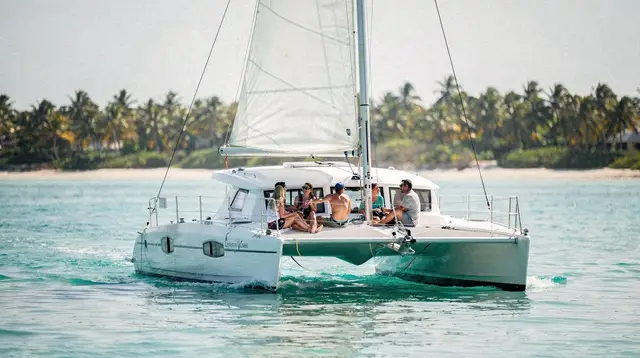
Water sports and marine life. Bavaro and Cap Cana beaches are the base for catamaran sailing, snorkeling, parasailing and, further offshore, scuba diving. Cap Cana’s Scape Park is also home to Hoyo Azul, a freshwater cenote — a genuine Dominican cenote, not a Mexican Yucatan import, despite the resemblance in photos. If dolphin encounters interest you, it is worth reading up on how those facilities operate before booking; captive dolphin tours are common in the zone but not universally recommended, and the ethics are worth a look before you commit.
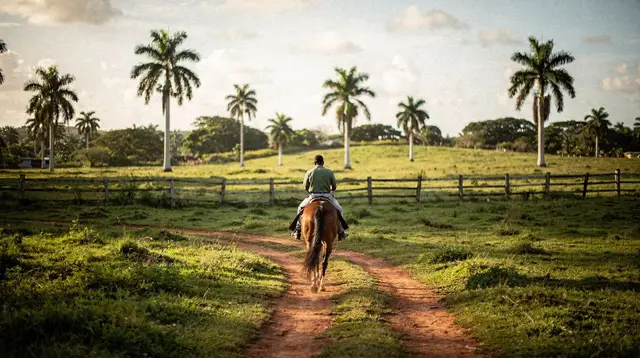
Land adventure. Buggy and ATV tours through the countryside toward Macao and El Cortecito are one of the most-booked categories here, usually paired with a stop at a cenote or a rum-and-cigar tasting. Horseback riding, ziplining and go-kart tracks round out the land-based options, and cultural or countryside safari tours give a look at rural Dominican life away from the resort strip.
Day trips further afield. Two longer excursions come up constantly in trip planning, and both deserve honest expectations. Santo Domingo’s colonial zone, a UNESCO World Heritage site since 1990 with the first cathedral built in the Americas, is a real highlight — but it sits 2h30 to 3 hours from Punta Cana by road, so treat it as a full early-start day, not an add-on. Samana bay, in the opposite direction, is the only place on this coast to see humpback whales, and only roughly from mid-January to late March; outside that window, the whale-watching tours simply are not running. See things to do in Santo Domingo, Santo Domingo colonial zone tours, things to do in Samana and Samana whale watching tours for specifics, plus the Samana-Miches destination guide and Santo Domingo-South Coast destination guide for the regional picture.
For a broader shortlist that pulls from all of these categories, best day trips from Punta Cana is a good next stop, and if you are still deciding how long to stay, how many days in Punta Cana and the three-day or five-day itineraries lay out realistic pacing.
A few tours worth knowing about
Land-based activity is one of the easiest ways to get outside the resort for an afternoon without a long transfer. A go-kart circuit is a straightforward option for an afternoon with a timed go-kart session near the hotel strip, and if you want something on the water without a full boat charter, a parasailing flight over the Bavaro coastline is a short, self-contained booking.
For families weighing marine encounters, it is worth comparing options like a supervised dolphin interaction session against a snorkel trip before deciding, since the setups and the ethics differ. For a look at daily life outside the hotel zone, a countryside safari through local villages and farms covers ground that resort brochures rarely mention. As with every excursion here, treat listed prices as a starting range — check the current GetYourGuide or Viator listing for the exact fare and availability on your dates.
Money, tipping and taxes
The official currency is the Dominican peso (DOP, written RD$). US dollars are widely accepted in hotels, tourist shops and on excursions booked online, but change usually comes back in pesos, so carrying some local currency helps for small purchases outside the resort. Restaurant bills typically already include an 18% ITBIS tax plus a 10% service charge, sometimes labeled “ley” on the receipt — factor that into any price you see quoted before tax. For a fuller breakdown, see money, tipping and taxes in Punta Cana.
When to go, honestly
The Dominican east coast is tropical year-round, generally 26-31°C (79-88°F). December through April is the drier, less humid stretch and the high season, with the trade-off of higher prices and busier excursions. May through November is more humid, and hurricane season runs June through November, with the highest statistical risk from August to October — not a reason to avoid the trip outright, but worth factoring into travel insurance and flexibility. Sargassum, a brown seaweed, can wash up on east coast beaches on and off from April to October, in amounts that vary year to year and are impossible to predict far in advance; no operator can honestly promise a sargassum-free beach in that window. None of this rules out a visit, but a guide that skips it isn’t being straight with you. See best time to visit Punta Cana for month-by-month detail.
Where this fits before you book a hotel
Because “Punta Cana” covers so much ground, the sector you choose changes which excursions are convenient and which involve a longer transfer. Bavaro puts you closest to the densest stretch of beach and the shortest airport run. Cap Cana trades some of that density for a higher-end feel, golf, a marina and the Scape Park. Uvero Alto is quieter and further out, with a longer ride to both the airport and to southern excursions like Saona. Macao beach itself is public, popular for surfing and buggy tours, and distinct from the private beaches fronting the Bavaro hotels. For accommodation decisions specifically, see where to stay in Punta Cana, and for the broader lay of the land, the Punta Cana-Bavaro destination guide and the Uvero Alto-Higuey destination guide.
None of the individual sector or activity pages replace the judgment call only you can make: how much time you want on a bus versus on a beach, and how much of the trip you want to spend inside the resort gates versus outside them. This page is meant to help you sort the options before committing to any one of them.
Frequently asked questions about things to do in Punta Cana
Is Punta Cana one place or several?
Punta Cana is technically the cape at the eastern tip of the Dominican Republic, but the name is used loosely for the whole tourist zone stretching from Bavaro up to Uvero Alto. Bavaro, Cap Cana, Uvero Alto and Macao are distinct sectors within that zone, not interchangeable names for the same beach.
How far is the airport from my hotel?
Punta Cana International Airport (PUJ) is roughly 15 to 40 minutes from most Bavaro and Cap Cana hotels, and 40 to 60 minutes from Uvero Alto. Santo Domingo has its own airport, Las Americas (SDQ), which is a different airport entirely.
Can I visit Isla Saona directly from my Punta Cana hotel?
No boat leaves from the Punta Cana hotel strip for Saona. Every tour includes a 1h15 to 1h45 road transfer to Bayahibe first, where the boats actually depart, so budget most of a day for it.
Do I need a visa or any paperwork before arriving?
Most visitors from the EU, UK, US, Canada and much of South America do not need a visa for a 30-day tourist stay. You do need to complete the free online e-Ticket form before your flight, and your airline ticket usually already includes the 10 USD tourist card.
What currency should I bring, dollars or euros?
Neither, technically the currency is the Dominican peso (DOP). US dollars are widely accepted in tourist areas and on excursions booked online, but change is normally handed back in pesos. Euros are not a practical currency here.
Can I see whales in Punta Cana?
Not in Punta Cana itself. Humpback whales are visible only in Samana bay, roughly from mid-January to late March, which means a separate day trip or overnight stay well outside the Punta Cana hotel zone.
Is a day trip to Santo Domingo worth it?
The colonial zone is genuinely worth seeing, but it is a 2h30 to 3-hour drive each way from Punta Cana, not a quick side trip. It works best as a full-day, early-start excursion rather than something added onto a beach day.
When is the best time to visit for beach weather?
December through April is the drier, less humid stretch and the high season. May through November is wetter, hurricane season runs June to November with the highest risk from August to October, and sargassum seaweed can affect east coast beaches on and off from April to October.
Tours for your first trip to Punta Cana on GetYourGuide
Verified deep-linked GetYourGuide tours. Book through these links and we earn a small commission at no cost to you.
GetYourGuide does not provide a product photo for this activity — the image shows the meeting point, photographed by us.