Things to do in Macao Beach
What is there to do at Macao Beach besides surfing?
Macao Beach itself is mostly a surf and buggy-tour beach, but the wider Macao area near Uvero Alto also covers horseback riding, cultural safaris, ziplines and a cave-and-cenote stop at Mundo Taíno. Most organized activities are booked as excursions rather than walk-up rentals on the sand.
Macao Beach, in context
Macao Beach is a public beach on the Atlantic-facing side of the Punta Cana tourist zone, separate from the private hotel beaches further south in Bavaro and Cap Cana. It sits closest to the hotels of Uvero Alto, a newer, quieter hotel sector, and it is best known for two things: surf and buggy tours. If that is all you are after, the dedicated Macao water sports and Macao buggy and ATV tours guides go deeper into those two activities specifically.
This page is different. It is for anyone who is staying in or near Uvero Alto, or who has a day earmarked for Macao, and wants the fuller picture — what else is actually within reach of this sector beyond the beach itself, what the transfer situation looks like, and who should honestly consider basing themselves further south instead. For a wider view of the whole Punta Cana tourist zone, see things to do in Punta Cana; for the hotel strip immediately south of here, see things to do in Bavaro.
Because Macao is a public beach, it is not gated or reserved for one hotel’s guests. That is part of its character: local vendors, surf instructors, horseback outfits and buggy-tour operators all use the same stretch of sand, which gives it a rougher, more open feel than the manicured hotel beaches to the south.
What Macao Beach actually looks like
Macao is a long, open stretch of sand backed by low dunes and sea grape, with a steadier shore break than the calmer bays in front of the Bavaro resorts. That surf is exactly why it draws surf schools and boogie-board rentals, but it also means the water here is less suited to the flat, sheltered swimming that a lot of all-inclusive guests expect from Punta Cana photos.
Facilities are basic and vendor-run rather than resort-run: beach chairs, small food stalls and tour meeting points, not a manicured pool deck. Expect a more local, working atmosphere than the landscaped grounds of a Bavaro or Cap Cana resort beach.
Surf and water time
Surfing is the activity Macao is genuinely known for on this coast, with a handful of local instructors offering board rental and lessons directly on the beach. Conditions vary with swell and season, and this is not a reliable flat-water snorkeling spot — for that, the reef around Catalina Island further south is a better bet. The full rundown of surf lessons, board rental and other water activities specific to this beach is in the Macao water sports guide.
Best time for a Macao Beach day
Macao sits on the same weather pattern as the rest of the Punta Cana coast: warm year-round, roughly 26–31°C, with a drier, less humid stretch from December to April that overlaps with the destination’s high season, and a more humid period from May to November. Hurricane season runs June through November, with the highest risk concentrated in August, September and October, so it is worth checking the forecast before locking in a countryside or beach day booked this far in advance. For a fuller season-by-season breakdown across the whole destination, see the best time to visit Punta Cana guide and hurricane season in Punta Cana.
Buggy, ATV and countryside tours
Buggy and ATV tours are the other pillar of Macao’s reputation, running inland from the coast through countryside tracks, small farms and the occasional mud pit, usually finishing with a stop back at the beach.
a half-day buggy tour through the countryside around Macao, ending with beach timeFor a more self-driven version of the same terrain, or a private group booking, compare against the standard shared tour before deciding. The dedicated buggy and ATV guide for Macao covers the difference between buggy, ATV and Polaris options in more detail, and the site-wide buggy vs ATV vs Polaris comparison is worth reading before booking if this is your first time on one of these tours.
Horseback riding near Macao
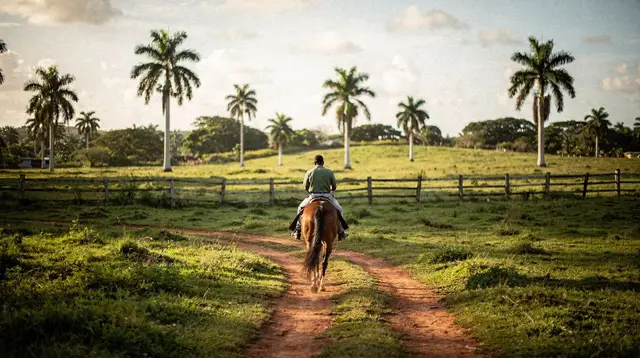
Horseback riding along the beach and through nearby farmland is a genuine alternative to buggies for people who want a slower, quieter way to see the same countryside.
a horseback ride from the Higüey countryside down to Macao Beach, with a swim includedThis route pairs Higüey’s rural landscape with a finish on the beach, and it is a reasonable way to combine two things — countryside and coast — in one morning without needing a car. For riders who want a private group rather than joining others, a private version of a similar route exists too, worth checking against the shared option for price and group size before booking.
Cultural safaris and countryside stops
Several full-day “safari” style tours use Macao as one stop among several, mixing a rural village visit, a stop at a local farm, and beach time at Macao itself.
a full-day countryside safari that includes a tasting stop and finishes at Macao BeachThese full-day tours suit visitors who want a broad taste of rural Dominican life — small farms, local food, a village stop — rather than a single-activity day. If you would rather focus purely on food, rum and cigars without the countryside detour, the Punta Cana food, rum and cigars guide is a narrower option.
The blue cave stop: Mundo Taíno
A smaller, less strenuous option near Macao Beach is a stop at a cave-and-cenote site with Taíno-themed grounds and a natural pool.
a half-day visit to a blue cave and cenote pool near Macao BeachThis is a paid, organized stop rather than a free natural site, and it is a reasonable way to break up a beach day with something shaded and different. It should not be confused with Hoyo Azul at Scape Park in Cap Cana, which is a separate cenote in a different sector entirely — see the cenotes, caves and waterfalls guide for how the various cave and cenote stops around the region compare.
Pairing Macao with Higüey
Several of Macao’s excursions, including the horseback route above, start from or pass through Higüey, the religious market town inland from the coast rather than a beach destination itself. Travelers who want more of Higüey’s own culture, food and countryside beyond a swim-and-ride combination can read the dedicated Higüey day trip guide and Higüey cultural and countryside tours guide, or the Higüey food, rum and cigars guide for a slower, food-focused version of the same inland area.
Ziplines and adventure parks nearby
For travelers based in or near Uvero Alto who want an adrenaline stop without heading all the way south to the parks near Bavaro, a private zipline expedition through jungle terrain inland from the coast is bookable as a standalone activity or paired with a countryside tour. These outings typically run as small groups moving between a series of platforms on cable lines strung through the tree canopy, with the operator handling harnesses and a safety briefing before anyone leaves the ground. It suits visitors who want a short adrenaline break rather than a full day of activity, and it pairs naturally with a half-day beach stop at Macao itself. For the fuller range of canopy and adventure-park options across the destination, including which ones run closer to Uvero Alto versus Bavaro, see the ziplines and adventure parks guide.
Who should stay in Uvero Alto, and who shouldn’t
This is the honest trade-off. Uvero Alto puts you closest to Macao Beach and gives a quieter, less developed feel than the dense hotel strip in Bavaro, but it adds real time to your airport transfer and distances you from the pickup hubs that most excursion operators use as a default meeting point.
| Uvero Alto (near Macao) | Bavaro / Cap Cana | |
|---|---|---|
| Transfer time from PUJ | 40–60 minutes | 15–40 minutes |
| Beach type | Public beach, surf, open water | Mostly private resort beaches, calmer |
| Atmosphere | Quieter, less developed | Denser, more resort infrastructure |
| Excursion pickup convenience | Often an add-on stop, longer pickup | Usually the default pickup zone |
If you want a quiet, lower-key base and don’t mind the longer transfer both to and from the airport and to most excursions, Uvero Alto and its proximity to Macao is a reasonable pick. If you want to minimize transfer time and stay close to the widest range of tour pickups, Bavaro or Cap Cana will serve you better — the Punta Cana vs Bavaro vs Cap Cana vs Uvero Alto comparison walks through this decision sector by sector, and where to stay in Punta Cana covers it at the whole-destination level. For the specific practicalities of getting from the airport to whichever hotel you choose, see from PUJ airport to your hotel.
Sargassum: the honest caveat
Macao’s east-facing position on the coast means it is exposed to the same seasonal sargassum arrivals that affect the rest of this shoreline, most likely between April and October and inconsistent from year to year. No operator or hotel can guarantee sargassum-free sand on a given week months in advance. If you are planning a trip specifically for beach time during that window, read the sargassum season guide before committing to a beach-heavy itinerary, and check current conditions closer to your travel dates rather than relying on marketing photos. For a broader look at beach options across the region if Macao’s conditions are unfavorable on the day, best beaches in Punta Cana has alternatives further south.
Getting to and around Macao
There is no rail network in this part of the Dominican Republic. Most visitors reach Macao by private transfer or taxi arranged through their hotel, since public “guagua” buses are aimed at longer-distance local travel rather than short hops between hotel sectors and this beach. Buggy, ATV and horseback tours generally include pickup from Uvero Alto and, for an added fee or longer pickup window, from Bavaro and Cap Cana hotels further south.
The getting around Punta Cana guide covers taxis, ride apps and local buses in more detail if you plan to move between sectors independently rather than relying on tour pickups. Travelers who prefer independence over tour pickups altogether can also look at renting a car in the Dominican Republic, though most visitors staying near Macao still find organized transfers or taxis simpler for one-off excursions, since driving is on the right and rural roads inland from the coast are not always well signed.
Practical notes
Bring cash in small denominations — vendors on a public beach like Macao are far more likely to want pesos or small-bill dollars than a private resort would be. Prices for tours and beach vendors are often quoted in US dollars, but change is commonly given in Dominican pesos (DOP), so carrying some small-denomination pesos avoids awkward change on a public beach like this one.
If your day includes a sit-down meal away from your hotel, expect the bill to add the standard 18% ITBIS tax plus a 10% service charge automatically rather than as a discretionary tip — see the money, tipping and taxes guide for how that plays out across the destination. Water sold on the beach is bottled; tap water anywhere in the country, including at hotels, is not safe to drink. If your day includes a countryside or cave stop, closed shoes are more useful than sandals for the buggy and horseback sections, even though the day ends on sand.
Frequently asked questions about things to do in Macao Beach
Is Macao Beach the same as the beaches in front of the Bavaro hotels?
No. Macao Beach is a public beach north of the main hotel strip, open to anyone, with vendors, surf schools and buggy-tour meeting points. The beaches in front of Bavaro and Cap Cana hotels are largely fronted by resort property, calmer, and closer to Punta Cana International Airport.
How far is Macao from Punta Cana International Airport?
Hotels around Uvero Alto, the sector closest to Macao Beach, are typically 40 to 60 minutes from PUJ by road. Bavaro and Cap Cana hotels further south are usually 15 to 40 minutes away, so factor the longer transfer into an Uvero Alto stay.
Can I swim at Macao Beach or is it just for surfing?
You can swim, but conditions are more open-ocean than the calmer bays further south, and Macao is genuinely known as a surf break with a steady shore break. It suits people who want waves and open sand more than flat, sheltered swimming water.
Does Macao Beach get sargassum?
It can. Like most of the Dominican Republic’s east coast, Macao is exposed to seasonal sargassum arrivals, most likely between April and October and variable year to year. There is no way to promise a sargassum-free week in advance from this side of the island.
Is it worth staying in Uvero Alto instead of Bavaro to be near Macao?
It depends on priorities. Uvero Alto sits closer to Macao Beach and feels quieter and less built-up, but it adds 20 to 40 minutes to most airport transfers and puts you further from the excursion pickup hubs concentrated around Bavaro and Cap Cana.
What is Mundo Taíno by Jhoraji at Macao Beach?
It is a small cave-and-cenote attraction near Macao Beach, built around a blue cave pool and Taíno-themed grounds, usually sold as a half-day excursion that can be paired with beach time. It is a paid, organized stop rather than a free public site.
Are the buggy and ATV tours at Macao the same as at Bavaro?
They cover similar terrain — countryside tracks, mud pits, a village stop — but Macao-based tours typically start and finish nearer Uvero Alto and the northern hotels, while Bavaro-based buggy tours pick up further south. Check the tour’s stated pickup zone before booking.
Is Macao Beach safe for a day visit without a hotel booking there?
Yes, it is a public beach and a common half-day excursion stop for guests staying anywhere in the Punta Cana area, usually arriving as part of an organized tour rather than independently.
Tours for your first trip to Punta Cana on GetYourGuide
Verified deep-linked GetYourGuide tours. Book through these links and we earn a small commission at no cost to you.
GetYourGuide does not provide a product photo for this activity — the image shows the meeting point, photographed by us.