Cacao and coffee farm tours near Punta Cana
What is a cacao and coffee farm tour near Punta Cana?
It is a half-day visit to a working farm in the countryside inland from Higuey, where a guide walks you through cacao and coffee cultivation, fermentation and roasting, followed by a tasting of chocolate and coffee. It runs as a combo with hotel transfer from Bavaro, Cap Cana or Uvero Alto, and is separate from buggy safaris or craft-market shopping trips.
What a cacao and coffee farm visit actually covers
A cacao and coffee farm tour is one of the more focused half-day excursions available from the Punta Cana hotel zone, and it is worth being precise about what it is and is not. This is not a buggy safari with a farm stop bolted on, and it is not a craft-shopping trip built around larimar and amber. It is a visit built around two crops, cacao and coffee, grown in the countryside inland from Higuey, with the emphasis on how the beans get from the plant to the cup or the bar.
Most operators run these as a half day, picking guests up from hotels in Bavaro, Cap Cana or Uvero Alto and driving inland toward the farms clustered around Higuey. If you want the fuller countryside format that mixes farm stops with off-road driving, that is a different product, covered separately in our countryside safari guide and the broader Higuey cultural and countryside tours roundup. Here, the focus stays on the farm itself.
Why Higuey, and why it matters where you are staying
Higuey is a real Dominican town, not a beach resort, and it is worth situating for anyone whose only reference point is the hotel strip along the coast. It is best known nationally as the seat of the Basilica of Our Lady of Altagracia, a pilgrimage site whose feast day falls on 21 January, and it has limited tourist infrastructure outside that basilica and the surrounding market streets. The cacao and coffee farms that host these tours sit in the agricultural land around Higuey, reached by road rather than by any coastal route.
Because these farms are inland, the tour always starts with a transfer, and how long that transfer takes depends on your hotel’s location. Hotels in the Bavaro and Cap Cana sector generally sit closer to the main road network than the Uvero Alto sector, which is set further north and typically involves a longer drive to reach any inland destination. Your booking confirmation will state the pickup time and expected duration for your specific hotel, and it is worth reading that carefully rather than assuming the transfer will match a friend’s experience from a different part of the coast. If you are trying to work out a rough sense of distances across the region generally, our Punta Cana vs Bavaro vs Cap Cana vs Uvero Alto comparison is a useful starting point, though it does not replace your tour operator’s specific pickup information.
What happens on the farm
The structure of these visits is fairly consistent across operators, even though the exact script varies farm to farm. A local guide usually starts by walking the plot, pointing out cacao trees with their pods growing directly from the trunk and branches, and coffee shrubs with their red cherries. This part is educational rather than performative: the guide explains growing conditions, harvest timing and how the two crops are often grown side by side or in rotation with other subsistence crops on smaller family farms.
From there, the tour typically moves into processing. For cacao, that means explaining fermentation, where harvested beans sit in boxes or under leaves for several days to develop flavor before drying in the sun. Some farms let visitors handle the fermented beans or see the drying racks directly. The beans are then roasted, usually over an open flame or in a simple roaster, and ground by hand or with a small mill into a paste that becomes the base for drinking chocolate or solid chocolate bars. For coffee, the equivalent steps cover picking, pulping, drying and roasting the beans before grinding and brewing.
Most tours close with a tasting: hot chocolate or cacao tea, brewed coffee, and often a piece of the farm’s own chocolate. Some farms also demonstrate a simple bean-to-bar process where you watch, and sometimes help, mold and set a small chocolate bar to take with you. This hands-on, unhurried pace is part of the appeal, and it is a genuinely different rhythm from a buggy tour or a party catamaran — worth knowing before you book if you are expecting more activity and less explanation.
What this tour is not
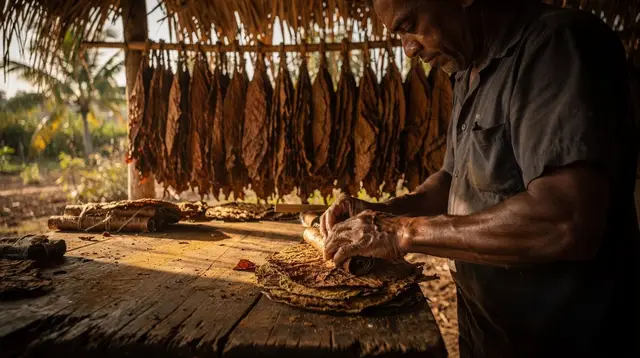
It is worth being direct about scope, because tour names and marketing photos can blur the lines between different excursion types. A cacao and coffee farm tour is not a full countryside safari: those trips, often run in trucks or buggies, cover more ground and typically include stops at a school, a sugar cane press and sometimes a cigar-rolling demonstration in addition to a farm stop, with less time spent on cacao and coffee specifically. If that broader mix interests you more than a focused farm visit, see our countryside safari guide instead.
It is also not a shopping trip for larimar or amber jewellery, even though some tour itineraries in the region combine a farm stop with a stone workshop visit. Larimar and amber are Dominican semi-precious stones sold in dedicated shops and markets, and buying them is a different transaction from buying farm-made chocolate or coffee; our separate guide on larimar and amber covers what to know if that is what you are after. If a tour listing bundles cacao, coffee and a stone workshop into one itinerary, read the description closely so you know how much time is allotted to each stop.
Booking options
Several operators run versions of this tour, ranging from a straightforward farm-and-tasting format to combinations with light hiking or a cultural traditions theme. Since a farm visit like this pairs naturally with wanting to actually taste the finished product, this coffee, tobacco and hidden trails tour into the Higuey countryside is a common starting point, combining farm walks with a tasting stop.
For visitors who prefer to mix the farm stop with some off-road driving, an ATV tour that includes a coffee and chocolate tasting stop keeps the farm element but adds more activity around it. Families or groups wanting a broader cultural framing, including music or craft demonstrations alongside the farm visit, might look at this farm life and Caribbean cultural traditions tour. And for anyone who wants an adventure element bolted onto the same countryside setting, a jungle zipline tour that includes a Dominican cacao stop combines ziplining with a shorter cacao-focused segment.
Whichever option you pick, the exact route, farm visited and inclusions vary by operator and can change between bookings, so confirm the itinerary against the current listing before you commit.
Comparing the main formats
| Format | Focus | Typical pace | Best for |
|---|---|---|---|
| Dedicated cacao and coffee farm tour | Full visit to one farm, tastings, bean-to-bar demo | Slow, explanatory | Anyone who wants depth on cacao and coffee specifically |
| Farm stop within a countryside safari | Brief farm stop plus sugar cane, school, cigars | Faster, more stops | Visitors who want variety over depth |
| ATV or zipline combo with farm tasting | Adventure activity plus a shorter farm segment | Mixed pace | Groups wanting activity and a tasting, not a long walk |
When to go: weather and timing on a farm walk
The Dominican Republic’s east coast stays tropical year-round, generally in the 26-31°C range, so there is no cold season to plan around. What changes is rainfall and humidity. The stretch from December to April is the drier, less humid part of the year and tends to be the more comfortable window for an outdoor walk through unpaved farm paths, while May through November is wetter, with the Atlantic hurricane season running June to November and the highest risk concentrated in August, September and October.
None of this rules out booking a farm tour in the wetter months — operators run these visits year-round and a tropical shower is often short — but if your travel dates are flexible and this tour is a priority, the drier season lowers the odds of a muddy walk or a weather-related reschedule. Our best time to visit Punta Cana guide lays out the seasonal trade-offs in more detail, and the hurricane season guide covers what a named storm actually means for a booked excursion.
Pairing a farm visit with the rest of Higuey
Because the farms sit close to Higuey rather than on the coast, a cacao and coffee tour pairs naturally with other reasons to head into that same inland area. If you are already committing to the drive, our Higuey day trip from Punta Cana guide covers how to combine a farm visit with the Basilica of Our Lady of Altagracia and the town’s market streets in a single outing, and the broader things to do in Higuey roundup lists the other stops worth considering.
Food is part of that same trip for many visitors: the region’s rural kitchens and roadside stands are covered in our Higuey food, rum and cigars guide, and if a farm tour has put you in the mood to understand mamajuana or Dominican rum more generally, our separate mamajuana, rum and cigars explained guide is a good next stop. None of this is required — plenty of visitors book the farm tour on its own as a half-day combo with transfer included — but it is worth knowing the pieces exist if you would rather build a fuller day around the same drive inland.
Practical notes before you book
Wear closed shoes and clothing you do not mind getting a little dusty, since farm paths are unpaved. Bring cash in a small amount if you want to buy chocolate or coffee directly from the farm, since not every farm processes card payments on site, and pesos are generally more useful for small on-farm purchases than exact change in US dollars. The Dominican peso (DOP) is the local currency, and while US dollars are widely accepted in tourist areas and on excursions, change is typically handed back in pesos, so carrying a mix of both avoids awkward math at a farm stall.
Sun protection matters even though much of the walk may be shaded by cacao and coffee canopy, since the transfer and any open areas on the farm are not. Tap water is not safe to drink anywhere in the Dominican Republic, farms included, so bring or buy bottled water for the visit. For a fuller packing rundown that covers more than just this one excursion, see our what to pack for Punta Cana guide.
If your farm visit includes a meal or is bundled with a restaurant stop elsewhere in your trip, note that Dominican restaurant bills normally carry an 18% ITBIS tax plus a 10% service charge, both usually itemized on the check rather than something you need to calculate yourself. That is a separate matter from tipping your tour guide or driver directly, which is customary but not fixed by law; our money, tipping and taxes in Punta Cana guide covers both in more detail.
As with any excursion booked from a hotel in this area, treat published prices as a starting range rather than a fixed number: check the current price, duration and pickup details on the GetYourGuide or Viator listing for the exact date of your stay, since operators adjust pricing and combos over time. If you are weighing whether to book through your hotel’s tour desk or directly online, our hotel tour desk or book online guide walks through the trade-offs.
Cacao and coffee farm tours: frequently asked questions
Where exactly are these cacao and coffee farms?
They sit in the rural interior around Higuey, a Dominican town away from the coast, not inside a beach resort area. Higuey itself is known for the Basilica of Our Lady of Altagracia rather than for beaches, and the farms are reached by road from the Punta Cana hotel zone.
How long does the transfer from my hotel take?
It depends on where you are staying. Hotels in Bavaro and Cap Cana are generally closer to Punta Cana International Airport (PUJ) than Uvero Alto, and the same pattern holds for the drive out to the Higuey countryside, so Uvero Alto guests should expect a longer ride. Your operator’s confirmation will give the pickup window for your specific hotel.
What actually happens during the visit?
A guide typically walks the plot to show cacao pods and coffee shrubs, explains how cacao beans are fermented and dried, demonstrates roasting and grinding, and shows a simple bean-to-bar or bean-to-cup process. Most tours end with a tasting of chocolate, cacao tea and brewed coffee.
Is this the same as a buggy or ATV safari?
No. Some countryside safari tours stop briefly at a farm as one point among several, while a dedicated cacao and coffee farm tour spends the whole visit on the farm itself, with more explanation and a longer tasting. Check the tour description on GetYourGuide or Viator to see which format you are booking.
Can I buy chocolate or coffee to take home?
Many farms sell their own chocolate bars, cacao products and roasted coffee on site, priced separately from the tour. This is farm produce, not the larimar or amber jewellery sold elsewhere on craft-shopping excursions.
Is this tour suitable for children?
Most farm tours are easygoing and walk at a slow pace, which tends to suit families, but check the specific listing for minimum age and walking requirements before booking.
How much does a cacao and coffee farm tour cost?
Prices vary by operator, group size and whether transfer is included. Check the current price and inclusions on the GetYourGuide or Viator listing before booking, since tour operators adjust rates without notice.
Is a cacao and coffee farm tour affected by weather?
It can be. The Dominican Republic has a wetter period from May to November, with the highest hurricane risk from August to October, and farm paths are unpaved, so a rainy morning can make walking muddier or push an operator to reschedule. The drier stretch from December to April is generally the more comfortable window for an outdoor farm walk, though tours run year-round.
What should I bring or wear on a farm tour?
Closed shoes, light clothing you do not mind getting dusty, sun protection and a small amount of cash in pesos for on-site purchases are the practical basics. Bottled water is worth carrying too, since tap water in the Dominican Republic is not safe to drink.
Countryside and cultural tours from Punta Cana on GetYourGuide
Verified deep-linked GetYourGuide tours. Book through these links and we earn a small commission at no cost to you.
GetYourGuide does not provide a product photo for this activity — the image shows the meeting point, photographed by us.