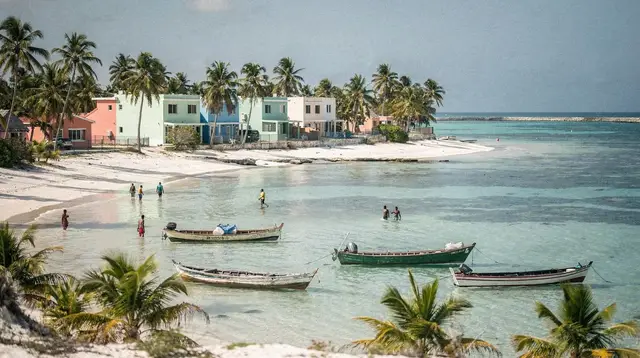
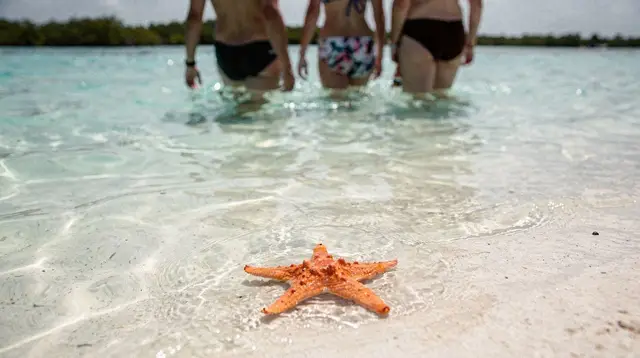
A 5-day rainy season plan for Punta Cana, Cap Cana and Santo Domingo
Why plan around the rainy season instead of against it
May to November is the Dominican Republic’s wetter half of the year, and June to November is hurricane season, with the highest storm risk from August to October. None of that makes a trip to Punta Cana and Bavaro a bad idea — average temperatures still sit at 26-31°C and most rain arrives as short afternoon showers rather than all-day washouts. But it does change what a smart itinerary should prioritize: fewer plans that live or die on a flat, sargassum-free beach, and more days built around golf, a cave, a marina, a colonial city and activities that keep working when the sky does not cooperate.
This plan does not chase whale watching (that is a Samana story, roughly mid-January to late March, nowhere near this itinerary) and it skips the southern islands entirely — Saona and Catalina are a different guide, reached from Bayahibe, and they are far more weather-dependent than anything covered here. It also does not push a fast pace: five days, no rental car, and enough slack to move an activity by a few hours if a squall rolls through.
If you are comparing options, this is not the same trip as a five-day Punta Cana budget itinerary, which stays close to the resort strip and skips Cap Cana and Santo Domingo. It is also not the luxury week built around Cap Cana in high season with a rental car. This is a plan-B trip for a plan-B time of year: honest about what the weather might do, not a premium week dressed up as one.
What to expect from the weather
Expect warm, humid days in the 26-31°C range, brief but sometimes heavy showers (often afternoon), and a real chance that a tropical system affects flights or excursions somewhere in the June-to-November window, worse from August through October. Read the site’s hurricane season guide before booking, keep travel insurance in mind, and check forecasts a few days out rather than trusting a single app.
Sargassum — the brown seaweed that can wash up on the east coast — is a separate issue from storms and shows up on its own calendar, mostly April through October, in amounts that vary year to year and even week to week on the same beach. No operator can promise a clean beach on a given date in this window. The sargassum season guide has more detail; this itinerary simply avoids betting entire days on beach conditions no one can guarantee months in advance.
Getting around without a car
Every leg here is booked as a private or shared tour with hotel pickup, which matters more than usual in the rainy season: no waiting on a street for a guagua in a downpour, no navigating unfamiliar roads if a shower reduces visibility. See the getting around Punta Cana guide for how taxis, ride apps and transfers actually work here, and the PUJ-to-hotel guide for arrival logistics. Most Bavaro and Cap Cana hotels are 15-40 minutes from Punta Cana International Airport (PUJ); Uvero Alto runs 40-60 minutes, which is not part of this route but worth knowing if you are comparing hotel zones.
Day 1: Arrive, settle in, low-key Punta Cana
Land at PUJ, clear immigration (have your free e-Ticket done in advance — it is mandatory for entry, and the 10 USD tourist card is already bundled into most flights, not a separate arrival fee), and transfer to your hotel in Punta Cana or Bavaro. Keep day one unstructured on purpose: this is the day most likely to run into a delayed flight or a first-afternoon shower, and there is no tour to miss.
If the weather cooperates, a short walk on the beach nearest your hotel is enough of an introduction. If it does not, most resorts have a pool bar, spa or games room that works just as well for a first evening. Either way, avoid booking anything time-sensitive today. For a sense of what a rainy day in the zone actually looks like, the rainy day Punta Cana guide covers indoor and low-weather-risk options beyond what fits in this itinerary.
Day 2: Cap Cana — golf, marina, cave
Move inland-and-upmarket for the day to Cap Cana, a higher-end sector south of Bavaro built around a marina and several golf courses. Golf is one of the more rain-tolerant activities on this coast — a short shower rarely closes a course for long, and most clubs pause and resume play rather than cancel outright. Pair a morning round (see the golf in Punta Cana and Casa de Campo guide for course options) with an afternoon at the marina, browsing boats and having lunch at one of the waterfront restaurants — remember menu prices there typically carry an 18% ITBIS tax plus a 10% service charge (“ley”), which is standard, not an add-on error.
For an evening that does not depend on weather at all, consider an evening cave party with a mud bath and cocktails in Cap Cana — it happens underground, which makes it one of the few genuinely rain-proof options on this whole itinerary.
Day 3: Santo Domingo day trip
This is the longest travel day of the trip, and it should be treated that way: Santo Domingo is 2.5 to 3 hours from Punta Cana by road, not the “quick day trip” some brochures imply. Book a guided day tour to Santo Domingo from Punta Cana that includes the transfer, rather than trying to arrange the trip piecemeal — with a round-trip drive eating up 5-6 hours on its own, an organized tour is the only way to see the Colonial Zone without an exhausting logistics puzzle.
The upside for a rainy-season trip: Santo Domingo’s Colonial Zone, a UNESCO World Heritage Site since 1990, is largely a walking city of covered arcades, museums, cathedrals and colonial buildings — the Catedral Primada de America, the Alcazar de Colon, and the Calle El Conde among them. Rain here is an inconvenience, not a trip-ending problem, unlike a beach day. See the Santo Domingo day trip guide and the colonial zone self-guided walk for what a full day there covers. Given the drive, this is not a day to combine with anything else — get back to your hotel, and plan a slower day 4.
Day 4: Punta Cana, weather-flexible day
After yesterday’s long drive, stay closer to the hotel zone. Check the forecast the night before and pick one of two directions:
- If the sea is calm and reasonably clear of sargassum, book the half-day snorkeling trip to the natural pool off Punta Cana — a shorter, lower-cost option than a full day on the water, useful when you are not fully committing the day to a boat.
- If the beach looks rough or the sky does not cooperate, swap in a go-kart session in Punta Cana instead — it runs on a track regardless of what the ocean is doing, and it is an easy half-day filler that does not need a full dry forecast.
Either way, keep the afternoon open. This is the itinerary’s built-in buffer day, useful if an earlier activity got rescheduled because of weather. For general orientation on what else fits into a loose Punta Cana afternoon, the best snorkeling spots near Punta Cana guide is worth a look before you decide.
Day 5: Cap Cana catamaran and Hoyo Azul, then departure
Head back to Cap Cana for the trip’s marquee outing: a catamaran, snorkeling and Hoyo Azul combination tour in Cap Cana. Hoyo Azul is a cenote inside Scape Park — a freshwater sinkhole surrounded by limestone cliffs, not affected by sargassum or rough surf the way an open beach is, which makes it one of the more dependable outdoor options on a rainy-season trip. The catamaran and snorkeling portion is weather-dependent like any boat excursion, so build in flexibility for your flight time; ask your hotel or the tour desk about morning versus afternoon departures if your flight is later in the day. The Hoyo Azul and Scape Park guide covers what the cenote visit involves in more detail.
If your flight is early, move this to a half-day version or shift it to day 4 and use day 5 purely for packing and transfer — either way, don’t schedule a tight connection right after a boat tour in a season when boat schedules can slip.
Budget shape for this itinerary
| Day | Focus | Approx. activity cost (USD, per person) |
|---|---|---|
| 1 | Arrival, rest | — |
| 2 | Cap Cana golf + evening cave party | 80-180 for golf, 60-90 for the cave party |
| 3 | Santo Domingo day trip | 90-140, transfer included |
| 4 | Snorkeling or go-karts (weather call) | 40-80 |
| 5 | Cap Cana catamaran + Hoyo Azul | 90-150 |
These are ranges, not fixed prices — check the GetYourGuide or Viator listing for each tour for the exact rate on your travel dates, since pricing shifts with season and demand.
Rainy season Punta Cana, Cap Cana and Santo Domingo: questions
Is Punta Cana worth visiting during the rainy season?
Yes, if the plan does not depend entirely on calm beach weather. Temperatures stay warm (26-31°C) year-round, and showers are usually brief and afternoon-focused. Building in golf, a cenote, a cave and a city day trip — as this itinerary does — reduces how much of the trip a single stormy day can ruin.
Will hurricanes affect a trip in this window?
Hurricane season runs June through November, with the highest risk from August to October. Most trips are unaffected, but flight delays or excursion cancellations are more possible in this window than in December-to-April high season. Travel insurance and flexible plans (like the buffer day in this itinerary) are the honest way to manage it, not a guarantee that nothing will be disrupted.
Will the beach have sargassum during my trip?
Possibly. Sargassum can wash up on Punta Cana’s east-facing beaches mainly from April to October, in amounts that vary by year and even by week. No tour operator or hotel can promise a sargassum-free beach for a specific date this far in advance, which is part of why this itinerary leans on Cap Cana, Santo Domingo and cenote activities rather than a beach-heavy plan.
Why does this itinerary include Cap Cana instead of just staying in Bavaro?
Cap Cana offers golf, a marina and Hoyo Azul inside Scape Park — activities that are less dependent on flat, clear ocean conditions than a typical beach day. Alternating between Punta Cana/Bavaro and Cap Cana spreads the trip across more weather-resilient options than staying in one beach-focused zone.
How different is this from the Punta Cana budget itinerary?
The budget version stays within Punta Cana and Bavaro and skips both Cap Cana and the Santo Domingo day trip to keep costs and transfer time down. This itinerary spends more on a marina, golf and a cenote day, plus a full day trip to the capital, aimed at travelers visiting during a lower-demand, weather-uncertain stretch of the year rather than at minimizing spend.
Is this the same as the Cap Cana luxury itinerary?
No. The luxury week is built for high season, assumes a rental car, and stays centered on Cap Cana and Casa de Campo at a higher spending level. This itinerary is a no-car, mid-range plan built specifically as an honest alternative for the rainy season, with Cap Cana as one stop among several rather than the whole trip.
Do I need a car for this itinerary?
No. Every day in this plan is reachable by hotel transfer, taxi or a booked tour that includes pickup, including the Santo Domingo day trip. A rental car is not necessary and, given occasional heavy rain and unfamiliar roads, arguably adds more risk than it saves during this season.
What documents do I need to enter the country for this trip?
A passport valid for your full stay, the free online e-Ticket completed before both arrival and departure (mandatory), and the 10 USD tourist card, which is bundled into most flights rather than paid separately on arrival. Citizens of the EU, UK, US, Canada and most South American countries do not need a separate tourist visa for a standard stay.
Seasonal tours and activities on GetYourGuide
Verified deep-linked GetYourGuide tours. Book through these links and we earn a small commission at no cost to you.
GetYourGuide does not provide a product photo for this activity — the image shows the meeting point, photographed by us.