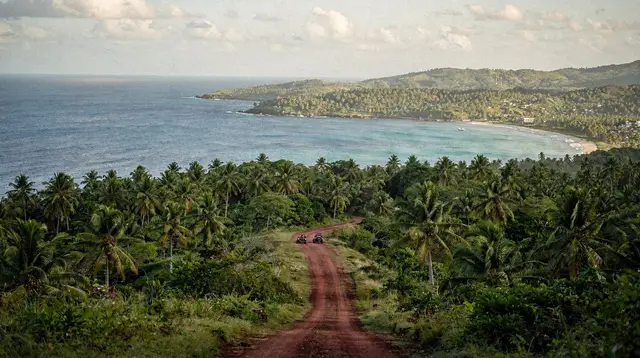
Buggy and ATV tours in Las Terrenas
What do buggy tours from Las Terrenas actually involve?
Half-day or full-day rides through the greener, less developed countryside north of the Samana peninsula, mixing dirt roads, small hamlets, river or lagoon swim stops, and one or two beach breaks. They cover land only — no boat leg and no whale watching, which are separate excursions from the same area.
What a buggy tour out of Las Terrenas actually covers
Las Terrenas is the largest and most developed beach town on the Samana peninsula’s north coast, and it is also where most of the peninsula’s buggy and ATV tours depart from. That matters because the terrain here is genuinely different from the buggy tours run further south, out of Bayahibe near the Cotubanama coast. Around Las Terrenas, the routes climb into greener, hillier countryside dotted with small hamlets, coconut plantations, and river crossings, rather than the drier scrubland closer to the southeast coast. If you have already looked at a Bayahibe buggy tour and are trying to decide between the two regions, the honest answer is that they are not interchangeable experiences — they sit in different landscapes with different stops.
A typical Las Terrenas buggy or ATV tour runs three to five hours, including hotel pickup from the town or nearby resorts. Groups usually convoy in pairs of buggies or single-rider ATVs behind a lead guide, moving between paved road sections, packed dirt tracks, and occasionally looser or muddier stretches depending on recent rain. Expect a mix of open countryside, small farming communities, and at least one stretch along or near the coast. Most itineraries build in two or three stops: a river or lagoon swim break, a beach pause, and sometimes a short visit to a roadside stand selling coconuts, fruit, or local rum. None of this should be oversold — it is a countryside ride with a few good pauses, not a theme-park circuit, and how much you see of “authentic” rural life depends heavily on the specific route and the day’s conditions.
a half-day buggy adventure that pairs the countryside ride with a beach stop and a river swim is the most straightforward version of this format, and it is a reasonable starting point if you want one clear read on what the region offers without adding an extra activity.
How this differs from Samana town and Miches
The Samana peninsula is often talked about as a single destination, but it covers three quite different bases: Las Terrenas, Samana town, and Miches further west. Las Terrenas is the most built-up of the three, with the highest concentration of hotels, restaurants, and tour operators, which is why most buggy departures are based here rather than in the other two. Samana town is smaller and functions mainly as the departure point for whale-watching boats and catamaran trips into the bay — if you are looking for that, see the whale-watching guide rather than this page, since a buggy tour will not put you anywhere near a boat. Miches, meanwhile, is quieter and less developed than either, with its own smaller set of buggy and ATV operators working a different stretch of coastline.
None of this is a strict hierarchy — it is simply that Las Terrenas has the tour infrastructure and route variety that make it the practical base for a countryside buggy ride, while the other two towns serve different kinds of excursions. If you’re staying in Punta Cana proper and weighing whether to base a whole day trip around this part of the country, it helps to look at the broader things to do in Las Terrenas and things to do in Samana pages before locking in a single activity.
What the routes actually look like
Route names vary by operator, but most Las Terrenas buggy itineraries draw from a similar pool of stops: coastal villages, small rivers or freshwater pools, and one or more beaches along the north shore. A few operators build a longer version that adds a stretch through coffee and cocoa farmland, slowing the pace to walk through a small plantation before getting back on the buggies.
a dune-buggy route that works a stop at a coffee and cocoa farm into the ride, with an added detour toward El Limon is worth comparing against the straightforward beach-and-river version if you’d rather slow down for a farm stop than add extra beach time. Neither is objectively better — it depends on whether you want more nature stops or more water stops, and both are land-based, so don’t expect either to double as a boat trip or a whale-watching excursion, which are handled separately on the El Limon waterfall tours guide and the Samana catamaran guide.
Some tours instead concentrate the whole day on a beach circuit, hopping between two or three named beaches west of town rather than heading inland.
a beach-focused circuit that links Playa Moron, Playa Onda, and Playa Ermitano by buggy trades the farmland detour for more time on sand, which suits travelers who came for the best beaches near Punta Cana style of day rather than a countryside ride. If your priority is genuinely rural scenery over beach time, look instead at the beach-and-river or beach-and-Moron versions, since both spend more of the route inland.
A smaller number of operators sell the ride as part of a longer countryside package rather than a beach-and-buggy loop.
a buggy adventure that combines a beach stop at Moron with additional river pauses along the inland route sits between the two extremes above, useful if you cannot decide between a beach-heavy day and a farmland-heavy one.
River and lagoon stops: what to expect, honestly
Almost every itinerary includes at least one freshwater stop, usually described as a river or a laguna. These are genuinely pleasant breaks — cooler than the ocean, usually shaded, and a welcome pause after an hour or more of dust and vibration on the buggy. That said, water levels and clarity vary with recent rainfall, and a stop billed as a “natural pool” can range from a wide, calm swimming spot to a smaller, shallower pool depending on the season and the specific location the operator uses that week. Don’t plan the whole day around a single dramatic swim; treat it as a bonus rather than the headline.
For travelers who want the lagoon stop without the buggy ride around it, a separate, quieter option exists.
a private excursion built specifically around a laguna near El Limon rather than a full buggy circuit is worth a look if the swim stop is really what draws you and the dust and driving are the part you’d rather skip.
Weather, terrain, and what to wear
The interior routes north of Las Terrenas are noticeably greener and wetter than the drier zones around Punta Cana and Bavaro, so mud is a real possibility outside the driest weeks of the year. In the drier stretch of the calendar — roughly December to April — expect more dust than mud; in the wetter months from May to November, count on the opposite. Either way, closed shoes are the sensible choice over sandals, and clothes you don’t mind getting dirty matter more here than on a beach-based excursion. Bring a dry bag or a sealed pouch for your phone and any cash, since the river stop means at least one point where you’ll want your hands and pockets free.
As with the rest of the east and southeast of the country, the region sits in the Atlantic time zone (UTC-4) with no seasonal clock change, and the hurricane season runs June through November with the highest risk from August to October — a factor worth checking if you’re booking a countryside tour that depends on decent road conditions during a wet or stormy stretch.
Driving yourself vs. riding as a passenger
Most tours offer a choice between driving your own buggy or ATV with a co-rider, or sitting as a passenger while someone else drives. If you plan to drive, you’ll typically need a valid driver’s licence from home, and some operators set a minimum age for drivers separate from the minimum age for passengers. Pregnant travelers and anyone with back or joint issues should be cautious about the vibration and bumps on dirt sections — ask the operator directly before booking rather than assuming.
Dominican Republic driving rules follow the right-hand side of the road, same as most of North America and continental Europe, so the mechanics of steering a buggy will feel familiar even if the road surface does not.
Buggy, ATV, or Polaris: does it matter here?
Operators around Las Terrenas advertise the ride under a few different names — dune buggy, ATV (quad), and occasionally Polaris-style side-by-side — and the terms aren’t always used consistently from one listing to the next. A buggy is typically a two-seat, roll-caged vehicle you drive side by side with a passenger; an ATV or quad is a single-rider straddle vehicle, sometimes offered with a second seat behind the driver; a Polaris-style side-by-side is a larger, more enclosed version of the buggy with more stable handling on rough ground.
On the routes north of Las Terrenas, the choice mostly comes down to comfort and how much dust or spray you’re willing to sit in rather than any real difference in where the tour goes. If the distinction matters to you, the buggy vs. ATV vs. Polaris comparison walks through the practical trade-offs — visibility, fatigue over a multi-hour ride, and how each handles the muddier stretches — in more depth than fits here.
Mud, dust, and whether it’s actually worth it
Anyone who has read a handful of reviews of Dominican buggy tours has run into the same complaint: the mud. Depending on recent rain, a stretch of the route can go from dusty and firm to genuinely sloppy, and riders and their clothes usually end up covered one way or the other. That is not a flaw specific to Las Terrenas — it is close to the point of the activity, and the operators running these tours plan around it rather than trying to avoid it. If you are still deciding whether this style of excursion suits you at all, the is a buggy tour worth the mud piece lays out the honest trade-offs between the fun of it and the reality of arriving back at the hotel needing an immediate shower and a change of clothes.
The river and lagoon stops built into most itineraries double as a rinse-off point before the ride back, which helps, but don’t expect to stay clean for the whole tour. Anyone with a mosquito sensitivity around the freshwater stops should also take a look at the general guidance on mosquitoes and what to know before a day spent partly outdoors near still or slow-moving water.
What to pack for the day
Beyond the closed shoes and change of clothes already mentioned, a few smaller items make the ride noticeably more comfortable: sunglasses or riding goggles to cut down on dust in the eyes, a hat or bandana that won’t blow off at speed, and a reusable bottle of water, since the tour is a half-day or more outdoors and shaded stops are limited to the scheduled breaks. The general what to pack for Punta Cana guide covers the broader packing list for the region if this is one stop among several excursions during your trip. As with the rest of the country, tap water isn’t safe to drink, so plan on bottled or filtered water rather than refilling from a tap at any of the roadside stops.
Booking through your hotel desk or online
As with most excursions around Punta Cana and the wider east coast, buggy tours out of Las Terrenas can be booked through a resort tour desk or directly online through a platform like GetYourGuide or Viator. Booking online ahead of time generally gives you a clearer, fixed itinerary and a firm price before you commit, while a hotel desk booking can sometimes be arranged with less lead time but with less transparency on exactly which route and stops you’ll get. If you’re undecided on which route to take generally, the hotel tour desk or book online comparison covers the trade-offs in more detail. For pricing, treat any number you see as a starting point rather than a fixed rate — check the specific tour listing for the current price before booking, since rates shift with season, group size, and whether you choose a shared or private buggy.
If you’re staying elsewhere on the peninsula or planning a longer trip
Travelers based in Samana town or planning a broader loop through Miches can still book a Las Terrenas-based buggy tour, though pickup times will run longer the further away you’re staying. If a full day trip built around this side of the country appeals to you, the wild north coast: Uvero Alto and Miches itinerary sketches out how a multi-day loop through this part of the region can work, and the Samana day trip from Punta Cana guide covers the logistics of getting here from a Punta Cana or Bavaro hotel in the first place, since it is a considerably longer drive than anything within the Bavaro-Cap Cana zone itself.
One more distinction worth repeating: this page, and the tours linked on it, are about the land-based buggy and ATV circuits around Las Terrenas. If what you actually want is the boat trip into Samana bay, the whale-watching season from mid-January to late March, or the beaches around Cayo Levantado, those are separate bookings covered on the Samana catamaran and Samana whale watching pages. A buggy tour will not put you on the water, and no operator running one should be promising a whale sighting as part of the ride.
How this fits into a wider countryside day
For travelers who want more than one rural activity out of the trip, a buggy tour pairs naturally with a broader look at how Dominican countryside excursions work in general — the Dominican countryside safari guide explains what these inland day trips typically include across the country, which is useful context if this is your first one. The coffee-and-cocoa detour offered on some Las Terrenas routes is also a lighter version of a theme covered on its own in the cacao and coffee farm tours guide, for anyone who wants to compare a dedicated farm visit against the shorter stop folded into a buggy itinerary.
It’s also worth weighing the guided option against doing the drive yourself. Some travelers with more time and a comfort level with local roads choose to explore the peninsula independently rather than book an organized tour — the renting a car in the Dominican Republic guide covers what that involves, though it’s worth noting a rented sedan won’t get you onto the same dirt tracks a buggy tour uses. And if the appeal of a buggy day is really about getting away from the resort for a few hours, the is leaving the resort worth it piece makes the broader case for and against day trips like this one.
Buggy tours and speedboat thrills around Punta Cana on GetYourGuide
Verified deep-linked GetYourGuide tours. Book through these links and we earn a small commission at no cost to you.
GetYourGuide does not provide a product photo for this activity — the image shows the meeting point, photographed by us.