Best snorkeling spots near Punta Cana
Where can you snorkel near Punta Cana without a long transfer?
Short boat trips from the Punta Cana and Cap Cana marinas reach calm sandbank and reef patches a 20-40 minute ride offshore. Macao Beach has surf and is not suited to snorkeling. The reef and visibility most divers rave about are around Isla Catalina and along the Bayahibe coast, both south near La Romana, not a same-day walk from a Bavaro hotel.
If you are staying at a hotel in Bavaro or Cap Cana and want to snorkel without giving up a full day, this page covers what is actually within reach: short boat trips out of the local marinas and a handful of calmer beach areas. It also says plainly what is not within reach on a short trip, because the reef most people picture when they hear “Punta Cana snorkeling” is not here.
What counts as snorkeling from a Punta Cana hotel
The Punta Cana and Bávaro: the resort strip explained area does not have a fringing coral reef running along the shore the way some Caribbean islands do. What it has instead is sandy seabed, seagrass patches, and a scattering of rock and small reef structure a short boat ride offshore, plus a few marine life stops built into the standard boat tours. That is a real, pleasant snorkeling morning. It is not the same thing as the dramatic reef wall and drop-off diving you may have read about for this part of the Dominican Republic, which sits further south.
Worth clearing up before booking anything: “Punta Cana” strictly names the cape at the island’s eastern tip, but most visitors use it loosely to mean the whole tourist strip that actually splits into separate sectors — Bavaro, Cap Cana, Uvero Alto and Macao are distinct areas, not different names for the same beach. Which marina your snorkeling trip leaves from, and how far the transfer runs, depends on which of those sectors your hotel sits in.
Three honest categories exist for a Bavaro or Cap Cana base:
- Short boat trips from the Punta Cana and Cap Cana marinas — 20 to 40 minutes out, a snorkel stop over a sandbank or reef patch, often combined with a beach stop, lunch, or a look at dolphins in a marine park setting.
- Calm hotel-adjacent water — limited, patchy, and not worth planning a trip around on its own.
- The real reef and clearer visibility south, around Isla Catalina and Bayahibe — worth doing, but as its own day, not an add-on.
Best short snorkeling trips from Punta Cana and Cap Cana
These leave from marinas in or near the Punta Cana Resort area and Cap Cana and stay within an hour or so of the coast, which keeps the whole outing to a half day.
| Trip type | Typical duration | What you get | Good for |
|---|---|---|---|
| Speedboat snorkeling stop | 3-4 hours | Fast ride out, one or two snorkel stops over sand and reef patches | Groups wanting speed over comfort |
| Catamaran with snorkeling and lunch | 4-5 hours | Slower sail, snorkel stop, onboard lunch | Couples, families, a relaxed pace |
| Half-day natural pool and snorkel | 3-4 hours | Sandbank (“natural pool”) stop plus a snorkel area | First-timers, weaker swimmers |
| Boat party with snorkeling and dolphin watching | 4-5 hours | Music, snorkel stop, dolphin sighting (not swimming with them) | Groups wanting a livelier trip |
For a straightforward option, a speedboat trip with a snorkeling stop covers the basics in under half a day. If you would rather sail at a slower pace and eat onboard, a catamaran cruise that pairs snorkeling with lunch is the more relaxed version of the same idea. Families or nervous swimmers often do better with a half-day trip built around a shallow natural pool stop plus snorkeling, since the sandbank gives everyone somewhere to stand.
Check the exact stop location and current price on the GetYourGuide or Viator listing before booking — operators rotate stops depending on conditions, and the fourth field of the ITBIS-plus-service pricing you will see at restaurants does not apply to tours, but tour prices themselves shift with season and fuel costs, so treat any figure here as a range rather than today’s number.
Why Macao Beach is not a snorkeling spot
Macao is a public beach known for its Atlantic-facing surf break and buggy tour stops, not for calm, clear water. The swell that makes it popular with surfers is exactly what makes it a poor snorkeling choice: churned sand, limited visibility, and a shore break that is more work than reward with a mask on. If a trip is billed as combining Macao Beach with snorkeling, check carefully what water it actually visits — the snorkeling stop is usually elsewhere, with Macao added only as a scenic or lunch stop.
If you are near Macao and staying in Uvero Alto, the honest advice is to treat it as a beach and buggy destination and book your snorkeling trip out of the Punta Cana or Cap Cana marinas instead.
Where the real reef actually is
This is the part worth being direct about. The reef wall and the reputation for genuinely good snorkeling and diving around this coast belong to Isla Catalina, off La Romana, and the coast around Bayahibe, inside the Cotubanama national park. Both are roughly two hours from Bavaro hotels by road before a boat is even involved, so they are not a short add-on to a beach morning — they are their own full day.
If clear water and visible reef structure matter more to you than convenience, it is worth planning one day of your trip around a longer snorkeling cruise that reaches deeper water and a natural pool stop and treating the closer Punta Cana boat trips as the easy, low-commitment option instead. For the specific Catalina Island and Bayahibe trips, see the dedicated guides on snorkeling trips to Catalina Island and scuba diving near Bayahibe, which cover the transfer time and boat logistics in full. Isla Saona trips, which also leave from Bayahibe, are built around the sandbank and beach experience more than snorkeling, and are covered separately in the Saona Island excursions guide.
Sargassum and when it is not worth it
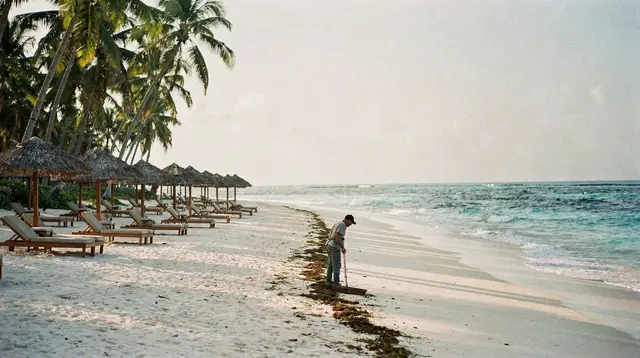
Brown sargassum seaweed can wash up along this coast, mostly from around April to October, with no reliable pattern year to year — some seasons are barely affected, others see thick mats on the sand and in the shallows for weeks. It mainly affects shoreline snorkeling and the first stretch of water off the beach; boat trips that head further out to a sandbank or reef stop are less affected but not immune. If you are booking during that window, ask the operator directly what the current water looks like at the planned stop rather than assuming a photo from the listing reflects today’s conditions. See sargassum season near Punta Cana for more on timing.
Gear, safety, and what to expect in the water
Every boat trip in this category supplies mask, snorkel and a life vest as part of the price, so you do not need to bring your own unless you have a mask you know fits well. Crew typically stay in the water at the snorkel stop, which makes these trips workable for beginners, though it is worth saying upfront if you are a weak swimmer, since not every stop has a sandbar shallow enough to stand on.
Water temperature runs warm year-round, generally in the high 20s Celsius, so a wetsuit is not needed. Reef shoes are worth packing if you are prone to cutting feet on rock or coral rubble at the entry point. Bring reef-safe sunscreen if you have it — regular sunscreen is still what most people use here, but it is worth applying before boarding rather than in the water.
Snorkeling vs. scuba diving from Punta Cana
If a morning of surface swimming over a sandbank sounds too limited, scuba diving reaches deeper sites with more visible structure, mostly around Bayahibe and Catalina Island, and requires either a resort try-dive introduction or a certification card depending on depth. That full comparison, including certification options, lives on the dedicated scuba diving near Punta Cana guide rather than here — this page stays focused on snorkeling.
For a broader look at boat-based water activities beyond snorkeling, including party boats and catamaran cruises without a snorkel stop, see the Punta Cana catamaran and boat trips guide and the wider Punta Cana water sports guide. Macao’s own activity options, mainly surf and buggy tours, are listed in the Macao water sports guide, and a full rundown of shoreline options across the region is in best beaches in Punta Cana. For the full activity list by category, see the water sports hub.
Best time of year for snorkeling conditions
Water stays warm along this coast all year, generally in the high 20s to low 30s Celsius, so temperature is never the deciding factor. Two seasonal patterns are worth planning around instead. December to April is drier and less humid, and it is also the region’s high season, which tends to mean calmer seas for the short runs out of the Punta Cana and Cap Cana marinas. May to November is wetter, and June through November is hurricane season, with the highest chance of a storm disrupting a boat schedule falling between August and October; operators reschedule or refund around genuine storm warnings rather than run a trip in unsafe water. See best time to visit Punta Cana and hurricane season in Punta Cana for how these windows shape a wider trip, not just a snorkeling morning.
Getting to the marina from different hotel zones
Where you are staying changes how much of the day gets eaten up before you even reach the boat. Hotels in Bavaro and Cap Cana sit closest to the Punta Cana marinas used for most of the trips above, roughly 15 to 40 minutes from Punta Cana International Airport (PUJ) by road, and the marina transfer runs on similar timing. Staying further north around Uvero Alto or Macao adds real driving time, since that stretch runs 40 to 60 minutes from PUJ, and the same distance has to be covered again to reach the marina and back. If you are coordinating a snorkeling day around a flight, Punta Cana airport transfers and from PUJ airport to your hotel cover realistic timing, and Uvero Alto and Higuey lays out what else is worth doing if you are based in that sector rather than Bavaro.
Booking notes
A few practical points that apply across every option above:
- Transfer to the marina is usually included in the tour price and picks up from most Bavaro and Cap Cana hotels; confirm pickup time and location when booking since it varies by hotel zone.
- Group size varies a lot between a shared speedboat and a private charter — check the listing if you want a smaller group.
- Payment and pricing on these trips is quoted in USD on the booking platforms; carrying a little cash in pesos or dollars covers tips and any extras onboard, but the tour price itself is settled at booking.
- Weather cancellations happen occasionally, more often during hurricane season from June to November; most operators rebook or refund rather than run a trip in unsafe conditions.
Snorkeling near Punta Cana: FAQ
Can I snorkel directly off the beach in Bavaro or Cap Cana?
Some hotel stretches have small patches of rock or seagrass where you can see fish close to shore, but there is no real reef right off the sand. Most worthwhile snorkeling here means a short boat ride, not a walk into the water.
Is Macao Beach good for snorkeling?
No. Macao Beach has open Atlantic swell and a shore break that draws surfers, and the water is usually too churned up for clear snorkeling. Go there for the beach and the waves, not for fish.
Where is the best snorkeling actually located?
The reef wall and clearest water most people mean when they say Punta Cana snorkeling are around Isla Catalina, off La Romana, and along the Bayahibe coast. Both are roughly two hours south of Bavaro hotels by road plus boat time, so treat them as a separate day trip, not a same-day extra.
How long are the short snorkeling boat trips from Punta Cana?
Most run 3 to 5 hours door to door, including a short ride from your hotel to the marina, 20 to 40 minutes by boat to the snorkel stop, roughly 30 to 60 minutes in the water, and time built in for a beach stop or lunch depending on the operator.
Does sargassum affect snorkeling near Punta Cana?
It can. Brown sargassum seaweed washes up on the east coast on and off from around April to October, some years heavily and other years barely at all. It mostly affects the shoreline and shallow water; boat operators usually pick stops away from the worst of it, but ask before booking if you are traveling in that window.
What is the difference between a snorkeling boat trip and a scuba dive near Punta Cana?
Snorkeling trips stay at the surface over shallower sandbank and reef patches and need no certification. Scuba diving goes deeper, requires basic training or a certification card, and reaches sites with more visible reef structure, including some near Bayahibe and Catalina Island.
Do I need my own snorkel gear?
No. Every boat operator running these trips supplies mask, snorkel and a flotation vest as part of the price. Bringing your own mask is only worth it if you know it fits well and want to skip a shared one.
Can beginners and non-swimmers join a snorkeling boat trip?
Most trips are fine for beginners since crew stay in the water with you and life vests are standard. Weak or non-swimmers should say so when booking, since some stops are in open water without a shallow sandbar to stand on.
Water sports in Punta Cana on GetYourGuide
Verified deep-linked GetYourGuide tours. Book through these links and we earn a small commission at no cost to you.
GetYourGuide does not provide a product photo for this activity — the image shows the meeting point, photographed by us.