Punta Cana on a budget: five days
Five days, no rental car, and a route that stays inside walking, guagua and short-taxi range of Bavaro, Punta Cana and Macao. This is not the itinerary for Cap Cana’s marina, a golf morning, or a day trip to Santo Domingo or the southern islands — those all add transfer costs and hours that work against a tight budget. Every stop here earns its place because it is either free, cheap, or a short fixed-rate taxi ride away.
Why this route stays cheap
The core idea is simple: minimize transfers and pick activities with a low cost per hour. Getting around Punta Cana without a car means leaning on guaguas (shared local minibuses with fixed, low fares) and fixed-rate taxis rather than private transfers, which can cost several times more for the same trip. Staying inside the Bavaro to Punta Cana to Macao triangle avoids the 40- to 60-minute hauls to Uvero Alto or the 1- to 3-hour drives toward the southern islands and Santo Domingo.
Keep a small stash of Dominican pesos (DOP, RD$) on hand for guagua fares and small vendor purchases — see pesos or dollars in Punta Cana for the practical split. US dollars are accepted almost everywhere in the tourist zone, but change usually comes back in pesos. Whatever you spend on food, restaurant bills add 18 percent ITBIS tax plus 10 percent service — never treat a menu price as the final price.
Before any of that, the paperwork itself is free if you do it right. Travelers from the EU, UK, US, Canada and most of South America don’t need a visa for a standard tourist stay, and the 10 USD tourist card is already bundled into most air tickets — the only extra step is the free online e-Ticket entry and exit form, which is mandatory both on arrival and on departure. Filling it out in advance costs nothing and avoids a queue at the airport that eats into a tight schedule.
Day 1: Settle in, walk Bavaro’s public stretch
Arrive at Punta Cana International Airport (PUJ) and use a fixed-rate airport taxi rather than a private transfer if your hotel is in Bavaro — the ride runs roughly 15 to 40 minutes depending on which part of Bavaro you land in. Spend the rest of the day on foot: Bavaro’s beach access points near the public entrances cost nothing, and walking the shoreline is the cheapest orientation to the area you will get.
For dinner, skip resort restaurant markups and head toward a local comedor in Bavaro town for Dominican staples — rice, beans and grilled protein at a fraction of hotel-restaurant prices, still with ITBIS and service added to the check. Save the dominican food guide for a shortlist of what to order.
Day 2: Macao Beach, the free alternative to a private beach day
Take a guagua or a short fixed-rate taxi to Macao Beach, a public beach with no entry fee — a deliberate contrast to the private beaches fronting Bavaro’s hotels, which you cannot access without staying there or paying a day-pass. Macao is known for surf and a rougher shoreline than Bavaro’s calmer sand, so it suits swimmers comfortable with waves more than families with small children.
There is no need to book an organized excursion to enjoy Macao: bring your own towel, buy a drink from a beach vendor stall, and treat the transport there and back as the only real cost. If you want a low-cost way to see the area from land instead of water, an ATV run through Macao is one of the cheaper adventure options in the zone.
a half-day ATV run through Macao’s back roads and beach trailsDay 3: Indigenous Eyes and a low-cost adventure add-on
Indigenous Eyes Ecological Park, inside Puntacana Resort, charges a modest entry fee that undercuts almost every paid activity in the region — a full morning of freshwater lagoons and shaded trails for a fraction of what a boat excursion costs. It’s the standout budget pick among the region’s nature and hiking guides.
In the afternoon, if the budget has room for one paid activity this week, a short go-kart session is one of the cheapest adrenaline options available, well below the cost of a half-day water excursion.
an afternoon go-kart session near Punta CanaRound out the day with an evening walk along Bavaro’s public beach access rather than a paid nightlife stop — see free things to do in Punta Cana for more zero-cost options that fill an evening without a check at the end of it.
Day 4: One short water excursion, chosen for value
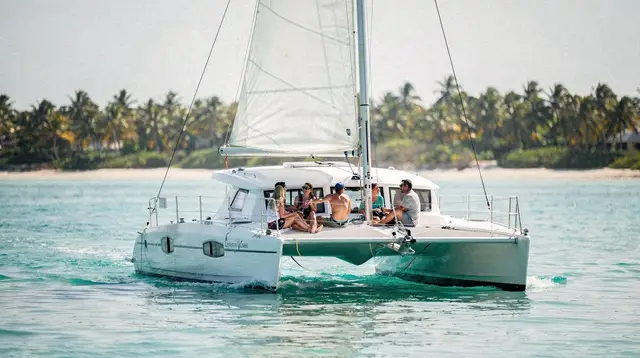
This is the one day to consider a booked excursion, and the goal is value, not spectacle. A short snorkeling trip that stays close to the Bavaro coastline costs less than a full-day catamaran party cruise and still delivers reef time without a long transfer.
a half-day snorkeling trip to a natural pool off the coastIf snorkeling isn’t the priority, a shorter coastal cruise is the next-cheapest way to see the shoreline from the water without committing to a full-day, higher-priced package.
a shorter coastal cruise along Bávaro with a snorkeling stopEither way, book directly through a GetYourGuide or Viator listing rather than a hotel tour desk markup — compare a couple of listed prices for the same activity before committing, since exact rates shift by season and provider.
Day 5: Slow morning, budget souvenirs, departure
Use the last day for a low-key morning back on Bavaro’s public beach stretch, then a walk through a local market area for souvenirs — mamajuana bottles and small amber or larimar pieces are common finds, though quality and price both vary; see dominican countryside and craft notes style guides before buying anything described as larimar without a receipt.
Time your departure taxi with PUJ’s 15- to 40-minute drive time from most Bavaro hotels in mind, and confirm your online e-Ticket entry and exit form is filled out before you leave — it’s free but mandatory, separate from the 10 USD tourist card already bundled into most air tickets.
Practical basics that keep the week cheap and simple
None of this costs money, but skipping it can cost you a wasted afternoon or an unnecessary purchase. Tap water in the Dominican Republic is not safe to drink, so budget for bottled or filtered water rather than assuming hotel tap water is fine — a detail covered in more depth in can you drink the water in Punta Cana. Outlets run on the same 110-120V, type A/B standard as North America, so travelers from the US and Canada need no adapter; everyone else does. The country sits in the Atlantic time zone (UTC-4) year-round with no seasonal clock change, which matters less for the budget than for coordinating pickup times with tour operators or family back home. If anything goes wrong, the emergency number is 911, the same as in the US and Canada.
Traffic in the Bavaro-Punta Cana-Macao triangle runs on the right, and this itinerary assumes no rental car — see renting a car in the Dominican Republic if a change of plan makes a car worth the added insurance and fuel cost partway through the week. A short checklist of what actually earns a spot in the suitcase, from sun protection to small bills for guagua fares, is in what to pack for Punta Cana.
Budget breakdown by category
| Category | Approx. daily range (USD) | Notes |
|---|---|---|
| Local transport (guaguas, fixed-rate taxis) | 5-15 | Guaguas are peso-cash only |
| Food (local comedores, not resort dining) | 15-30 | Add 18% ITBIS + 10% service at sit-down spots |
| Free activities (Macao Beach, beach walks) | 0 | Bring your own towel and drinks |
| Indigenous Eyes entry | one-time, modest fee | Cheapest paid activity on this route |
| One booked excursion (day 3 or 4) | varies by listing | Check current price on GetYourGuide or Viator |
Treat every figure here as a range, not a fixed number — check prices at booking time on the actual listing rather than planning against a number that may have moved.
What this itinerary leaves out on purpose
No Cap Cana, no golf, no marina, no Santo Domingo day trip, and no Saona or Catalina island excursion. Each of those adds either a higher per-activity cost (golf, marina charters), a 2.5- to 3-hour drive each way (Santo Domingo), or a 1.25- to 1.75-hour road transfer to Bayahibe before a boat even leaves the dock (Saona, Catalina) — all of which sit against the goal of a genuinely low-cost week. For a version of this region built around exactly those stops, with a car and a higher budget, look at a Cap Cana and La Romana-focused itinerary instead; this one is built to answer a different question.
If five days doesn’t fit your trip
Five days is enough to cover the free and low-cost core of Bavaro, Punta Cana and Macao without feeling rushed, but it isn’t the only option. Travelers with less time and the same budget priorities can trim this route down using three days in Punta Cana as a base, dropping one of the paid excursion days and keeping the free beach time. Those with a longer stay and slightly more room in the budget might prefer seven days in Punta Cana and beyond, which opens the door to a single day trip outside the Bavaro-Punta Cana-Macao triangle without abandoning a cost-conscious approach for the rest of the week. Either way, the same core logic applies: fewer transfers, free beach time first, and one or two paid activities chosen for value rather than novelty.
Frequently asked questions about a budget Punta Cana week
Do I need a rental car for this budget itinerary?
No. This route stays inside the Bavaro-Punta Cana-Macao triangle, which guaguas and fixed-rate taxis can cover. A rental car adds insurance, fuel and parking costs that work against a tight budget.
Is Macao Beach really free?
Yes, Macao Beach is a public beach with no entry fee, unlike the private beaches attached to Bavaro hotels. Budget for parking or a taxi to get there, plus food and drink, since there are only basic vendor stalls on site.
What does Indigenous Eyes cost and is it worth it on a budget?
Indigenous Eyes, inside Puntacana Resort, charges a modest entry fee that is far below most excursion prices. It gives a half day of freshwater lagoons and trails, which makes it one of the better cost-per-hour activities on this itinerary.
Should I pay in dollars or pesos?
US dollars are widely accepted at shops, taxis and excursions, but change is usually given in Dominican pesos (DOP), the official currency. Carrying some small peso bills avoids awkward change and helps with guagua fares, which are peso-only.
Do restaurant prices already include tax and service?
Menu prices rarely include the 18 percent ITBIS tax and the 10 percent service charge (ley), both of which are added to the final bill. Budget an extra 28 percent or so on top of listed food prices.
How do guaguas work and are they safe for tourists?
Guaguas are shared local minibuses that run fixed routes at low fixed fares, paid in cash to the driver or a helper. They are a normal, widely used way to get around for both Dominicans and budget travelers, though they can be crowded and make frequent stops.
Can I still book excursions if I am watching costs?
Yes, but choose fewer, cheaper activities instead of stacking pricier all-day tours. A go-kart session, a short snorkeling trip or a Macao ATV ride can fit a tight budget better than a full-day catamaran or private charter.
What does this itinerary deliberately skip?
It leaves out Cap Cana, golf, marina activities, a Santo Domingo day trip and the southern islands (Saona and Catalina), all of which add transfer time or cost that work against a five-day budget week focused on Bavaro, Punta Cana and Macao.
Tours for your first trip to Punta Cana on GetYourGuide
Verified deep-linked GetYourGuide tours. Book through these links and we earn a small commission at no cost to you.
GetYourGuide does not provide a product photo for this activity — the image shows the meeting point, photographed by us.