Cenotes, caves and waterfalls near Bayahibe
Are there cenotes near Bayahibe, and are they the same as Hoyo Azul?
Yes, but they are a different site entirely. Bayahibe's cenotes and caves sit inland from the village, on the fringes of Cotubanama National Park, while Hoyo Azul is a separate cenote inside Scape Park at Cap Cana, roughly two hours away. Bayahibe's version is usually reached on a jungle walk, buggy or e-bike tour, not a boat trip to Saona or Catalina.
Not to be confused with Hoyo Azul
If you have already read about a bright blue cenote near Punta Cana, that is almost certainly Hoyo Azul, the well-known sinkhole pool inside Scape Park at Cap Cana. It is a different site, a different park, and a different price bracket from anything covered here. This page is about the smaller, less publicized cenotes, jungle caves and freshwater pools that sit inland from Bayahibe, on the edge of Cotubanama National Park, in the La Romana-Bayahibe area at the southern end of the coast.
The two clusters of natural pools are roughly two hours’ drive apart, so do not expect Bayahibe’s cenotes to look like the photos you have seen of Hoyo Azul, and do not assume a price or a duration quoted for one applies to the other. Each is sold as its own tour, with its own transfer time from your hotel.
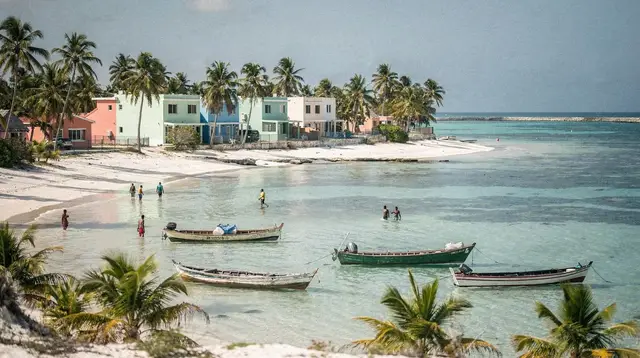
Bayahibe is best known as the departure point for boat trips to Isla Saona and Isla Catalina, both inside Cotubanama National Park. The cenotes and caves covered here are a land-based counterpart to those boat trips: no catamaran, no sandbar stop, no snorkeling over reef. Instead, the activity moves inland, through dry tropical forest, limestone caves and small freshwater ponds fed by underground springs.
What “cenote” means in this part of the island
In the Yucatan, a cenote is usually a large, deep sinkhole with clear blue water. Around Bayahibe, the term gets used more loosely for a range of freshwater features: shallow limestone pools inside cave systems, spring-fed ponds along jungle trails, and the odd larger sinkhole. None of them are marketed with the scale or the name recognition of Hoyo Azul, and operators tend to bundle a cenote stop into a broader jungle, buggy or trekking tour rather than sell the cenote alone.
That bundling is useful context when you compare tour listings: a “cenote tour” near Bayahibe is often really a jungle walk or buggy circuit with one or two swim stops, not a single dedicated attraction with its own entrance gate. Read the itinerary on the GetYourGuide or Viator listing before booking, since two tours with similar names can cover different combinations of caves, pools and trails.
a national park jungle walk with cenote snorkeling stops near Bayahibe is a common starting point: a guided hike through Cotubanama’s dry forest with one or more pauses to swim in a cave pool or cenote, aimed at visitors who want the caves without a long day of driving.
The caves themselves
The limestone that runs under this stretch of the south coast is riddled with caves, some large enough to walk through, others narrow crawl spaces best left to guides who know them well. Several caves used on tours have a partially collapsed roof, letting sunlight down onto a pool below, which is usually the most photographed moment of the trip. Others stay fully enclosed, lit only by headlamps, with stalactites and the occasional bat colony.
Do not expect painted rock art or the kind of taino pictograms found further north at Los Haitises; that is a different region and a different tour entirely, reached by boat from Sabana de la Mar or Samana rather than overland from Bayahibe. The caves around Bayahibe are sold on their geology and their pools, not on archaeology.
Jungle trekking and buggy routes
Most operators fold the cenote and cave stops into a longer route through Cotubanama’s forest edge, either on foot, by buggy, or increasingly by e-bike. A typical outline:
| Format | Rough duration | What is included |
|---|---|---|
| Guided jungle walk | Half day | Forest trail, one or two cave or cenote stops, guide commentary |
| Buggy or ATV circuit | Half day to full day | Dirt-road driving, cave and river stops, sometimes a beach finish |
| E-bike tour | Half day | Paved and packed-dirt riding, lighter physical effort, fewer swim stops |
| Private reef and cenote combo | Full day | Coastal snorkeling plus one inland cenote stop |
Treat these durations as a guide, not a guarantee. Actual timing depends on group size, hotel pickup location and how many stops the operator adds that day.
For the jungle-and-cave combination, a buggy circuit through jungle trails, caves and beaches around Bayahibe covers the driving version, while a jungle trek with a cenote swim and snorkeling stop keeps things on foot for a slower pace.
If you would rather ride than walk, an e-bike tour around Bayahibe covers more ground with less physical effort, though it typically spends less time in the water than the walking or buggy options.
What you will not get here: reef diving and snorkeling
This page deliberately stays on land. Bayahibe’s reputation for scuba diving and reef snorkeling, including the wall dives off Isla Catalina, is a separate subject with its own gear, certification requirements and boat logistics; see the dedicated Bayahibe scuba diving guide for that side of things. Cenote and cave tours use a mask and fins at most, in still, shallow freshwater, and none of the operators listed here take you onto the barrier reef.
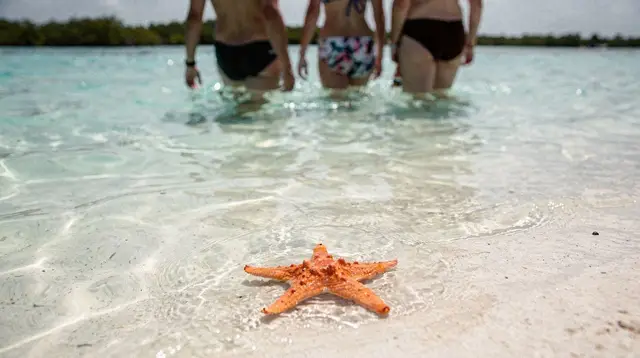
If your priority is the boat trip and the sandbar rather than caves, Saona Island excursions and the practical rules for its natural pool are covered separately in Saona’s natural pool and starfish-handling rules, including why lifting the starfish for photos is discouraged.
Getting there from a Punta Cana hotel
Bayahibe sits roughly 1 hour to 1 hour 30 minutes by road from most Bavaro and Cap Cana hotels, and closer to 1 hour 30 minutes to 2 hours from Uvero Alto, depending on traffic and your exact hotel’s location. Almost every cenote, cave or buggy tour built around Bayahibe includes round-trip transfer from the main hotel zones as part of the price, so you are not expected to arrange your own transport. Still, budget the transfer time into your day: a “half-day” tour on paper can occupy most of a morning once pickup and drop-off are factored in.
If your hotel is in La Romana itself rather than the Punta Cana hotel strip, the drive to Bayahibe is much shorter, closer to 20-30 minutes, and some operators offer a reduced or waived transfer fee for guests already staying nearby.
For a look at everything else the area covers beyond caves and cenotes, things to do in Bayahibe and things to do in La Romana round out the picture, including the replica village at Altos de Chavon, a short drive from Bayahibe and a common add-on to a day that starts with caves and cenotes.
What a private option adds
Group tours keep prices lower but move on a fixed schedule with a set list of stops. a private reef and cenote snorkeling outing near Bayahibe trades that fixed schedule for a smaller group and more flexibility on timing, which matters if you are traveling with young children, an older relative, or simply want fewer people in the water with you at the cave pool. Expect the private version to cost noticeably more per person than the shared buggy or jungle-walk tours; check the current price on the GetYourGuide or Viator listing rather than assuming a fixed multiple.
Planning it into a longer south coast day
Cenotes and caves near Bayahibe pair naturally with other south coast stops rather than standing alone as a full-day plan. A common combination for visitors staying in Punta Cana:
- Morning: cenote, cave or jungle tour near Bayahibe
- Early afternoon: lunch in Bayahibe village
- Late afternoon: a stop at Altos de Chavon before the drive back
That combination works better as an overnight or a longer stay than a rushed single day; see three days on the south coast around Bayahibe for a paced version that does not try to cram the boat trip, the caves and Altos de Chavon into one afternoon.
If you are weighing whether to spend your one south coast day on Saona Island or on land at the cenotes and caves, note that they answer different questions: Saona is about beach time, a sandbar and open water, while the cenote and cave tours are about forest, geology and freshwater. Neither substitutes for the other, and trying to fit both into a single day usually means rushing one of them.
Booking notes and honest expectations
- Prices are not fixed year-round and vary by operator, group size and season; check the current figure on the specific GetYourGuide or Viator listing before comparing options.
- None of these tours are the same length or price as a Hoyo Azul and Scape Park visit at Cap Cana; treat that as a separate trip with its own guide.
- Tap water is not safe to drink anywhere in this area, cenotes included; bring a bottle rather than relying on refills at the site.
- Closed-toe shoes or sturdy sandals make a real difference on cave and jungle paths, which can be uneven, wet or slippery.
- Most tours run rain or shine, since caves offer natural shelter, but a heavy downpour can affect river or trail conditions; ask your operator about their weather policy if you are booking during hurricane season, roughly June through November.
Frequently asked questions about Bayahibe’s cenotes and caves
Is the Bayahibe cenote the same as Hoyo Azul?
No. Hoyo Azul is at Scape Park in Cap Cana, on the opposite side of the tourist zone from Bayahibe. Bayahibe’s cenotes and caves are a separate cluster of sites inland from the village, covered by a different set of tours with their own pricing.
Can I combine cenotes with the Saona Island boat trip?
Not usually on the same day. Saona and Catalina excursions are full-day boat trips that leave from Bayahibe’s harbor early and return in the afternoon. Cenote, cave and jungle tours run as a separate half-day or full-day activity, typically inland by buggy, jeep or e-bike rather than by boat.
Do I need to know how to swim to visit a cenote near Bayahibe?
Basic swimming comfort helps, since most tours include a swim or snorkel stop in a natural pool or cave-fed pond. Life jackets are usually provided and guides keep groups in shallow, sheltered water, but check the specific tour listing if you are a non-swimmer.
How deep are the cenotes near Bayahibe compared to Hoyo Azul?
Depth varies by site and season, and operators do not always publish exact figures. Treat any number you see as approximate and check the current tour description on GetYourGuide or Viator rather than assuming it matches Hoyo Azul, which is a distinct location with its own depth.
Is this the same activity as scuba diving in Bayahibe?
It can overlap, but they are usually sold as different products. Snorkeling in a cenote or cave pool is included in most jungle walk and buggy tours. Actual cenote scuba diving, which requires certification and specialized guiding, is a separate booking aimed at certified or trainee divers.
How do I get to the Bayahibe cenotes from a Punta Cana hotel?
Most visitors book a tour that includes hotel pickup from Punta Cana, Bavaro or Uvero Alto, with the road transfer built into the excursion. Expect the transfer itself to take a meaningful chunk of the day, since Bayahibe sits south of the main hotel zone; check pickup times on the tour listing rather than assuming a short ride.
What should I bring on a Bayahibe cenote or cave tour?
A swimsuit under your clothes, a reusable water bottle since tap water is not safe to drink, closed shoes or sandals with a strap for jungle paths, and cash in pesos or dollars for tips or extras. Sunscreen and insect repellent are worth packing, applied outside sensitive freshwater pools when possible.
Is the water in Bayahibe’s cenotes cold?
Freshwater cenotes and cave pools tend to run cooler than the sea, since they are shaded and spring-fed, though nowhere near cold by most standards. Expect a noticeably fresher temperature than a swim off Bayahibe’s beach, especially first thing in the morning.
Seasonal tours and activities on GetYourGuide
Verified deep-linked GetYourGuide tours. Book through these links and we earn a small commission at no cost to you.
GetYourGuide does not provide a product photo for this activity — the image shows the meeting point, photographed by us.