Things to do in La Romana
Is La Romana worth visiting for its own sake?
Not really as a standalone stop. La Romana is a working town with limited attractions of its own; almost everything travelers come for, Bayahibe's boat departures for Isla Saona and Isla Catalina, and the replica village of Altos de Chavon, sits just outside it. Most visitors pass through rather than stay.
La Romana shows up constantly in excursion names, on cruise itineraries, and in hotel tour-desk brochures. What it rarely gets is an honest description of what’s actually there. This page is that description: what La Romana town offers on its own, what it doesn’t, and where you’re better off pointing your day instead.
Is La Romana worth a stop on its own?
Mostly, no. La Romana is a real working Dominican town, with a cruise port, a market area, and ordinary streets rather than a resort front. If you’re staying at a hotel in Punta Cana or Bavaro and wondering whether La Romana deserves a place on your itinerary as a destination in itself, the honest answer is that it doesn’t have enough dedicated sights to fill a day.
What La Romana does have is location. It sits close to Bayahibe, the fishing-village-turned-port that boats to Isla Saona and Isla Catalina depart from, and close to Altos de Chavon, the replica village built above the Chavon river. Most excursions that carry “La Romana” in their name are actually built around one or both of those two places, with La Romana serving as the region’s reference point, transit hub, or hotel-pickup label rather than the activity itself.
That distinction matters when you’re comparing tour listings. A trip labeled “La Romana: Saona Island Boat Tour” is not a tour of La Romana town; it is a Saona Island trip that happens to use La Romana in its name because that’s the wider area GetYourGuide and Viator file it under. Read the itinerary line by line rather than the title.
Getting the region straight: town, port, and replica village
Three names get used almost interchangeably in marketing copy, and they are not the same place:
- La Romana is the town itself: a cruise port, a market, a functioning Dominican city with limited tourist infrastructure of its own.
- Bayahibe is a separate village a short distance away, and it’s the actual departure point for boats to Saona and Catalina. For the detail on those crossings, the piscina natural stop, and what a typical day on the water looks like, see the dedicated Bayahibe and things to do in Bayahibe pages rather than expecting that detail here.
- Altos de Chavon is a hillside village built in the 1970s in a Mediterranean, sixteenth-century style, with an amphitheater that opened in 1982. It looks old; it isn’t. For a full walkthrough, see things to do in Altos de Chavon.
This page won’t re-describe either of those two in depth. Its job is narrower: help you decide how much time, if any, La Romana town itself deserves, and point you onward to the pages that cover what you’re actually going to spend your day doing.
What’s actually in La Romana town
Setting aside Bayahibe and Altos de Chavon, La Romana’s own attractions are thin:
- The cruise port area, used by ships calling at the Dominican Republic’s south coast. If you’re arriving by cruise, the port itself is functional rather than scenic, and most shore excursions move you straight out toward Bayahibe or Altos de Chavon.
- The town market and center, useful for a short walk and a sense of an ordinary Dominican town away from the resort zone, but not built around tourism.
- Countryside experiences on the outskirts: sugarcane fields, cigar-rolling demonstrations, and rum tastings that draw on the region’s agricultural history. These are the activities most genuinely tied to La Romana rather than borrowed from a neighboring village.
That last category is worth a closer look, because it’s where La Romana earns its keep as more than a signpost. A guided tour through the area covering rum and cigar tasting gives a sense of the tobacco and sugarcane economy the region was built on, and a private cultural experience combining a cave visit with cigar-rolling pairs that same theme with a look at local cave formations. Neither requires the boat crossing to Saona or the drive out to Chavon, so they’re a reasonable way to spend a few hours if you’re specifically curious about La Romana’s own history rather than using it as a gateway.
For rum, cigars, and mamajuana more broadly across the region, the rum and cigars explained guide covers what you’re actually tasting and buying, and the cacao and coffee farm tours guide covers a related countryside activity if you want to compare it against the sugarcane-and-rum angle.
La Romana as a gateway to the islands
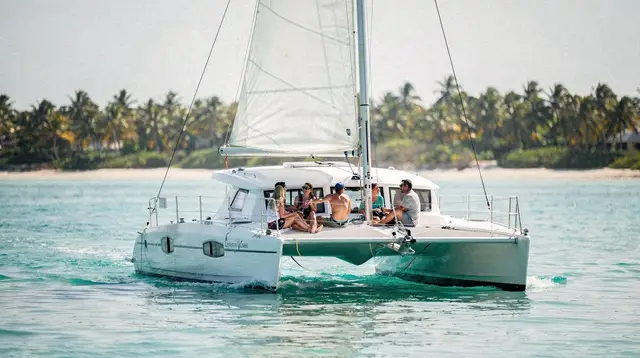
The single biggest reason travelers hear “La Romana” at all is Saona Island. Trips are frequently sold under La Romana’s name, using it as the regional label, hotel-pickup point, or transit reference, even though the boats themselves leave from Bayahibe’s dock inside Cotubanama national park. A boat tour to Saona Island that includes lunch is a fair example: booked under La Romana, delivered from Bayahibe.
The same applies to Isla Catalina, known for its reef wall and snorkeling rather than the sandbar stops Saona is known for. A buggy tour combined with a Catalina Island stop is one way operators package the two together. For the underwater detail, comparison between the two islands, and which one suits your priorities, the Saona vs. Catalina guide and the Catalina Island snorkeling guide go further than this page needs to.
If your goal for the day is the islands, plan around Bayahibe and its day-trip guide directly rather than treating La Romana as the destination. La Romana in that context is a name on a booking page, not a place you’ll spend meaningful time.
La Romana as a gateway to Altos de Chavon
Altos de Chavon sits close enough to La Romana that many day trips combine the two: a stop in town, then the climb up to the replica village and its overlook of the Chavon river. If your interest is specifically the village, its artisan shops, the amphitheater, and the river view, that detail lives on the Altos de Chavon destination page and the day-trip guide, not here.
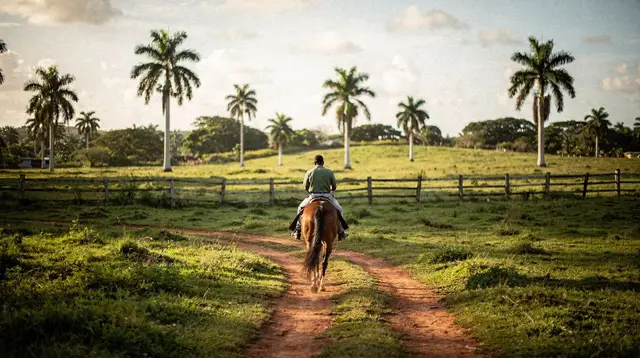
Where La Romana genuinely adds something to that combination is the countryside in between: horseback routes and ranch stops that aren’t part of either the island crossing or the Chavon visit. A horseback ranch tour with a picnic included is a way to spend a slower half-day in the area without needing a boat or a museum-style walk through Chavon.
Comparing what “La Romana” actually gets you
| If you book under “La Romana”… | What you’re actually doing | Where to read more |
|---|---|---|
| Saona Island boat trip | Boat crossing from Bayahibe’s dock | Bayahibe, Saona excursions |
| Catalina Island buggy/snorkel trip | Reef-side snorkeling off Catalina, buggy leg from the mainland | Catalina Island |
| Chavon village tour | Walking the 1970s replica village and amphitheater | Altos de Chavon |
| Rum, cigar, or cave experience | Countryside stops genuinely near La Romana town | This page, rum and cigars explained |
| Horseback ranch outing | Countryside route between La Romana and Chavon | This page |
Prices and exact durations for any of these vary by operator and by whether the pickup is from a Punta Cana hotel or arranged locally; check the specific listing on GetYourGuide or Viator for the day’s confirmed price and schedule rather than treating any figure here as fixed.
Getting to and around the area
La Romana is on the south coast, reached by road from the Punta Cana hotel zone; the exact drive time depends on which part of Bavaro, Cap Cana, or Uvero Alto you’re starting from, and is best confirmed against your specific tour’s listed pickup window rather than assumed. Travelers arriving independently should note the region has no rail network: fixed-rate taxis, private transfers, and tour-operator shuttles are the standard way to move between La Romana, Bayahibe, and Altos de Chavon.
If you’re coming from a cruise ship docked at La Romana’s port, most shore excursions are built to move you out to Bayahibe or Chavon quickly rather than keep you in town, which reflects the same imbalance this page has been describing throughout.
Planning notes worth keeping in mind
A few practical points apply to any excursion booked in or around La Romana, same as elsewhere in the region:
- Prices quoted for tours are typically in USD, sometimes referenced in Dominican pesos (DOP) by local operators; nothing here should be read as a fixed, current price, since rates change and the operator’s own listing is the accurate source for the day.
- Restaurant bills in town, same as anywhere in the Dominican Republic, normally carry an 18% ITBIS tax plus a 10% service charge (“ley”) on top of listed menu prices.
- Bring a valid passport and keep in mind the free e-Ticket form is mandatory for entry and exit regardless of which region you’re traveling to.
- Tap water in La Romana, as everywhere on this list of destinations, is not safe to drink; stick to bottled or filtered water.
Should you stop in La Romana or go straight to Bayahibe or Chavon?
If your day’s real goal is Saona Island, Catalina Island, or the Chavon village, there’s little reason to build in extra time for La Romana town itself beyond whatever transit or pickup your booked tour already includes. If you have a genuine interest in the region’s rum, cigar, and countryside history separate from the islands or the replica village, La Romana earns a few hours on its own terms. For everyone else, treat it as the name on the booking page rather than the destination, and spend your planning time on the Bayahibe or Altos de Chavon pages instead, or browse the wider day trips and things to do hubs for other options departing the Punta Cana area.
Things to do in La Romana: frequently asked questions
Is La Romana itself worth exploring?
The town has a functional center and a cruise port, but very little built for tourists. There is no single attraction that justifies planning a stop in La Romana for its own sake.
Do Saona and Catalina boat trips leave from La Romana or Bayahibe?
Boats to Isla Saona and Isla Catalina depart from Bayahibe, a separate village near La Romana. Some tour operators list La Romana as the meeting point or hotel-pickup reference, but the actual embarkation is at Bayahibe’s dock.
Is Altos de Chavon in La Romana?
Altos de Chavon sits just above the Chavon river near La Romana and is often booked as a combined outing with the town. It is a replica Mediterranean village built in the 1970s, not a historic site from an earlier century.
What can you actually do inside La Romana town?
Options are limited to a look at the cruise terminal area, a stop at a local market, or a quick walk through the center. Most excursions marketed under La Romana’s name actually take place outside the town, at Bayahibe, Altos de Chavon, or the surrounding countryside.
Should I book a tour from Punta Cana or arrange one locally in La Romana?
Both exist. Punta Cana hotels and online platforms sell combined trips that include transport to La Romana, Bayahibe, or the islands; local operators in La Romana sell similar excursions to travelers already in the area. Compare what a listing actually includes before booking, since names overlap heavily.
Is La Romana good for cigar or rum tours?
La Romana and its surrounding countryside host several rum, cigar, and cultural cave experiences, since the region has a long tobacco and sugarcane history. These are among the few activities genuinely tied to La Romana rather than to Bayahibe or Altos de Chavon.
How does La Romana compare to Punta Cana for a day trip?
La Romana is not a beach destination and has no resort strip. It functions mainly as the access point for Bayahibe’s islands and for Altos de Chavon, so most visitors treat it as a passthrough rather than a destination in its own right.
Tours for your first trip to Punta Cana on GetYourGuide
Verified deep-linked GetYourGuide tours. Book through these links and we earn a small commission at no cost to you.
GetYourGuide does not provide a product photo for this activity — the image shows the meeting point, photographed by us.