Scuba diving and snorkeling in Bayahibe
Is Bayahibe worth it for scuba diving from Punta Cana?
Yes for divers and snorkelers specifically: Bayahibe is the departure port for Isla Catalina's reef wall, the most consistent dive site in the region, plus cenote-style dives and beginner try-dives. The trade-off is a 1h15-1h45 road transfer each way from most Punta Cana hotels before the boat even leaves.
Why divers head to Bayahibe, not Punta Cana’s beaches
Bayahibe is a former fishing village that has become the main dive and boat departure point for the Cotubanama national park, the marine and forest reserve that includes both Isla Saona and Isla Catalina. For anyone booking a excursion strictly for the diving or snorkeling itself, Bayahibe is the relevant departure point, not the hotel beaches of Bavaro or Cap Cana. This guide covers the dive- and snorkel-specific side of Bayahibe: site conditions, certification levels, what marine life to expect, and how the transfer from a Punta Cana hotel actually plays out. For the general beach-day version of an island trip, see the pages on Saona island excursions and things to do in Saona Island instead, and for a fuller picture of the village itself beyond diving, the Bayahibe destination page covers the wider area.
Bayahibe sits inside the same south-coast region as La Romana and Altos de Chavon, and it is worth being clear from the start that this is a different part of the country from the Punta Cana hotel strip. If diving is the only reason for the trip, that distinction matters more than it might seem, since it changes both the transfer time and the kind of day you should plan around it.
The transfer: plan for 1h15-1h45 before you even board a boat
Bayahibe sits south of the main Punta Cana hotel zone, and getting there from most Bavaro or Cap Cana resorts takes 1h15 to 1h45 by road, depending on the exact hotel and traffic. That is before boarding anything. Operators collecting divers from Punta Cana hotels typically schedule an early pickup, often before 7am, to reach Bayahibe in time for boat departures and to fit two dives or a full snorkeling circuit into the day. If you are staying in Uvero Alto, add time on top of that, since it is already 40-60 minutes further from the airport than Bavaro.
Divers staying closer to La Romana or in Bayahibe itself cut this transfer down substantially, which is worth factoring in if diving is the main reason for the trip rather than a one-off excursion from a Punta Cana base.
Most operators handle this leg with a private hotel pickup included in the tour price, which is the simplest option and the one assumed throughout this guide. If you would rather arrange your own transport, the general breakdown of taxis, guaguas and getting around Punta Cana applies here too, though a local bus is not a practical way to reach a boat departure with dive gear and a fixed check-in time. Renting a car is a workable alternative for divers based near La Romana who want flexibility over several days; the country-specific rules and driving conditions are covered in renting a car in the Dominican Republic. Whichever way you get there, remember that the country drives on the right and there is no rail option connecting the hotel zone to the south coast.
| Starting point | Approx. road time to Bayahibe |
|---|---|
| Bavaro / Punta Cana hotels | 1h15 - 1h45 |
| Cap Cana | 1h15 - 1h45 |
| Uvero Alto | 1h45 - 2h15 |
| La Romana | 20 - 30 minutes |
| Staying in Bayahibe | Walking distance to dive shops |
Isla Catalina: the reef wall that draws certified divers
Isla Catalina is a small uninhabited island off the coast near La Romana, reached by boat from Bayahibe, and it is the reference dive site for this stretch of coast. The main draw is a coral wall dropping from around 3 meters down past 25 meters in places, with sea fans, barrel sponges, and a healthy population of reef fish: grunts, snapper, parrotfish, and regular sightings of sea turtles and eagle rays. Visibility is generally good year-round but is affected by recent rain and swell, so conditions can shift week to week.
This is the site to book specifically if diving quality is the goal, rather than the general Isla Saona day trip, which stops at shallower sandbar and natural-pool areas better suited to swimming and photos than structured diving. If you are choosing between the two islands for a non-diving day out, the comparison in Saona vs Catalina: which island covers that decision separately from the diving angle addressed here.
Certified divers vs. first-time try-dives
Bayahibe’s dive operators split their offering into two tracks:
- Certified divers can book straight into reef and wall dives at Isla Catalina, usually as a two-tank day trip. Bring your certification card; most shops will ask for it before assigning tank sizes and depth limits.
- First-timers with no certification can join a supervised scuba diving initiation, done in shallow, sheltered water with an instructor, which does not require prior training. This is a try-dive, not a certification course, and depth and time underwater are limited accordingly.
Between those two, some shops also run cenote-style or cavern dives inland from Bayahibe, in freshwater conditions distinct from the open-water reef diving at Catalina Island. These usually require at least an open water certification, since visibility, buoyancy control, and overhead-environment awareness matter more than on an open reef. If cave and cenote diving specifically interests you, treat it as a separate booking from a reef trip rather than something to combine in the same morning.
Anyone thinking about getting certified rather than just trying a single dive should look at learning to dive in Punta Cana before booking, since a full certification course runs over multiple days and is a different commitment from either the single try-dive or a two-tank trip for already-certified divers described here.
a cenote scuba diving trip run by Go Dive Bayahibe covers that freshwater side for already-certified divers, while a beginner scuba diving initiation with the same operator is built for people diving for the first time.
Snorkeling without a tank: Los Melones and the Catalina shoreline
Not everyone on a Bayahibe boat is diving. Several trips mix certified divers doing tank dives with snorkelers who stay near the surface over the same reef structures, particularly the shallower sections of the Catalina wall. Los Melones is one of the named snorkeling spots included on some boat itineraries, offering coral and fish viewing without certification or gear beyond a mask and fins.
a snorkeling tour to Los Melones with Go Dive is built specifically for this non-diving crowd, and it is a reasonable way to see a meaningful slice of the same underwater environment if you are not certified and do not want a try-dive.
If snorkeling rather than diving is the actual goal of the trip, it is also worth comparing Bayahibe to the other options along the coast covered in best snorkeling spots near Punta Cana, since some hotel-adjacent reefs skip the road transfer entirely, at the cost of the reef quality Catalina offers. Divers and snorkelers who want to add general time on the water beyond a single boat trip can also look at catamaran and boat trips around Punta Cana and, more specifically for this island, Catalina Island snorkeling trips, which cover the snorkel-only version of the same destination without the two-tank dive structure.
Best time of year for diving and boat conditions
Water temperature in this part of the Dominican Republic stays warm year-round, in line with the country’s general 26-31degC climate, so there is no strict off-season for diving itself. What changes across the year is boat comfort and, occasionally, surface conditions on the crossing to Catalina Island. The country’s hurricane season runs from June to November, with the highest risk concentrated from August to October; operators cancel or reschedule boat trips on short notice when a storm system is close enough to affect sea conditions, so it is worth checking the hurricane season in Punta Cana guide if traveling in that window.
Sargassum seaweed, which can build up on east-coast beaches roughly from April to October in varying amounts year to year, is a beach and shoreline issue rather than a reef-diving one, but it can affect boat launch points and surface swimming stops; the sargassum season in Punta Cana guide explains where and when it tends to show up. For a broader read on when to visit the region generally, including the drier December-to-April stretch versus the wetter May-to-November months, see best time to visit Punta Cana.
What a typical day trip actually looks like
A day trip booked from a Punta Cana hotel generally runs in this order: early hotel pickup, the 1h15-1h45 road transfer to Bayahibe, boat departure, one or two dives (or a snorkeling circuit) at or near Isla Catalina, a surface interval with lunch on some itineraries, then the return transfer. Because of the transfer on both ends, expect the full day, door to door, to run 8-10 hours even though time in or under the water is a smaller fraction of that.
This is different from booking directly out of Bayahibe or La Romana, where the same diving can be fit into a shorter half-day. If your hotel is in Bavaro or Cap Cana and diving is the main goal of the trip rather than a side activity, it is worth weighing whether a short stay in or near La Romana would cut the transfer overhead significantly.
| Trip type | Who it suits | Underwater time |
|---|---|---|
| Two-tank reef/wall dive at Catalina | Certified divers | Two dives, roughly 40-50 min each |
| Scuba diving initiation (try-dive) | First-timers, no certification | One shallow dive, instructor-led |
| Cenote/cavern dive | Open water certified divers | Single dive, freshwater site |
| Los Melones snorkeling tour | Non-divers, snorkelers | Surface swimming over reef |
What to bring and check before booking
Certified divers should carry their certification card and log book if a shop asks for recent dive history, since some operators set minimum experience levels for deeper wall sections. A rash guard or light wetsuit top helps with both sun and minor scrapes on coral structures. Motion sickness medication is worth packing for the boat ride out to Catalina Island if you are prone to it, since sea conditions vary by day and season.
Because the water at the resort taps is not safe to drink, bring a refillable bottle rather than relying on finding drinking water once you are past the hotel zone; the same point is covered in more general terms in can you drink the water in Punta Cana. Prices for dive packages are typically quoted in USD and vary by number of tanks, equipment rental, and whether lunch is included; check the current rate on the operator’s GetYourGuide or Viator listing rather than treating any figure here as fixed.
The country’s currency is the Dominican peso (DOP, RD$), not the euro, but US dollars are widely accepted for tours and excursions in tourist areas, with change typically handed back in pesos. If lunch or drinks are arranged at a restaurant rather than included on the boat, expect the bill to carry an 18% ITBIS tax plus a 10% service charge, both of which are standard and not an overcharge. The money, tipping and taxes in Punta Cana guide covers this in full, and pesos or dollars in Punta Cana walks through which currency actually makes sense to carry day to day. None of this affects the diving itself, but it is worth knowing before settling a bill at the end of a long day on the water.
Combining diving with other Bayahibe activities
Divers with time before or after a boat trip sometimes add a short land-based activity in Bayahibe itself. an e-bike tour around Bayahibe is a low-effort way to see the village on a non-diving day, and a guided look at the village’s lesser-known corners branded as The Secrets of Bayahibe works as a half-day filler if you are staying overnight near La Romana rather than doing the full round trip from a Punta Cana hotel in a single day.
For a broader look at everything else bookable in the area beyond diving, see things to do in Bayahibe and the wider La Romana and Bayahibe destination overview. Travelers weighing whether to book this as part of a small private group rather than a standard shared boat can compare the trade-offs in private tours vs. group excursions; a private booking generally means more flexibility on timing but does not change the underlying transfer time from a Punta Cana hotel.
One planning detail that applies regardless of which dive or snorkeling product you book: everyone entering or leaving the Dominican Republic, including day-trippers who flew in through Punta Cana International Airport (PUJ), must complete the free online e-Ticket form. It has nothing to do with the boat trip itself, but forgetting it is a genuinely common way to cause delays at the airport rather than at the dive shop; see Dominican Republic e-Ticket and entry rules for the current requirements.
Frequently asked questions about diving in Bayahibe
How far is Bayahibe from Punta Cana hotels?
Most Punta Cana and Bavaro hotels are 1h15 to 1h45 by road from Bayahibe, depending on traffic and the exact resort. That transfer happens before boarding the boat, so tours booked from a Punta Cana hotel start early.
Is Isla Catalina better than Isla Saona for diving?
For diving and snorkeling, yes. Isla Catalina is built around a reef wall with better visibility and marine life, while Isla Saona trips are day-at-the-beach excursions with a natural pool stop and generally shallower, less structured snorkeling.
Do I need to be a certified diver?
No. Certified divers can book reef and wall dives directly, but several Bayahibe operators run beginner try-dives (often branded as a scuba diving initiation) for people with no prior certification, done in shallow water with an instructor.
What will I actually see underwater at Catalina Island?
Expect a coral wall dropping from roughly 3 to over 25 meters, sea fans, sponges, reef fish such as grunts, snapper and parrotfish, and regular sightings of sea turtles and eagle rays. Visibility is usually good but varies with season and recent weather.
What is a cenote dive near Bayahibe?
Some operators run freshwater cavern or cenote-style dives inland from Bayahibe, distinct from the open-water reef dives at Catalina Island. These usually require at least an open water certification and are booked as a separate product.
How many dives can I fit in a day trip from Punta Cana?
Most day trips from a Punta Cana hotel fit two boat dives at Catalina Island, sometimes with a snorkeling stop instead of a second dive for non-divers in the same group. Factor in the road transfer on both ends when judging how long the day runs.
Is snorkeling worth it if I don’t dive?
Yes, several Bayahibe boats mix certified divers and snorkelers on the same trip, and snorkeling directly over the Catalina reef wall’s shallower sections shows a meaningful amount of the same coral and fish life without a tank.
Scuba diving in Punta Cana on GetYourGuide
Verified deep-linked GetYourGuide tours. Book through these links and we earn a small commission at no cost to you.
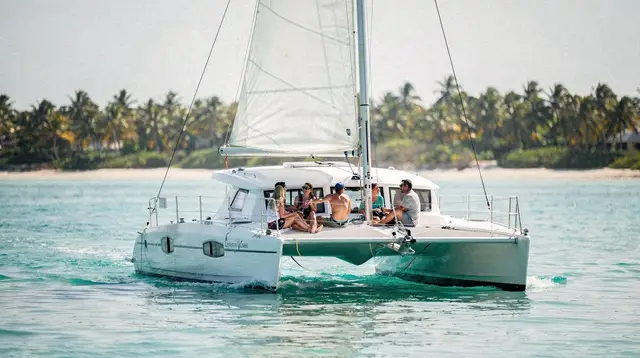
GetYourGuide does not provide a product photo for this activity — the image shows the meeting point, photographed by us.