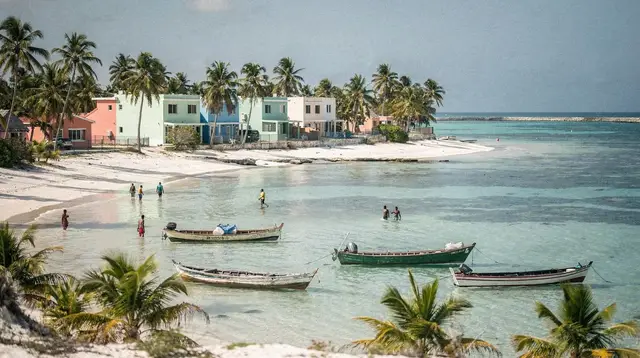
Saona is not a Punta Cana beach — it starts with a road trip
The most repeated mistake on this coast is treating Saona Island as an extension of Punta Cana’s own beachfront. It isn’t. Saona sits inside Cotubanama National Park, on the south coast, and the only way in is by boat from Bayahibe, a fishing village well south of the Bavaro and Cap Cana hotel strip. If you’re staying at a Punta Cana resort, your day starts with a 1h15 to 1h45 road transfer to Bayahibe before you so much as see a dock. No operator can shorten that leg — it’s simply the distance between the two coasts. Treat the transfer as part of the experience, not an inconvenience to be minimized, and the rest of the day makes a lot more sense.
That single fact reframes everything else about planning a Saona trip: this is a full-day outing, not a half-day beach add-on. Once you accept the transfer, the island itself delivers one of the better beach days available from a Punta Cana base.
What the day actually looks like
Most Saona tours follow a similar shape, though the exact order and inclusions vary by operator:
- Hotel pickup in Punta Cana, Bavaro or Cap Cana, then the road transfer south to Bayahibe.
- Boarding — usually a fast speedboat for one leg of the water crossing.
- A stop at a shallow sandbar in open water, often marketed as the “natural pool,” where waist-deep water and (on many tours) starfish draw a crowd for photos.
- Time on Saona’s beach, typically with a buffet lunch included.
- The return leg, often on a catamaran with music and drinks, back toward Bayahibe.
- The road transfer back to your hotel.
Door to door, this adds up to roughly 8 to 10 hours, depending on your hotel’s exact location and which tour you book. Uvero Alto hotels should expect the longer end of every transfer window on this itinerary, since that sector already sits 40-60 minutes from the airport corridor, let alone from Bayahibe.
Where you’re staying changes this math more than most itineraries admit. Hotels in Punta Cana, Bavaro and Cap Cana sit closest to the Bayahibe corridor, so they tend to land at the shorter end of that 1h15-1h45 window. The Uvero Alto and Higuey sector sits further north, adding real minutes on both legs of the transfer; if you’re based there, ask your tour desk for the actual pickup time rather than assuming it matches a Bavaro guest’s schedule, and see from PUJ airport to your hotel for how that same north-south divide plays out on arrival day.
a full-day Saona itinerary combining speedboat, sandbar stop and beach time is the most booked format for first-time visitors, and it’s a reasonable benchmark for comparing what else is on offer.
The natural pool and the starfish question
The sandbar stop is a highlight for most visitors — clear, shallow, turquoise water in the middle of open sea makes for good photos and an easy swim break. It’s also where the site’s one real conservation issue shows up: starfish live on this sandy bottom, and for years, boat crews and tourists routinely lifted them out of the water for photos. That handling stresses the animals and can kill them. It’s worth choosing an operator that discourages this and keeping your own hands off the starfish regardless of what others around you are doing; see why you should not lift the starfish for the full reasoning.
What you’ll find on Saona itself
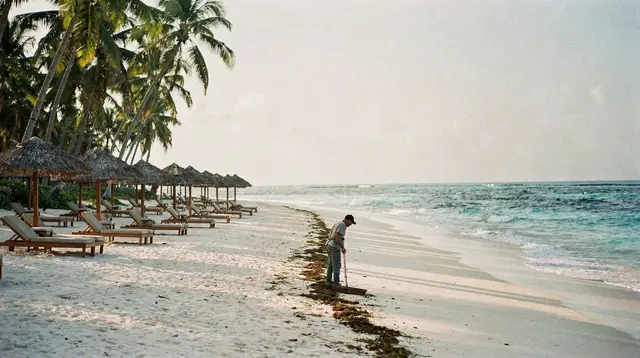
Saona’s beach is long, shaded by coconut palms in stretches, and genuinely quiet away from the main tour drop-off points — most of the island has no permanent settlement and no resorts. Depending on your tour, you’ll get anywhere from ninety minutes to a couple of hours of actual beach time on the island, bookended by the boat legs and lunch. If open-water photo stops and a livelier return trip appeal more than extra beach time, a VIP-format Saona day with more time on smaller boats trims the group-tour crowd in exchange for a higher price.
For travelers who’d rather skip the speedboat-catamaran combination altogether and prioritize a slower, more private day near the same waters, a private catamaran charter along this coast is worth pricing against a shared group tour — it costs more per person for a smaller group but removes the crowd factor from both the sandbar stop and the beach time.
Saona vs. Catalina: don’t assume they’re interchangeable
Saona and Catalina Island are both accessed from the La Romana-Bayahibe coast, and both get marketed heavily to Punta Cana visitors, but they reward different priorities. Saona is about the beach itself, the boat ride, and the sandbar stop — a social, scenic day. Catalina is a smaller island best known for its reef wall, and it’s the stronger pick if snorkeling or diving is the actual goal rather than a backdrop. See Saona vs Catalina: which island if you’re still deciding, and Catalina Island snorkeling trips if the reef is the draw.
| Trip | Departure point | Main draw | Typical day length |
|---|---|---|---|
| Saona Island | Bayahibe | Beach, sandbar, boat day | 8-10 hours from Punta Cana |
| Catalina Island | La Romana / Bayahibe area | Reef wall, snorkeling, diving | 8-10 hours from Punta Cana |
| Bayahibe beaches only | Bayahibe | Village, Playa Dominicus | Half day possible |
Cost and what drives the price
Prices for Saona tours run in a wide band depending on boat type, group size, lunch quality and whether the tour is shared or private. As a rough sense of the range you’ll see quoted, expect roughly USD 90-160 per person for a standard shared-group day trip, with private charters running well above that. These figures move with season, operator and promotions, so treat them as an ordering guide only — always confirm the current price and exact departure time on the GetYourGuide or Viator listing before booking, since dated blog figures go stale fast.
A useful upsell some travelers overlook: pairing a rum and coastal cruise with the same general area rather than a pure beach day. a rum-tasting boat cruise along the La Altagracia coast covers similar waters with a different focus if you’ve already done Saona on a prior trip and want a lower-key repeat visit to the region.
Most Saona tours are prepaid in full when you book, but bring both currencies for extras: bar drinks not included in the package, tips for boat crew and guides, or souvenirs at the lunch stop. The Dominican peso (DOP) is the official currency, but US dollars are widely accepted in tourist areas and on excursions, with change typically handed back in pesos. See money, tipping and taxes in Punta Cana for a fuller breakdown of how much to leave crew and guides on a day trip like this one.
When to go
December through April is the more reliable window: drier weather, calmer seas for the boat legs, and a lower chance the trip gets rescheduled for rough water. May through November brings more rain and rougher crossings on some days, and the region sits inside the Dominican Republic’s June-to-November hurricane season, with the highest storm risk from August to October. None of this rules out a Saona trip in the off-season — many days are still fine — but book with flexible cancellation terms if you’re traveling in the wetter months, and expect operators to reschedule around genuinely rough weather rather than sail through it.
Sargassum, the brown seaweed that periodically affects Punta Cana’s own beaches (mainly April to October), is a separate and less consistent issue on Saona specifically; conditions vary year to year, and there’s no way to guarantee a sargassum-free visit on any given date.
Getting to the departure point
If you’re arranging your own transport rather than booking an all-inclusive tour package, note that Bayahibe is roughly the midpoint of a longer south-coast day that can also include La Romana and Altos de Chavón — worth considering if you want to combine sights rather than make a dedicated Bayahibe trip solely for boat boarding. For flights and airport-side logistics before or after your stay, see Punta Cana airport transfers.
Most Saona bookings include hotel pickup and drop-off as part of the price, which removes the need to arrange your own transfer to Bayahibe — worth confirming on your specific listing, since a handful of budget tours use a shared meeting point instead of door-to-door pickup.
Who should book this, and who should skip it
Saona works well for first-time visitors wanting one clear highlight-reel beach day, couples who don’t mind a group-tour setting, and anyone comparing it directly against Catalina for a single south-coast excursion. It’s a weaker fit for travelers with limited time who can’t spare a full day, anyone prone to serious seasickness who dislikes open-water speedboat legs, or families with very young children who may struggle with the long transfer and midday sun exposure. If a full day feels like too much, a shorter combined option covering Saona and Catalina from Boca Chica exists for travelers based nearer Santo Domingo, though that’s a different departure logistics chain entirely.
For a beach experience with the more premium end of the amenities — better boats, smaller groups, less waiting around at the sandbar — a premium-tier Saona beach tour with upgraded boats and smaller groups is the option to compare against the standard shared tour before booking.
Combining Saona with the rest of the south coast
Bayahibe isn’t only a boarding point for Saona — it anchors a wider stretch of the south coast that’s worth planning around if you have more than one day to spend away from Bavaro or Cap Cana. Boca Chica, closer to Santo Domingo, offers its own catamaran and boat trips and a shorter day trip from Punta Cana for travelers who want calmer, more sheltered water than the open-sea crossing to Saona. Inland, a La Romana day trip and things to do in La Romana round out a longer south-coast day built around Altos de Chavón’s village-replica and shops. Travelers building a multi-day trip around this coast rather than a single excursion can use the south coast: Bayahibe in three days itinerary as a starting template, or the longer ten days: Dominican east and Samaná plan if Saona is just one stop among several.
Practical notes before you book
- Bring cash in small USD or DOP denominations for drinks, souvenirs or tips beyond what’s included.
- Pack reef-safe sunscreen and a hat; there’s limited shade on parts of the beach and none on the open-water boat legs.
- Confirm pickup time the night before — Punta Cana hotel pickups for this itinerary tend to start early given the transfer distance.
- Don’t schedule anything else that day. Between the two-way transfer and the boat legs, this occupies most of a full day.
- Check the cancellation policy if traveling May-November, given the higher chance of weather-related rescheduling.
For more on the village that makes all of this possible, see Bayahibe day trip from Punta Cana and things to do in Bayahibe. For the broader natural-pool etiquette and what tour operators do or don’t allow around the starfish, read Saona Island natural pool and starfish rules. And if you’re still weighing whether the transfer is worth it at all, is Saona Island worth it tackles that question directly. For the full activity list on this stretch of coast, see things to do in Saona Island and the broader La Romana-Bayahibe region overview.
Saona Island: frequently asked questions
Can you visit Saona Island directly from Punta Cana?
No. Every Saona boat departs from Bayahibe, on the south coast, which means a 1h15-1h45 road transfer from most Punta Cana hotels before you even reach the water.
How long does a Saona Island day trip actually take?
Plan on 8-10 hours door to door once you count the drive to Bayahibe, boarding, the boat and catamaran legs, beach and sandbar time, and the return transfer.
Is Saona Island worth the long transfer?
For most visitors, yes, since the beach and the natural pool stop are hard to match elsewhere on the coast, but it is an honest full-day commitment, not a quick excursion.
What is included in a typical Saona Island tour?
Most tours combine a speedboat leg with a catamaran leg (or the reverse), a stop at a shallow sandbar known locally as the natural pool, beach time on Saona, and usually lunch. Exact inclusions vary by operator, so check the listing.
Saona Island or Catalina Island: which is better?
Saona suits travelers who want a long white-sand beach and a lively boat day; Catalina suits those prioritizing snorkeling and diving on its reef wall. See the comparison guide for details.
Do the starfish at the natural pool get picked up for photos?
They should not be. Lifting starfish out of the water stresses and can kill them; reputable operators now discourage or ban the practice.
What should I bring on a Saona Island excursion?
Reef-safe sunscreen, a hat, cash in small USD or DOP bills for extras, a dry bag for your phone, and motion sickness tablets if you are prone to seasickness on the speedboat leg.
Can I book a private option instead of a group tour?
Yes, private catamaran charters to the Saona area exist for groups wanting more flexibility and a quieter boat, at a higher price than shared group tours.