A reef island, not a sandbank island
Isla Catalina sits a few kilometers off the coast near La Romana, and almost everything written about it comes back to the same feature: a reef wall along its southern edge, with a drop-off that draws divers and snorkelers rather than people looking to spend a day on sand. That’s the honest way to frame it. If you’ve read about Punta Cana boat trips and pictured a shallow “natural pool” with a sandbar to stand on, that’s a different island — Isla Saona, further south inside Cotubanama national park. Catalina and Saona get bundled together in a lot of marketing copy, but they serve different trips. See our full comparison in Saona vs. Catalina: which island if you’re deciding between the two.
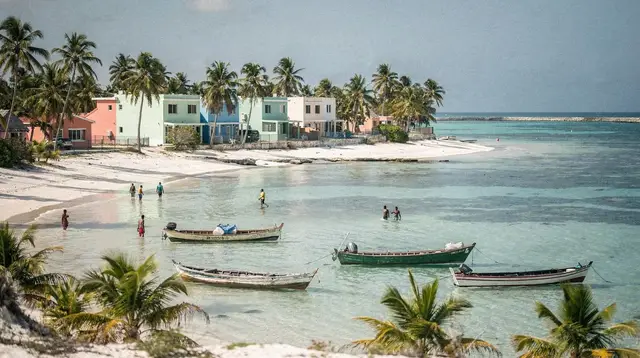
Catalina’s beach exists — a narrow strip of sand near the boat mooring — but it’s a staging area for divers and snorkelers gearing up, not the reason people book the trip. If a beach day with shallow water and a starfish sandbank is what you actually want, that’s Saona’s format, not Catalina’s.
Getting there: the same long transfer as Bayahibe
Boats to Catalina Island leave from the Bayahibe area and from ports around La Romana, the same departure zone used for excursions to Saona. That matters for anyone planning from a Punta Cana hotel in Bavaro, Cap Cana, or Uvero Alto: this is not a short hop. Expect on the order of an hour and a half to two hours of road transfer from most Punta Cana resorts down to the Bayahibe/La Romana coast before you even board a boat. Tour operators build that transfer into the excursion, with pickup times set well before dawn on some departures, but it’s worth knowing going in rather than discovering it in the van.
Because the road time is close to identical whether you’re headed to Catalina or to Saona, don’t assume Catalina is the “quicker” island option — it isn’t meaningfully shorter. The difference between the two trips is what happens once you’re on the water, not how long it takes to get to the coast. For more on the road side of that transfer, see Bayahibe day trip from Punta Cana and La Romana day trip from Punta Cana.
What the trip actually looks like
Most Catalina Island excursions follow a simple pattern: transfer by road to the coast, then a boat crossing to the island, anchoring near the reef wall for snorkeling or diving, with a break on the small beach for lunch (often included on full-day packages). Boat types vary by operator — catamaran, speedboat, or a mix — but the point of the day is the water, not the crossing.
a standard day trip to Catalina Island covers the transfer, boat, and snorkeling stop, and is the most common way to visit for people who aren’t certified divers.
For snorkelers who want a longer, more structured time in the water rather than a single stop, a Catalina Island snorkeling-focused tour spends more of the day at the reef itself.
Divers have a separate track entirely. Isla Catalina’s wall dive is one of the better-regarded dive sites reachable from this coast, with drop-offs and visibility that go well beyond what snorkeling from the surface shows. a scuba diving trip to Catalina Island is built for certified divers, and some operators also run introductory dives for first-timers as part of the same departure — check the listing for certification requirements before booking. If you’re new to diving generally and want the full picture of what’s involved and what it costs, learning to dive in Punta Cana covers that separately.
Groups wanting more control over pacing, and willing to pay for it, can book a private catamaran charter to Catalina Island instead of a shared-boat departure — useful for families or groups who don’t want to share a snorkeling stop with a full boatload of strangers.
What’s under the water, and why it’s the actual draw
The reef wall off Catalina’s southern shore drops from shallow reef flat into deeper water, with coral formations, sponges, and reef fish typical of this part of the Caribbean. Visibility is generally good, though like anywhere it varies with weather, recent rain, and boat traffic on a given day — no operator can promise a specific number of meters, and any listing that does is overselling it.
This is the core reason to choose Catalina over Saona: if what you want from an island day is looking underwater — snorkeling over structure, or diving a wall — Catalina delivers more of that per hour than Saona’s shallower, sandier stretches. If what you want is standing in ankle-deep water on a sandbar with a mixed drink, that’s Saona’s strength, not Catalina’s. Booking Catalina expecting Saona’s natural-pool format, or the reverse, is the most common mismatch travelers run into when comparing the two. For a broader look at where else the diving is good on this coast, see best snorkeling spots near Punta Cana and scuba diving in Bayahibe, which covers wall and wreck sites closer to the Bayahibe departure point itself.
Combining Catalina with the rest of the La Romana area
Because the road transfer to reach the coast is the same regardless of which island you visit, some travelers pair a Catalina morning with an afternoon inland — most commonly a stop at Altos de Chavón, the reconstructed Mediterranean-style village built in the 1970s above the Chavón River (its amphitheater opened in 1982; it’s a modern build styled after a 16th-century village, not an actual historic site, whatever the marketing photos suggest). Others use the same coastal trip to see La Romana itself before or after the water portion.
Combining a boat day with a land stop makes for a long day out of Punta Cana — expect to be gone most of the daylight hours once road time on both ends is added up. If a single focused activity fits your schedule better, keep the day to the reef and skip the inland add-on. See things to do in Bayahibe and things to do in Catalina Island for other ways to structure the day around this stretch of coast.
When to go: season and sea conditions
The Dominican Republic runs tropical year-round, generally 26-31°C, so temperature alone won’t tell you when to book. What actually changes the Catalina experience is the sea. December through April is the drier, less humid stretch of the year and brings calmer water for the crossing, which is why it’s the season most operators and this site point to for a smoother boat ride and less chance of a cancelled departure.
May through November is wetter, and June through November is hurricane season specifically, with the highest risk of a storm disrupting boats and transfers falling in August, September, and October. None of that means the trip is off the table outside December-April — most days in the rainier months are still fine for a crossing — but if your dates fall in peak hurricane season, build in flexibility and expect a higher chance that an operator reschedules or cancels for weather. For the broader picture of what storm season means for a trip built around boat excursions, see hurricane season in Punta Cana.
Sargassum, the floating seaweed that piles up on beaches in mats, is mostly a problem on the open Atlantic-facing coast around Punta Cana, Bavaro, and Macao, and mainly shows up between April and October, with how bad it gets varying a lot from year to year. Catalina’s departure point on the Caribbean-facing La Romana coast isn’t the same stretch of shoreline and isn’t affected the same way, but it’s not a guarantee either — check current conditions close to your trip rather than assuming either coast is sargassum-free. See sargassum season in Punta Cana for what the seaweed does and doesn’t affect.
Practical notes
- Currency: bring US dollars or Dominican pesos for anything not already included in your booking — tips for the boat crew, a drink on the island, rental snorkel gear if it isn’t included. The peso (DOP) is the official currency; dollars are widely accepted on tours, but change usually comes back in pesos.
- What’s usually included: round-trip transfer, boat, snorkeling equipment on snorkel-focused trips, and often lunch on full-day packages. Diving trips typically include tanks and weights for certified divers; ask about equipment rental if you don’t have your own mask and fins.
- Seasickness: the open-water crossing to Catalina can be choppier than the more sheltered run to Saona, depending on wind. If you’re prone to motion sickness, plan accordingly.
- Sun and water: reef-safe sunscreen matters here more than on a beach day, since you’ll be in the water over live coral for a good part of the trip.
- Exact prices and departure times shift by season and operator — check the current listing on GetYourGuide or Viator rather than treating any number here as fixed.
- Tap water: not safe to drink anywhere in the Dominican Republic, including on the boat or at the lunch stop — stick to bottled or the water provided by the tour.
- Entry paperwork: if you’re arriving from abroad for your trip, the free online e-Ticket form is mandatory for both entry and departure, separate from anything related to booking excursions once you’ve landed — see the Dominican Republic e-Ticket and entry rules if you haven’t filed it yet.
Choosing between a shared boat and a private charter
Most Catalina bookings are shared-boat departures, where you’re grouped with other travelers on a set schedule set by the operator. That keeps the per-person cost down and is the standard way both snorkelers and divers reach the island. A private charter flips that: you set the pace, choose how long to stay at the reef, and don’t share the deck with a full boatload of strangers, but it costs more per person and usually needs to be booked further ahead since availability is more limited than on a shared departure.
It’s worth it for families with young kids who don’t want to keep to someone else’s schedule, small groups celebrating something specific, or anyone who’s tried a shared Catalina trip before and found the crowd part of the day more tiring than the water part. For most first-time visitors comparing prices, the shared-boat trip is the more practical starting point, with the private option worth considering once you know Catalina is the island you want.
Catalina Island: questions before you book
Is Catalina Island the same as Saona Island?
No. They’re separate islands with separate formats. Saona, reached from Bayahibe inside Cotubanama national park, is built around a shallow “natural pool” sandbank and a beach day. Catalina, off La Romana, is built around a reef wall for diving and snorkeling. Some tour listings blur the two in their marketing photos — read the itinerary, not just the image, before booking.
How long is the trip from a Punta Cana hotel to Catalina Island?
Plan on roughly an hour and a half to two hours of road transfer from most Bavaro, Cap Cana, or Uvero Alto hotels down to the Bayahibe/La Romana coast, then a separate boat crossing to the island itself. It’s a full-day commitment once the return transfer is added.
Do I need to be a certified diver to visit Catalina Island?
No. Most visitors go on snorkeling-focused day trips that don’t require certification. Scuba diving trips are aimed at certified divers, though some operators offer introductory dives for beginners as an add-on — check the specific listing for what’s required before booking.
Is there a beach on Catalina Island?
There’s a narrow stretch of sand near the boat mooring, mainly used as a staging area for snorkeling and diving groups and for the lunch stop on full-day trips. It isn’t a beach destination in the way Saona’s sandbank is; the water, not the sand, is the point of the day.
What will I actually see underwater at Catalina Island?
A reef wall with coral formations, sponges, and typical Caribbean reef fish, dropping from shallow reef flat into deeper water. Visibility is generally good but varies day to day with weather and recent rain, so treat any specific number quoted by a tour listing as approximate.
Can I combine Catalina Island with Altos de Chavón in one day?
Yes, and it’s a common pairing since both are reached through the same La Romana coastal area. It makes for a long day once road transfers on both ends are counted, so it suits travelers who want to see more of this coast in one trip rather than a relaxed single-activity day.
Which is better for a first-time visitor: Catalina or Saona?
It depends on what you want from the day. Choose Catalina if snorkeling or diving over a reef is the priority. Choose Saona if a beach day with shallow water and a sandbank stop matters more than what’s under the surface. They aren’t interchangeable, and picking the wrong one for what you actually want to do is the most common regret travelers report about this comparison.
Does sargassum seaweed affect Catalina Island trips?
Sargassum mostly builds up on the Atlantic-facing beaches around Punta Cana, Bavaro, and Macao, typically between April and October, and how much shows up varies year to year. Catalina’s departure area on the La Romana coast is a different stretch of shoreline and isn’t hit the same way, but conditions still shift, so it’s worth checking close to your trip rather than assuming either coast is guaranteed clear.
When is the roughest time of year for the boat crossing to Catalina?
June through November is hurricane season, with the highest chance of a storm disrupting boats and transfers in August, September, and October. December through April is calmer and generally the more reliable stretch for a smooth crossing, though most days outside hurricane season are fine too.
What should I bring on a Catalina Island trip?
Reef-safe sunscreen, a swimsuit, a change of clothes, cash in USD or DOP for tips and extras, and motion sickness medication if you’re prone to it, since the crossing can be choppier than the Saona route. Bring your own mask and fins if you prefer familiar gear, though rental is usually available.