Learning to dive in Punta Cana
Can you learn to scuba dive from a Punta Cana hotel?
Yes. Several dive centers based in the Punta Cana, Bavaro and Cap Cana tourist zone run introductory dives and beginner courses in shallow, sheltered sites close to shore. Isla Catalina, the region's best-known reef wall, is off La Romana and is booked as a separate boat excursion, not a shore dive from a resort.
Diving from a Bavaro or Cap Cana hotel, not offshore
If you have never used a tank underwater and want to try it, or you are certified but want a couple of guided dives without organizing your own trip, several dive operators work directly with hotels in the Punta Cana tourist zone. They are set up for guests staying in Bavaro and Cap Cana, with pickup from the resort, gear fitted on site, and dive sites a short boat ride from shore.
This page is about that: learning the basics or taking a first guided dive close to where you are staying. It is a different activity from a snorkeling trip, which stays on the surface with a mask and tube and needs no instruction. Diving means breathing from a tank underwater, and even an introductory dive involves a briefing, confined-water practice, and an instructor staying next to you the whole time. If what you actually want is to float over a reef and look down, snorkeling is cheaper, faster to arrange, and does not require any skill test.
It is also worth being upfront about something many resort brochures blur together: the reef most divers travel to the Dominican Republic’s east coast for, Isla Catalina’s wall off La Romana, is not part of a Punta Cana hotel dive session. It is a separate excursion, covered further down this page.
What a first dive or a short course actually involves
A typical introductory dive with a hotel-based operator runs in three stages: a land briefing covering hand signals and basic safety, a confined practice session in shallow water or a pool, and then a guided open-water dive with an instructor holding onto or swimming beside you. Depths on these first dives are usually kept shallow and sites are chosen for calm conditions rather than the most dramatic scenery.
If you want to go further than a single dive, look for a listing described as a course rather than a discover dive. A course adds classroom or e-learning theory, more in-water skills (clearing a mask, sharing air, controlling buoyancy), and typically several open-water dives spread across two or more days. At the end of a full course you receive a certification card recognized by dive operators worldwide, not just a souvenir photo. A single discover dive gives you the experience but no certification.
| Format | What it includes | Certification at the end |
|---|---|---|
| Discover / intro dive | Briefing, confined practice, one guided open-water dive | No |
| Two-tank guided dive (certified divers) | Two dives with a local guide, no formal instruction | Not applicable — for already-certified divers |
| Multi-day open-water course | Theory, pool or confined sessions, several open-water dives | Yes, internationally recognized |
Exact structure, number of dives, and depth limits differ between operators, so treat this table as a general shape rather than a fixed itinerary — check the specific listing for what is included.
Dive sites near Punta Cana, Bavaro and Cap Cana
The dive sites used for hotel-based programs sit along the coast near the resorts, chosen for reasonably sheltered water and manageable depths for first-timers. They are not the open-water reef systems that dedicated dive trips elsewhere in the region are built around. Expect coral patches, reef fish, and sometimes a wreck or two depending on the operator, rather than a dramatic wall.
Some operators also run cave diving sessions inland, in flooded caverns and cenotes rather than the ocean. This is a different skill set from a beginner ocean dive and is usually aimed at more experienced or adventurous divers — check the listing carefully if cave diving is what you are after, since it is not interchangeable with a shore or reef dive.
Visibility and conditions along this stretch of coast vary with weather, and during sargassum season, roughly April to October, floating seaweed can affect the shoreline and, at times, near-surface visibility, though most dive sites sit deep enough to be less affected than the beach itself. An operator will tell you on the day if conditions are not suitable for a dive.
Sea conditions can also shift during the hurricane season, which runs from June through November with the highest risk from August to October. Operators cancel or reschedule dives when swell or visibility make conditions unsafe, so anyone diving during these months is better off keeping the itinerary flexible rather than booking a single fixed date for their only underwater outing of the trip.
Isla Catalina: the region’s best-known reef, and why it is a separate trip
Isla Catalina, off the coast near La Romana, is generally considered the most rewarding dive site in this part of the Dominican Republic, known for a steep reef wall and generally clearer water than the sheltered sites closer to the Punta Cana hotels. It sits within reach of Bayahibe, the fishing-village-turned-departure-port for boats heading to Isla Saona and Catalina, inside the Cotubanama national park.
From a Punta Cana or Bavaro hotel, reaching Catalina means a road transfer of roughly the same order as reaching Bayahibe for a Saona trip — well over an hour each way — before boarding a boat to the island itself. It is booked and priced as its own excursion with an early start, not a session you add on to a resort-based dive morning. If a listing claims a Catalina dive with no meaningful transfer time from a Punta Cana hotel, treat that as a red flag and read the operator’s meeting-point details closely before booking.
For most people, the sensible approach is: try a hotel-area intro dive or short course while staying in Punta Cana or Bavaro, and treat a Catalina reef dive as a separate full-day trip if diving is a priority for the visit — not an errand squeezed between beach afternoons.
Choosing between a hotel dive and a Catalina scuba trip
For visitors who already hold a diving certification and want more underwater time than a resort-based lesson offers, a dedicated Isla Catalina scuba diving day trip swaps the classroom-style hotel session for a full day built around the reef wall itself: an early hotel pickup, the road-and-boat transfer to the island, and guided dives with a local operator rather than a single shallow outing near the resort. This is the option worth comparing against a hotel-area intro dive if you already know how to dive and the sheltered sites near Bavaro or Cap Cana sound less appealing than open water off La Romana.
Non-divers traveling with a certified partner are not left out, since most Catalina-bound boats also carry snorkelers. A Catalina snorkeling trip or a broader Saona vs Catalina comparison is worth reading if only part of your group wants to go underwater with a tank while the rest stay on the surface. For a non-diving read of the same excursion zone, see the guide to a La Romana and Altos de Chavon day trip, or the case for Bayahibe’s own scuba scene, which sits closer to Catalina than a Punta Cana hotel and is sometimes used as an alternative departure point.
Booking a dive course or first dive
a guided introductory dive session run from the Punta Cana area is the most common way to try scuba diving for the first time without committing to a full certification course. For a more personalized outing, including reef exploration once the basics are covered, a private guided dive with a smaller group gives more one-on-one instructor time. Divers who want to try something beyond a standard reef dive can look at a cave diving outing at two inland dive sites, which is a different kind of dive and generally suited to those already comfortable in the water.
Prices, included dive counts, and certification details change often enough that this page will not quote a fixed figure — check the GetYourGuide or Viator listing for the day’s price and exact inclusions before booking. Confirm hotel pickup is included if you are staying outside the immediate Bavaro or Cap Cana hotel strip, since pickup radius varies by operator.
Practical notes before you book
Bring a health questionnaire mindset: most operators will ask about conditions like asthma, recent surgery, or ear problems before letting you dive, and some conditions require a doctor’s note. If you wear glasses, ask whether a prescription mask is available, since most rental gear is not fitted to individual eyesight. Reef-safe sunscreen is worth packing, since some dive boats and eco-sensitive sites request it. Do not plan a flight the same day as your dive — divers typically wait at least 18-24 hours after a dive before flying, which matters if your departure from Punta Cana International Airport falls the next morning.
Tipping the dive guide and boat crew is customary and separate from the tour price; ask the operator or your hotel tour desk what is typical if it is not stated on the booking page, and remember restaurant and service pricing in the Dominican Republic already builds in ITBIS tax and a service charge, which is a different thing from a guide tip.
Where you are staying affects both convenience and cost. Hotels clustered in Punta Cana, Bavaro and Cap Cana sit closest to the largest cluster of dive operators, while guests based in Uvero Alto and Higuey typically face a longer transfer both to a dive center and to Punta Cana International Airport itself. If your hotel does not offer a shuttle for the activity, ask about local transport options or confirm the pickup radius directly with the dive operator before paying, since some listings only cover the main Bavaro and Cap Cana hotel strip.
If diving is only one part of a broader beach-and-boat trip, it pairs naturally with a Punta Cana catamaran outing or a snorkeling day near Punta Cana on days you are not diving, and with a Saona Island excursion from Bayahibe if you want to see the same southern coastline above water. Divers staying in Uvero Alto should budget extra transfer time to reach hotel-area dive centers based further south, since that sector sits 40-60 minutes from the airport and further still from the main Bavaro dive operators.
Frequently asked questions about learning to dive near Punta Cana
Do I need to already know how to swim to try scuba diving?
Most introductory dive programs ask that you be a reasonably confident swimmer, though you do not need any diving certification. Instructors run a shallow briefing and confined practice before the first open-water descent, and a snorkeling trip is a better fit if you are not comfortable in the water.
What is the difference between a discover dive and a certification course?
A discover or introductory dive is a single guided outing with an instructor, no paperwork beyond a health questionnaire, and no certification at the end. A course such as an open-water certification runs over several sessions, includes theory and skills practice, and issues a card recognized worldwide.
Is Isla Catalina reachable as a day dive from a Punta Cana hotel?
Not directly. Isla Catalina sits off the coast near La Romana, roughly two hours by road and boat from most Punta Cana and Bavaro hotels, so a dive trip there is sold as its own excursion with an early pickup, not an add-on to a resort dive session.
How many dives does a beginner course include?
It varies by operator and by whether you book a single discover dive, a two-tank outing, or a multi-day certification. Check the exact number of dives, tank sizes and depth limits on the GetYourGuide or Viator listing before booking, since wording differs between centers.
Is the water clear enough near Punta Cana for a first dive?
Visibility along the Bavaro and Cap Cana coast is generally decent for beginner sites but varies with weather and swell, and it is usually calmer than an open-water reef dive further offshore. It is not the same visibility as Isla Catalina’s reef wall, which is the main reason serious divers travel there.
Do I need my own gear?
No. Dive centers working with hotel guests supply mask, fins, wetsuit, tank and regulator as part of the package. Bring your own mask only if you have a strong preference; everything else is provided and fitted on site.
What should I check before booking a dive course on a Punta Cana trip?
Confirm whether the price includes hotel transfers, how many dives are included, what certification (if any) you receive, and the minimum age and health requirements. The GetYourGuide or Viator page for each listing carries the current details and price, which change more often than a guide page can track.
Should I book a hotel-area dive or a trip to Isla Catalina?
If you have never dived before or just want a short, low-commitment introduction, a hotel-based intro dive or course near Punta Cana, Bavaro or Cap Cana is simpler to arrange and needs no full-day transfer. If you are already certified and want to dive a proper reef wall, a dedicated Isla Catalina day trip is worth the longer transfer; it is priced and booked as a separate excursion, not an add-on to a resort dive.
Scuba diving in Punta Cana on GetYourGuide
Verified deep-linked GetYourGuide tours. Book through these links and we earn a small commission at no cost to you.
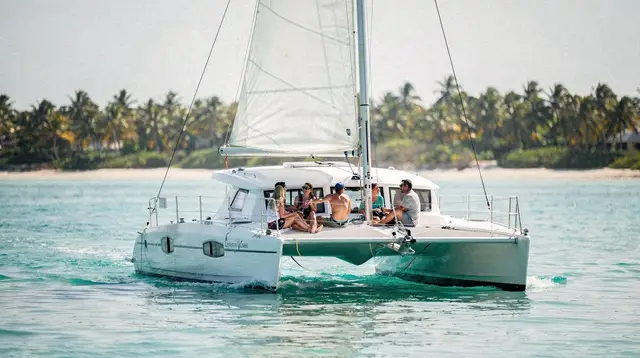
GetYourGuide does not provide a product photo for this activity — the image shows the meeting point, photographed by us.